



The first question everyone asks is the obvious one: how much does it cost to ship a car?
The honest answer is that it depends, but not in the vague, hand-wavy way most carrier websites make it seem.
The real cost follows a set of predictable variables, and once you understand them, you can build a reliable car shipping estimate on your own before a single salesperson picks up the phone.
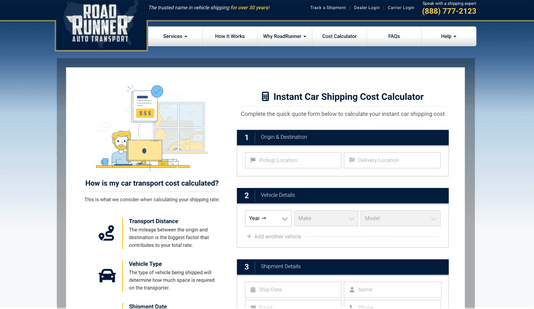
Running your details through an online car shipping estimator is the fastest way to get that baseline.
That context is what separates people who get fair deals from people who overpay because they have nothing to compare against.
The Distance Factor Isn’t as Straightforward as You Think
A 300-mile move and a 2,500-mile cross-country haul don’t scale the way most people expect.
Short-distance auto transport often costs more per mile than long-distance runs because carriers still burn the same amount of time loading, securing, and unloading your vehicle regardless of how far it travels.
A sedan shipped from Dallas to Houston might run $1.00 per mile, while that same sedan going from Miami to Seattle could drop to $0.40 per mile.
The total is higher on the long haul, obviously, but the rate structure rewards distance.
Plugging your specific route into a distance-based estimator gives you a much clearer starting point than any flat-rate rule of thumb.
These tools factor in the actual corridor, not just raw mileage, and that distinction matters more than most people realize when they’re trying to nail down a realistic car shipping estimate early in the process.
So, How Much Does It Cost to Ship a Car Across the Country?
Ballpark ranges are useful as a sanity check, so here’s where real-world pricing typically lands.
A standard mid-size sedan on an open carrier usually runs between $800 and $1,500 for a coast-to-coast route like New York to Los Angeles.
Shorter regional moves, say Atlanta to Nashville or Portland to San Francisco, fall more in the $400 to $750 range, depending on the corridor and time of year.
Those numbers shift based on everything covered in this article, but they give you a baseline.
If someone quotes you $350 to move a Toyota Camry from Boston to Phoenix, something is off.
And if another company comes in at $2,200 for the same run on an open trailer, that’s equally suspect.
A good car shipping estimate should land within a recognizable window for your specific route, and wildly outlying numbers deserve scrutiny, not your credit card.
Vehicle Type Changes the Math
Shipping a compact Honda Civic is a different proposition than moving a lifted Ford F-250 Super Duty or a classic 1967 Chevrolet Camaro.
Carriers are priced by the space your vehicle occupies on the trailer, both length and height.
A standard mid-size sedan fits neatly into an open car carrier slot.
A full-size pickup truck with aftermarket modifications takes up premium real estate and may limit what the driver can load around it.
Weight plays a role, too, though it’s secondary to dimensions.
Heavier vehicles increase fuel consumption for the hauler, and that cost filters back to you.
If you’re shipping something oversized like a dually truck or a large SUV, expect a bump of $150 to $400 over a comparable sedan on the same route.
Keep this in mind when evaluating any car shipping quote, because the vehicle itself is baked into the number, whether the company itemizes it or not.
Open vs. Enclosed Transport: The Real Price Gap
Open auto transport carriers, the multi-level trailers you see hauling new inventory on the interstate, are the standard.
They’re cheaper because the driver moves 7 to 10 vehicles at once, spreading operational costs across more customers.
For most people shipping a daily driver, open transport is perfectly fine.
Enclosed vehicle shipping exists for a reason, though.
Classic cars, luxury vehicles like a Porsche 911 Turbo or a Mercedes-Benz S-Class, and anything with sentimental or collector value benefit from the added protection.
The tradeoff is cost: enclosed carriers typically charge 30% to 60% more than open transport on the same route.
That premium buys you protection from road debris, weather exposure, and the general wear of an open highway run.
When you’re comparing any car shipping quote side by side, make sure you’re matching the same transport type, because an enclosed price stacked against an open price is an apples-to-oranges comparison.
Seasonal Pricing Swings Are Predictable
The car shipping industry follows patterns you can plan around.
January through March is peak season for snowbird routes, particularly northern states down to Florida, Arizona, and Southern California.
Carriers serving those corridors get booked fast, and pricing reflects the demand.
Summer brings a different surge. Military PCS relocations, family moves timed around school schedules, and general relocation activity all compress available carrier space between June and August.
If you have flexibility on timing, shipping in April, May, or late October often means lower rates and faster pickup windows.
Even a two-week shift in your timeline can save $200 or more on a cross-country car shipping cost.
That’s worth knowing before you lock in a quote, because the same carrier might offer a noticeably different number just 10 days later.
Terminal vs. Door-to-Door Pickup
Some carriers operate between fixed depot locations.
Others offer residential pickup and delivery.
The difference in car shipping cost between these two options usually falls in the $75 to $200 range, depending on how accessible your address is.
A suburban home on a wide residential street is easy for a carrier to reach.
A narrow downtown block or a rural gravel road, not so much.
Terminal-to-terminal shipping works well if you’re near a hub city and don’t mind driving a lot.
Door-to-door is the convenience play, and for most customers, the added cost is worth not coordinating a secondary trip to some industrial park off the highway.
Why Your Car’s Running Condition Matters
Vehicles that start, steer, and brake normally load onto a trailer with no special equipment.
Non-running vehicles need a winch, extra time, and sometimes a forklift, all of which add to the final price.
If your car is inoperable, expect a surcharge between $100 and $300, depending on the situation.
Even partial issues like a dead battery, flat tires, or a stuck parking brake can complicate the loading process enough to bump the price.
If your vehicle needs minor repairs that would make it rollable, handling those before the shipping date could bring your overall car shipping cost down.
Mention the vehicle’s exact condition when requesting a quote so the number you get back actually reflects reality.
How to Get a Car Shipping Quote You Can Trust
The most reliable way to benchmark your cost is to gather three to five quotes from different carriers or brokers and compare them against what a data-driven estimator tells you.
Wide variance between quotes, say one company at $650 and another at $1,400 for the same route, is a red flag that at least one of those numbers isn’t grounded in real market conditions.
Watch for quotes that seem unusually low.
Some brokers quote below market rate to secure a booking, then struggle to find a carrier willing to take the job at that price.
Your vehicle sits in limbo, the pickup date passes, and suddenly, the “updated” price is $300 higher than what you agreed to.
Reputable auto transport companies give you a realistic range upfront and stick to it.
A trustworthy car shipping quote should include the transport type, estimated pickup window, insurance coverage details, and a clear breakdown of deposit versus balance due at delivery.
If any of those elements are missing, ask, because vague quotes tend to grow once your car is committed.
Deposits, Insurance, and Hidden Fees
Most legitimate carriers require a deposit at booking, typically $50 to $200, with the balance due on delivery.
Be cautious of anyone asking for the full amount up front before your vehicle is even loaded.
That’s an industry-wide red flag.
Insurance coverage is included in virtually every licensed auto transport operation, but the coverage limits vary.
Ask for the carrier’s insurance certificate and verify it’s active.
Standard liability through the carrier’s policy may cap at a level below your vehicle’s value, especially for high-end or classic cars.
In those cases, supplemental gap coverage through a third party is worth investigating.
These details rarely show up in a quick car shipping estimate, so dig into them before you sign anything.
Putting It All Together
Your actual car shipping cost depends on a specific combination of distance, vehicle size, transport type, season, and pickup logistics.
No single factor dominates.
It’s the interaction between all of them that produces your final number.
A compact sedan on an open carrier from Chicago to Phoenix in October is a completely different pricing scenario than an enclosed shipment of a vintage Corvette Stingray from Boston to San Diego in January.
How much does it cost to ship a car?
Anywhere from $400 for a short regional move to $1,800 or more for a long-distance enclosed haul, with most standard cross-country shipments landing in the $900 to $1,400 range.
The best thing you can do before requesting formal quotes is run your details through a reliable estimator, understand which variables you can control, and know what a reasonable range looks like for your specific situation.
That way, when a carrier gives you a car shipping quote, you’ll know whether it reflects the real market or whether you should keep looking.


