
Retailers have spent years building dashboards, connecting transaction systems and analyzing store performance. Yet many physical stores still face the same challenge: data in the system does not always match the reality on the shop floor.
A sales dashboard may show what happened yesterday, but it may not explain what customers actually saw on the shelf, whether a promotion was executed correctly, or whether a product was physically available at the moment of purchase decision. This is why the store digital twin is becoming increasingly important in modern retail.
A store digital twin is not just a 3D model or a visual interface. It is a living digital representation of the physical store, bulit from real-time information on shelves, products, prices, promotions, customer flow, equipment and operational tasks.
For many retailers, the journey starts on the shelf. As part of the in-store digital infrastructure, electronic shelf label systems or digital price tag networks can provide a practical entry point. But the value is much higher than price display. When shelf-edge devices are connected with cameras, sensors and cloud platforms, retailers can build a richer data foundation for smarter operations, better customer experiences and new revenue opportunities.
Why a Store Digital Twin Needs More than Traditional BI
Traditional business intelligence is valuable, but it is often backward-looking. It can show sales numbers, margin changes, traffic trends in sales and promotion and promotion results, even after the fact. What it often can’t show is the physical reason behind those numbers.
A category manager might notice that a promoted product underperformed in several stores. But why did that happen? Was the product placed in the wrong location? Did the store run out of shelf stock during peak hours? Was the promotion message updated correctly at the shelf? Did the item receive the planned facings? Why was the traffic path weaker than expected in that area?
A store digital twin helps answer these questions by linking business data with the physical store environment. It connects space, shelf, product, price, traffic, and execution. This is where shelf-edge insights become more strategic.
Instead of being viewed only as price display devices, they can become part of the store data layer that reflects what is happening in the real store.
A digital price tag can display accurate price information. A connected digital price tag system can also help synchronize promotion updates and reduce the gap between headquarters planning and store execution. When this shelf-edge data is integrated with the broader smart retail infrastructure, the store digital twin becomes more accurate, actionable and useful.
Value layer 1: Improving Store Operational Efficiency
The first value of a store digital twin is operational efficiency. Physical retail remains highly execution-driven, with many processes depend on manual inspection, manual reporting, and delayed communication.
Store teams need to check shelf availability, correct product placement, update promotions, support picking, and respond to customer issues. Without real-time visibility, these tasks can become fragmented and inefficient.
A store digital twin can help retailers move from broad manual checking to targeted action. If a shelf condition changes, the system can help identify where the issue is, how long it has existed, and whether it requires replenishment, placement correction, price update, or promotion adjustment.
In this context, a connected ESL network can support more than pricing. It becomes part of the shelf-edge infrastructure that connects product information with store execution. This helps ensure that price and promotion information remains aligned across store systems.
For store managers, the result is clear task prioritization. Instead of encouraging employees to walk every aisle repeatedly, the system could help direct attention to the shelf locations that matter most. Here in headquarters, the improvement is better understanding of planogram compliance, promotion execution, and store-level variance. For retailers with a big network, this can make a big impact from an operational perspective.
Value Layer 2: Enhancing the customer shopping experience
A store digital twin is not only an operational tool. It can also help to improve customer experience. In grocery, pharmacy, consumer electronics, DIY, and other retail formats, customers make decisions at the shelf. If products are hard to find, the prices are unclear, or promotions are not visible, the customer journey is less efficient and less trustworthy.
Digital price tags and shelf-edge displays help create a clearer shelf-edge experience. They can display accurate pricing, promotion details, unit price information, membership messages, QR codes, sustainability information, and product guidance. When a digital price tag is connected with store systems, the information customers see at the shelf can stay consistent with checkout, e-commerce, and loyalty platforms.
A store digital twin can extend this value further. With more product location and shelf visibility, retailers can support in-store navigation, product findability, and reduce customer frustration. When customers can find products faster and trust the information on the shelf, the store becomes easier to shop. Customer experience is also tied to availability. A product which is in the backroom but not on the shelf is not available from the customer’s perspective. By integrating shelf data and replenishment workflows, retailers can reduce the risk of customers facing empty shelf positions or inconsistent display conditions.
Value Layer 3: New Revenue Growth Opportunities
The third value of store digital twin technology is new revenue growth. When retailers can better understand shelf conditions, product visibility, and customer interactions, store data will become a business asset rather than just an operational record.
One possibility is supplier collaboration. Brands want to know whether their products are placed correctly, whether promotional displays are executed, and whether paid shelf positions are delivered. A store digital twin can bring clearer information about shelf compliance and availability. So retailers can build stronger supplier relationships and can have more data-driven merchandising conversations.
Another opportunity is retail media. Physical stores remain powerful media environments because purchase intent is high at the shelf. Digital price tags and shelf-edge screens can support more relevant product messaging, promotion communication, and campaign measurement. When connected with real shelf data, retail media can become more measurable and more closely tied to execution.
A third opportunity is data monetization. Anonymized shelf performance, availability, promotion execution, and customer flow data can help suppliers and partners understand what happens in the physical store. For retailers, this creates the possibility of new data-based services beyond traditional product sales.
Why Real-Time Shelf Data Is the Foundation
A store digital twin is only as useful as the data that feeds it. If the system does not understand real shelf conditions, the digital twin remains incomplete. This is why real-time shelf data is a critical foundation.
Retailers need to know where products are placed, whether the shelf follows the intended planogram, whether products are missing from assigned positions, whether the promotion is visible, and whether shelf information is consistent with backend systems. This is where connected shelf-edge infrastructure becomes essential as part of a broader smart shelf solution.
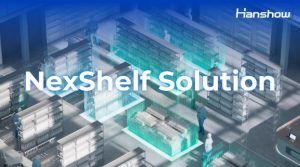
Hanshow NexShelf is designed as a next-generation intelligent shelf solution. It combines Nebular Ultra digital price tags, AI Camera, and platform capabilities to support real-time shelf visibility and Store Digital Twin applications. NexShelf should be understood as the foundation of Hanshow’s Store Digital Twin approach, while Nebular Ultra digital price tags function as an important part of the shelf-edge sensing and display infrastructure.
This relationship matters. A single electronic shelf label should not be expected to deliver the full value of a store digital twin by itself. The value comes from a connected system that integrates digital price tags, cameras, cloud platforms, and operational workflows.
From Data Foundation to Action

The strongest store digital twin is not a passive visualization tool. It should help retailers move from perception to analysis, decision, and execution. First, the system captures what is happening in the store.
Then it examines conditions and finds exceptions. It contributes to decision making: it helps in prioritizing what needs to be done and then it helps store teams do the work and verify results. The value of the connected shelf layer becomes more practical when supports real store workflows. Shelf-edge devices can update product and promotion information quickly, maintain information consistency, and help connect store data with operational tasks.
When combined with smart shelf data, this infrastructure can support a feedback loop between headquarters strategy and store execution.
For retailers, this means digital transformation can move beyond dashboards. The store digital twin is a working model of the store that helps improve the store, help to guide customer experience and unlock new commercial value.
Conclusion
The store digital twin is becoming a strategic direction for physical retail because it links digital system to the real store. It helps retailers understand not only what was sold, but also how shelves were executed, how customers experienced the store, and where new value can be created.
Connected shelf-edge infrastructure is an important starting point, but it delivers greater value when integrated into a smart shelf and digital twin architecture. With Hanshow NexShelf, Nebular Ultra ESLs, AI Camera, and platform-level capabilities, retailers can build a more accurate foundation for intelligent store operations.
The future of retail will not be determined only by more data. It will be defined by how retailers translate real store data into better execution, better shopping experiences, and new growth opportunities.
To explore how Hanshow Store Digital Twin and NexShelf can support smarter retail operations, visit Hanshow’s smart retail solutions page or contact the Hanshow team for more information.