

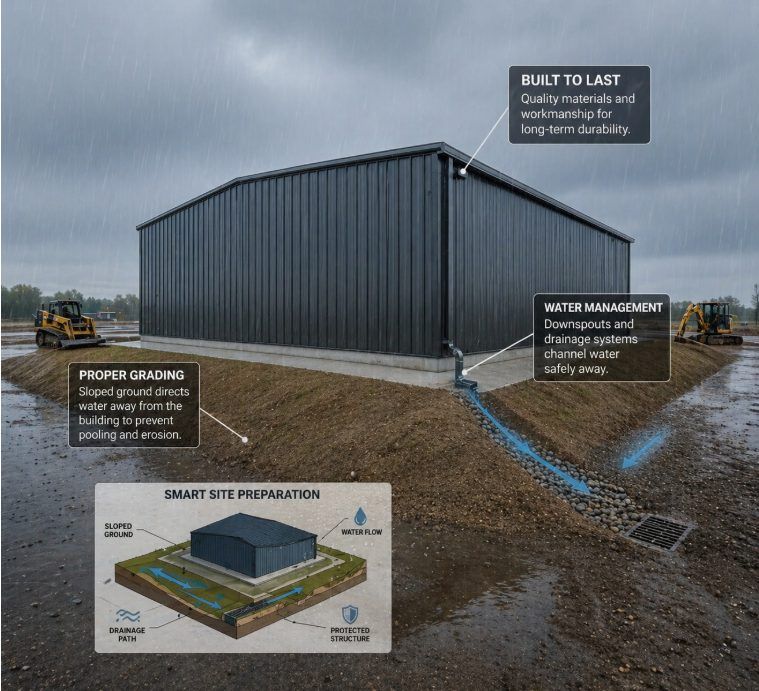
Most problems with metal buildings do not start with the steel. They start with the ground. Poor drainage, weak soil, and rushed site prep can shorten the life of a building that should last decades. If you want a structure that stays level, dry, and easy to use, you need to focus on what happens before the building kit ever arrives.
The first step is understanding your site. Soil type matters more than most people expect. Clay holds water and expands. Sandy soil drains well but can shift under load. Rocky soil can be stable but harder to grade. A simple soil check, even a basic one, gives you a clearer picture of what you are working with. In some cases, a geotechnical report makes sense, especially for larger metal buildings or sites with a history of settling.
Grading is where everything starts to take shape. The goal is simple. Water should move away from the building, not toward it. That means creating a slight slope around the pad. Even a small pitch makes a difference during heavy rain. Without it, water can pool near the foundation, which leads to erosion, moisture problems, and long-term structural stress.
A properly prepared pad is the backbone of the project. Most metal buildings sit on a concrete slab or a pier system. For slabs, the base layer is critical. Compacted gravel provides stability and helps with drainage. Skipping proper compaction is one of the most common mistakes. It can lead to cracks, uneven floors, and doors that stop lining up over time. Taking the time to compact in layers creates a stable base that supports the slab for years.
Drainage systems add another layer of protection. In areas with heavy rain, a French drain or perimeter drain can move water away from the building footprint. Downspouts should direct water well away from the slab, not just a few inches past the wall. Extensions or underground piping can keep runoff from cycling back toward the structure.
Gutters may seem like a small detail, but they play a big role. Metal roofs shed water quickly. Without gutters, that water drops straight to the ground and can erode soil along the perimeter. Over time, that erosion can undermine the edge of the slab. A simple gutter system with proper discharge points helps control that flow and protects the base of the building.
Another detail that gets overlooked is the transition between the slab and the surrounding ground. This edge should be clean and protected. Some builders use gravel borders to reduce splash back during rain. Others add small retaining edges or curbs. The goal is to keep soil from washing against the building and to reduce moisture contact with the lower panels.
Access paths and driveways also affect drainage. If a driveway slopes toward the building, it can funnel water directly to the entrance. That creates puddles at doors and increases the chance of water getting inside. Adjusting the grade or adding a shallow channel drain can solve this before it becomes a daily annoyance.
Ventilation under the roof and within the structure ties back to moisture control. Even with perfect exterior drainage, humidity can build inside. Ridge vents, wall vents, or mechanical ventilation help move moisture out. This reduces condensation on interior surfaces and keeps tools, vehicles, and stored materials in better condition.
For metal buildings used as workshops or garages, interior drainage can matter too. If you wash vehicles or equipment inside, consider floor drains or sloped slabs that guide water out. Planning this early avoids retrofits that are expensive and disruptive.
Site preparation also includes thinking about future use. If you plan to expand or add another structure, leave room for drainage paths and access. Blocking natural water flow with a new addition can create problems that were not there before. A simple site plan that looks ahead can prevent that.
The bottom line is straightforward. Metal buildings in Elk Grove are strong, but they rely on a stable and dry foundation. Good drainage, proper grading, and a well-built base keep the structure performing the way it should. Skipping these steps often leads to repairs that cost more than doing it right the first time.
