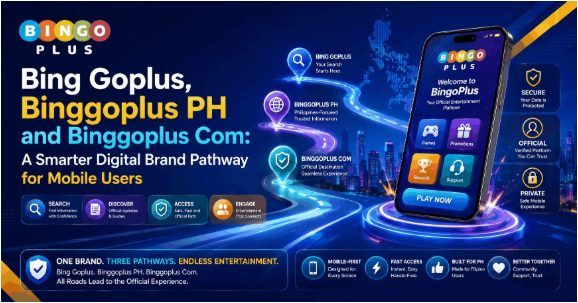
The search pattern around bing goplus, binggoplus ph, and binggoplus com shows how modern users interact with digital entertainment brands when they want speed, clarity, and confidence.
In the Philippines, many users search from mobile devices.They often type fast, use shortened brand phrases, and expect the right result even when the spelling is not exact.
That makes Binggoplus an interesting case for studying digital brand recognition.It shows how a company can build clearer information pathways for users who want official updates, local relevance, and a reliable place to understand the brand.
Why Binggoplus Search Variations Matter
Brand searches are not always clean or perfectly typed.A user may remember the sound of a brand but not its exact spelling.
That is why variations such as bing goplus and binggoplus com can appear in real user behavior.
What These Variations Usually Mean
These searches often suggest that users want:
- A recognizable brand destination
- Clear official information
- Philippine-related context
- Mobile-friendly browsing
- Updated company resources
- A simple path from search to action
- Confirmation that they are viewing the right brand
The spelling may vary, but the intent is usually stable.Users want certainty.
Binggoplus PH and Local Digital Trust
The phrase binggoplus ph adds a local layer to the brand journey.It signals that users are not only searching for a name; they are looking for relevance in the Philippine market.
Local trust is built through small but important signals.A page that feels current, clear, and locally aware can reduce user hesitation quickly.
What Philippine Users Often Expect
Users in the Philippines commonly look for:
- Fast mobile loading
- Clear brand naming
- Localized platform information
- Easy-to-read content
- Simple navigation
- Updated notices
- Consistent visual identity
- A direct route to official resources
When these details are present, the brand feels easier to understand.When they are missing, users may return to search and compare other results.
The Role of Digital Identity in Brand Recognition
A modern digital brand needs more than a memorable name.It needs a stable identity across search results, content pages, mobile layouts, and official destinations.
Binggoplus-related searches show why this matters.Users may arrive through different keyword variations, but they should still reach a consistent brand experience.
Strong Digital Identity Includes
A clear brand identity usually depends on:
- Consistent naming across pages
- Official-looking design
- Recognizable logo placement
- Clear content hierarchy
- Mobile-first layouts
- Updated information pages
- Simple internal pathways
- Supportive resource content
These elements help users feel that they are in the right place.They also help reduce confusion caused by similar-looking third-party pages.
Bing Goplus as a Typing Behavior Example
The term bing goplus looks like a separated or imperfect version of the brand phrase.This type of query is common when users search on mobile keyboards.
It does not always mean the user is looking for something different.Often, the user is trying to reach the same brand but types the phrase in a more casual way.
Why Brands Should Expect Imperfect Searches
Mobile search behavior is shaped by speed.
Users may:
- Miss spaces
- Add extra letters
- Separate a brand name incorrectly
- Use autocomplete suggestions
- Type from memory
- Search with partial brand phrases
- Mix brand names with location terms
A strong brand experience should account for this behavior.The goal is to guide users back to accurate information without making them work harder.
Binggoplus Com and Destination-Based Intent
The phrase binggoplus com suggests that a user may be looking for a direct web destination.This is different from a broad brand search.
The user may already know what they want.They just need the most reliable place to go.
What Destination-Based Users Care About
People using a web-style query often want:
- The main official source
- Current brand information
- A clean page experience
- No confusing redirects
- Mobile compatibility
- Clear page titles
- Trustworthy navigation
- A simple next step
This is where an organized information center becomes valuable.It can help users move from uncertain search behavior to a clearer brand path.
Why an Information Hub Matters
A brand information hub can act as a public reference point.It helps users understand updates, mobile access, company direction, and platform-related guidance.
For Binggoplus-related searches, this kind of hub can reduce scattered information.It gives users one reliable area to explore the brand context.
What a Useful Hub Should Provide
A strong information hub should include:
- Fresh brand updates
- Short and readable articles
- Local market context
- Mobile guidance
- Clear internal links
- User education content
- Company-related announcements
- Easy navigation to important pages
The best information pages do not overload users.They answer the next question before confusion appears.
Hypothetical Case Study: A Mobile User in Davao
Imagine a user in Davao who hears the brand name from a friend.The user remembers the sound but types bing goplus into a mobile browser.
The first need is simple.The user wants to identify the correct brand.
Later, the same user searches binggoplus ph to check whether the brand has Philippine relevance.At this stage, local context becomes more important than a long company description.
A few days later, the user searches binggoplus com because they want a more direct path.This short journey shows how spelling variation, local relevance, and destination intent can all belong to the same user behavior.
The Business Value of a Clear Brand Path
When users can find the right information quickly, the brand benefits.Less confusion means stronger recognition and fewer lost visits.
For a digital entertainment company, clarity is part of the product experience.Users judge the brand before they even reach the main platform.
Clear Pathways Can Support
A well-organized brand path can help with:
- Better user confidence
- Stronger brand recall
- Fewer wrong-page visits
- Cleaner mobile journeys
- More consistent messaging
- Easier access to updates
- Better first impressions
- Stronger returning-user behavior
This is especially important when users rely on mobile search.Every extra step can become a reason to leave.
Common Industry Pain Points
Many digital brands face the same issue.Their names appear across blogs, directories, social pages, and comparison sites.
That can make it hard for users to know which page to trust.
Problems Users Often Encounter
Common friction points include:
- Similar brand spellings
- Outdated descriptions
- Weak mobile formatting
- Unclear official references
- Repeated information
- Missing local context
- Poor page structure
- No obvious next step
These issues create unnecessary doubt.A clear information hub can reduce that doubt by giving users a more stable reference point.
How Binggoplus Can Support Mobile-First Users
Mobile users need pages that are simple, fast, and readable.They should not have to zoom, scroll endlessly, or guess where to tap.
A better mobile experience helps users move through the brand journey with less effort.
Mobile-Friendly Brand Elements
Helpful mobile elements include:
- Short paragraphs
- Large tap targets
- Clear headings
- Fast loading
- Simple menus
- Direct links to key resources
- Consistent brand visuals
- Easy return paths
These details may look small, but they shape trust.A clean mobile experience makes a brand feel more prepared and professional.
Natural Anchor Context for the Brand Information Hub
For readers trying to understand how a Philippine digital entertainment brand can support imperfect search behavior such as bing goplus, give local users clearer context through binggoplus ph, and help destination-focused visitors who type binggoplus com find reliable updates, mobile guidance, and official brand information without moving through scattered third-party pages, the most practical next step is to visit https://bingoplus.com/blog/, because a structured content hub can connect spelling variations, local discovery, and brand education into one clearer user pathway.
What Digital Brands Can Learn From This Model
Binggoplus shows that brand recognition is not always neat.Users search in different ways, especially on mobile.
A strong brand does not ignore these variations.It builds information pathways that help users recover from uncertainty.
Practical Lessons
Digital brands can learn several useful points:
- Spelling variations are normal user behavior.
- Local terms show market-specific interest.
- A content hub can reduce confusion.
- Mobile layout affects trust.
- Consistent naming improves recognition.
- Clear navigation keeps users moving.
- Updated information helps returning visitors.
The strongest brand paths feel simple.Users should not need to think too hard about where to go next.
Closing Thoughts
Binggoplus-related searches reveal a practical truth about digital behavior: users want reliable information, even when they type imperfectly.
Terms like bing goplus, binggoplus ph, and binggoplus com may look different, but they point toward the same need.People want a clear brand destination, local relevance, and a mobile-friendly experience that feels trustworthy.
When a digital entertainment brand builds a clean information hub and keeps its public identity consistent, it becomes easier to find, easier to understand, and easier to return to.