

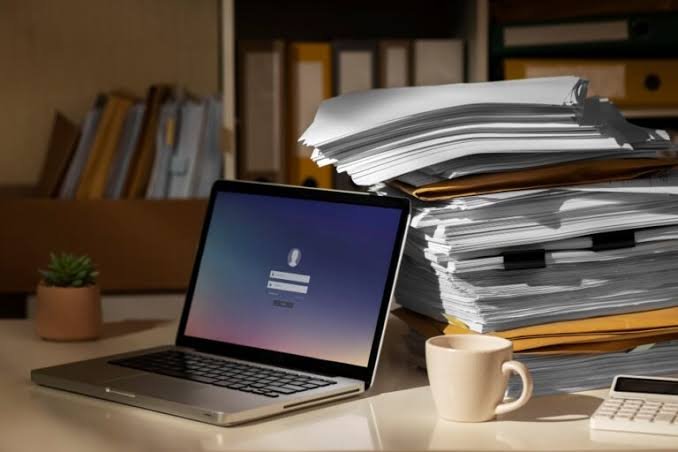
Over the past century, we’ve completely changed the way businesses work. And shifting to the digital world was a huge part of that. Realistically, we always focus on growing our companies and streamlining or finding more efficient systems. And with digital financial records, that process becomes a lot easier. For the longest time, people have been using paper documents, but those were difficult to handle and managing them has become inherently difficult. Shifting to the digital world brings many benefits, as you can notice below.
Efficiency and cost
Paper is quite expensive and using paper documents involves printing, using envelopes, storage like filing cabinets, office storage contracts and so on. It’s way more effective to shift towards a digital system. Not only can you make bank statements digitally, but storing everything is way more effective. Going with a paperless system eliminates clutter, and it can help you store documents more effectively. In the end, your bottom line is improved, costs are lowered, and your business runs more efficiently.
Accuracy and automation
One of the main upsides with a paperless system is that you can automate things. Using paper documents relies on human transcription, and humans are known to make mistakes. Digital records help reduce that issue and risk. Instead, you automate the process, with tools like OCR and machine learning. It’s more accurate, effective, and it can be performed at any given time. It delivers efficiency, and the value you get here is impressive.
Regulatory and legal acceptance
For a very long time, it was difficult to have a paperless system due to legal hurdles. Nowadays, things are better, since regulators have made it easier to shift towards a paperless system. Governments have gone further to permit digital records and in some countries, those have become mandatory. Electronic tax filing is the norm in many places, and it’s all much easier to track. So yes, a digital system is seen as the prime solution, which is extremely helpful and powerful.
It’s also important to keep in mind that the pandemic has accelerated things quite a bit, too. For example, companies were unable to transmit documents to one another via paper systems, since there were lockdowns. That made paperless systems much sought after, which in turn streamlined things in better ways than you might have expected. Granted, the pandemic didn’t create the shift on its own, but it was a major contributor to expanding paperless systems. And once companies saw the upsides, many of them decided to not go back at all.
Improved security
The problem with paper systems is that they are prone to all kinds of security issues. If someone gets access to the storage facility where documents are stored, they can copy, destroy or damage those documents, maybe even alter them. Also, durability is a concern, because paper degrades and it can fade within a few years. With digital versions, you have the best, crispest and highest quality version indefinitely.
Additionally, digital records also offer the benefit of using encryption. You can back up the documents and thus have multiple copies. Plus, being able to use the cloud for extra versions makes it much easier to access from anywhere. It also gives redundancy benefits, in case you delete something by mistake.
Accessibility
Digital records also provide better accessibility. That’s because digital files can be accessed from a phone, shared with anyone anywhere in the world and so on. They can also be searched, which can be handy when you have multi-page documents. It becomes a much better solution than expected, and it gives you outstanding value.
Having the option to search your records and find any content in no time, that’s a no-brainer and it can save a huge amount of effort and time. It just goes to show the consistency and ease of use that it can deliver, along with how much it can help a business. After all, being able to sift through files fast can save a huge amount of time, and it’s certainly worth your time.
Sustainability
Then there’s also the environmental aspect. Sure, it could be handy to have paper records, but then again, that means paper production is consuming water, trees and energy. Going paperless will prevent that, and it gives you much better results. The upside is that you can be sustainable, run a great business, and not worry about any issues. It truly is the best of both worlds, as you can have a more efficient business, while also protecting your planet.
Risks and challenges
Of course, going digital doesn’t automatically mean you are out of the woodwork. The problem with going fully digital is that you still encounter plenty of risks, as you will notice below:
- You can deal with cybersecurity threats, which could be problematic.
- Additionally, you rely on tech, and that means there will be discontinued software, expired subscriptions, lost passwords, etc that can lead to issues.
- Digital files can be altered, whereas paper files are much harder to alter without knowing.
- The format obsolescence is also a problem, and it’s important to understand that.
- Retention requirements are also something to keep in mind. Tax regulators and authorities will require records to be kept for a certain timespan. Digital systems need a clear set of retention policies, so the records are not deleted too early, nor do you end up keeping those things for a very long time.
Conclusion
Shifting to digital financial records can be a great idea, whether you want to track your income, focus on managing your company’s finances and so on. Naturally, going digital can provide a major shift within your business. That’s why you want to gradually make such a change. Thankfully, a shift towards being paperless and fully digital can be great for your business. However, it’s important to understand the process, how to do this safely, and to implement the right safeguards. Done right, that can be incredible, and it can boost the efficiency of your business.
