

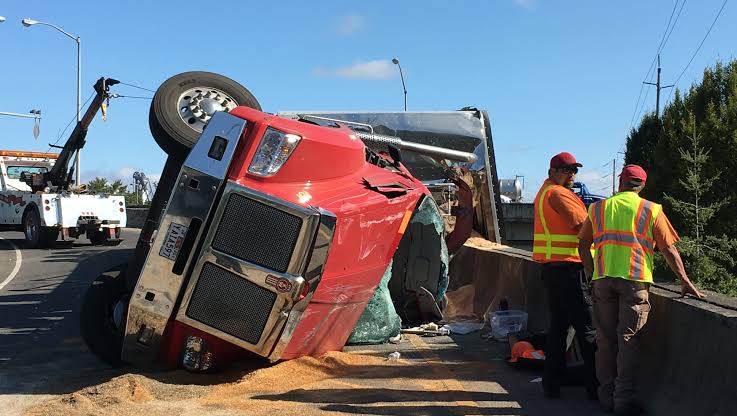
Truck accidents aren’t always as straightforward as they seem. Car collisions typically involve only two parties—the driver and the vehicle—but collisions involving commercial trucks can involve several people and organizations working in the background. Although many tend to think that the truck driver is at fault, investigations often show that there’s a more complex situation at play. There is a possibility that there are several parties involved in an accident, such as trucking companies, maintenance companies, cargo loaders, vehicle manufacturers, and more.
Once the victims start seeking damages, it is crucial to identify all potentially liable parties. An Oklahoma City Truck Accident Lawyer may seek to investigate not only the driver’s actions, but the actions of the business and individual involved in the operation of the truck. Knowing the different parties that could be involved in an accident can help you to understand why truck accident claims are likely to be more complicated than other personal injury cases.
Distinct Difference Between Car and Truck Accident
Usually, in a motor vehicle collision, the claim is for the fault of one or two drivers. Evidence can be related to speeding, distracted driving, failure to yield, etc. Commercial trucking accidents are distinct as trucks travel through a business network and service network. One company can own a truck, drive it with another company, have it maintained by a third-party, and be loaded by a completely different one.
For this reason, it may be necessary for investigators to expand beyond the scope of events on the roadway and investigate decisions that were made well before the crash. There is a time when the truck driver is not the only one to blame.
Truck drivers can contribute to accidents in so many ways, including:
- Distracted driving
- Fatigued driving
- Speeding
- Aggressive driving
- Impaired driving
A Lack of Adherence to Traffic Rules
But it can be easy to concentrate on the driver and neglect other potential factors. For instance, a truck company might require a driver to work unrealistic hours in which to make deliveries. In another case, it could be that the driver did not have time to react to a crash and had mechanical issues that stopped them. Because of this, circumstances of the crash are usually explored.
Maintenance providers can have a part in accidents
The heavy loads and the long distances they travel mean that commercial trucks will need constant inspections and maintenance. Some common mechanical failure contributing factors to accidents are:
- Brake malfunctions
- Tire blowouts
- Steering problems
- Lighting failures
- Suspension defects
In certain instances, trucking firms send some of their vehicles to third party repair shops for maintenance. Repairing incorrectly or not performing repairs at all and failing to discover serious problems can lead to an accident and force those responsible for the repairs to share some liability. The records of maintenance can be crucial when trying to determine who is liable in an investigation of liability.
Cargo Loading Companies Can Share Responsibility
In fact, the loading of cargo on a commercial truck could heavily affect the safety of the truck. When cargo is not loaded the following can occur:
- Rollovers
- Jackknife accidents
- Cargo spills
- Loss of the ability to read a map or map reading instructions
- Increased stopping distances
Changes in cargo distribution while the truck is in motion can change the truck’s center of gravity and cause the truck to be hard to control. If the loading errors have caused an accident, the company that was in charge of loading the goods could be involved in the legal claim. This adds another layer of complexity, not often seen in regular traffic accidents.
The Effects of the Independent Contractor
A lot of times, the trucking industry offers an employment arrangement with independent contractors instead of the regular employee. This can become complicated when it comes to questions of liability since several business entities could be at play when operating a single truck.
For instance, a motor carrier could be an independent contractor and pick up products for a bigger firm. While the truck is being leased, the truck itself could be rented out by another organization. Who has control over the driver, the vehicle or the transportation process becomes a key issue in the case.
Evidence can frequently reveal a greater story
A truck accident may initially be thought to be caused by one error or omission by a driver. But, so often, it is found that there were a series of events that include several decisions by various parties. Maintenance logs could reveal unaddressed maintenance problems. The schedule may be evident in the company’s correspondence. Loading can be revealed by cargo documentation. There may be insufficient training or supervision on the job. All the evidence helps to paint a clearer picture of the cause of the incident.
Sometimes a truck accident is not a single wrong, but a series of misfortunes which accumulated over time. Oftentimes, truck accidents are not caused solely by driver negligence. There are a series of companies, contractors, maintenance providers and others whose decisions can impact roadway safety behind each commercial vehicle. Responsibility for an accident can be much greater than the person behind the wheel.
This complexity makes truck accident claims different from typical car accidents, in that they must be investigated to a greater degree. It’s important to list all potentially liable parties in order to uncover the complete picture of what’s really happening after a collision, and give victims a chance to seek compensation from all parties that could have caused the accident. In many instances, it is just as vital to determine who caused the accident as to determine how the accident occurred.
