Business literature has spent decades celebrating the hacker-founder archetype: the college dropout who ships a product in a dorm room and outmaneuvers everyone through sheer technical intuition. Less examined is a different profile that keeps producing durable companies, one built not in dorm rooms or accelerator cohorts, but on practice fields and competition circuits. Athletes who transition into entrepreneurship carry a set of instincts that are difficult to teach in a business school classroom and harder still to develop inside a corporate career track.
What Competition Actually Trains You to Do
Competitive athletics, at any serious level, trains a specific cognitive skill that most business environments do not: the ability to make high-stakes decisions in real time, under conditions that cannot be controlled, while managing the physical and emotional weight of the outcome. That experience shapes how a person processes pressure long after the competition ends. It is not a metaphor. It is a trained response pattern.
The standard founder journey, even a successful one, tends to build a different skill set. Product development, fundraising, hiring, and revenue growth each carry their own pressures, but they unfold across weeks and quarters, with room for deliberation and course correction. The compressed decision-making that athletics demands is not a natural feature of building a company. Athletes who become founders tend to import it anyway, which gives them a different relationship with uncertainty than most of their peers.
Discipline as Infrastructure, Not Inspiration
One of the more durable misconceptions in startup culture is that discipline is a personality trait, something a person either has or lacks. For athletes, discipline is structural. Training schedules, recovery protocols, film sessions, performance reviews: none of these are optional, and none of them depend on motivation. The work happens because the system demands it, and the system exists because inconsistency produces compounding losses over a long season.
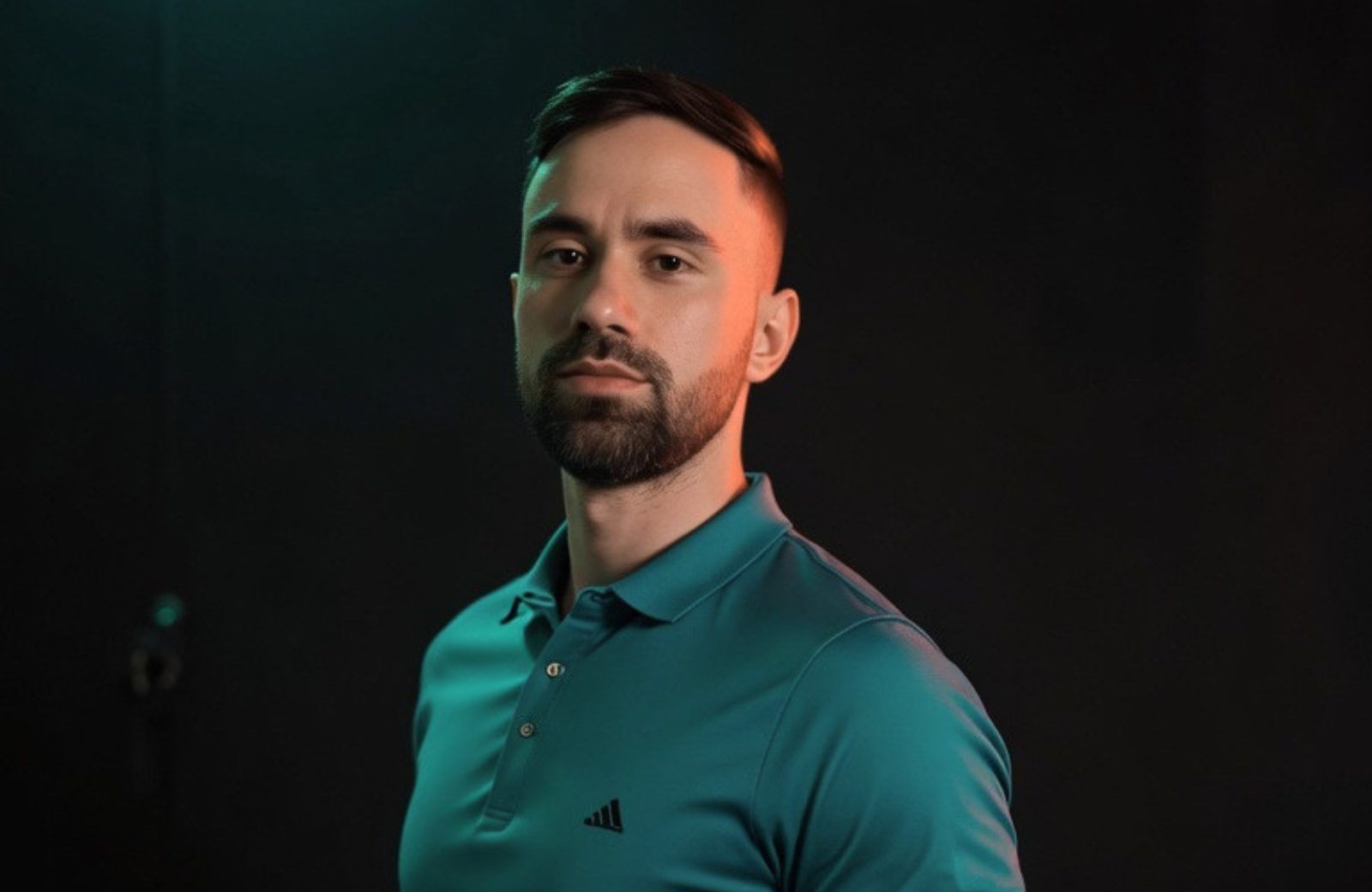
Pablo Gerboles Parrilla, who competed as a Division I golfer before founding multiple technology ventures, has spoken directly about how that structural discipline carried over. His morning routine, meditation, movement, focused work blocks, is not described as a productivity hack. It is framed as the same kind of non-negotiable preparation that competitive sport requires. The output changes but the underlying architecture does not.
“Consistency beats intensity,” Gerboles Parrilla has said. “It’s not about one great shot or one big win; it’s about showing up, making calculated moves, and adapting when conditions change.” That framing maps precisely onto what actually sustains a business through its difficult years, which is not a single breakthrough, but the accumulation of reliable execution across hundreds of ordinary days.
How Athletes Process Failure Differently
Every athlete loses. At the highest levels, they lose repeatedly, publicly, and against opponents who have also committed years to the same pursuit. What competitive sport provides, and what most other professional paths do not, is a structured framework for processing that loss and returning to competition without letting the result redefine the person. Athletes who reach serious levels of competition have typically developed that framework not as theory but as practice.
This matters in business because failure arrives differently there. A product launch that misses its targets, a key hire who does not work out, a client relationship that ends badly: these carry emotional weight that can distort subsequent decision-making if a founder does not have a reliable way to metabolize disappointment without internalizing it as permanent judgment. Athletes generally do. The mechanism is not optimism. It is the repetition of having lost and kept going anyway.
The Long Game as Default Setting
Startup culture has a complicated relationship with time horizons. The emphasis on speed, on moving fast, shipping early, iterating constantly, can inadvertently train founders to optimize for short cycles at the expense of durability. Athletes who have competed in sports with long seasons or individual events spread across a calendar year tend to carry a different sense of time. They understand that small decisions compound, that good positioning early makes difficult moments later more manageable, and that protecting energy over a sustained period outperforms burning it all in a single push.
Gerboles Parrilla has described this orientation for building companies. “In golf, you’re playing a long game,” he has noted. “Every decision matters, and the smallest mistakes can compound. Startups are the same.” The deliberateness that competitive sport requires, the awareness that a poor decision in the middle of a round can cost more than it appears to in the moment, is exactly the kind of strategic patience that most first-time founders have to learn the hard way.
Coachability and the Limits of Individual Genius
One trait that competitive athletics consistently develops is the ability to receive high-quality feedback and act on it without defensiveness. Athletes work with coaches, analysts, and training partners whose entire purpose is to identify what is not working and surface it clearly. A competitive athlete who resists that input does not improve. The relationship between performance and honest feedback becomes so direct that the resistance gradually erodes.
Founders frequently struggle with this, particularly in the early stages when the company is closely identified with the founder’s own ideas and judgment. Critical feedback about a product or strategy can register as a personal critique in ways that make it difficult to process cleanly. Athletes, having spent years in environments where performance data is the primary language, tend to separate their identity from their output more efficiently. They have learned to ask what the result is telling them rather than how it reflects on them.
Gerboles Parrilla’s approach to building teams reflects this orientation. Through his marketing operations and technology ventures, he has consistently prioritized bringing in specialists who have already done what the business needs, rather than building internally from generalists. “Founders shouldn’t just delegate,” he has argued. “They should understand, then delegate with purpose.” That balance, knowing enough to evaluate, being secure enough to defer, is a skill that competitive environments tend to build and insular ones tend to erode.
Calm Under Pressure as a Learnable System
The startup world fetishizes high-pressure environments while rarely examining what equips someone to perform well inside them. The assumption tends to be that certain people handle pressure and others do not, as though this were fixed. Elite athletes understand it differently. They train their nervous systems the way they train their physical skills: deliberately, systematically, and with attention to recovery as well as exertion.
Gerboles Parrilla’s approach to decision-making under pressure draws directly from this tradition. His practice of structured breathwork and meditation during high-stress periods is not presented as a wellness habit but as a performance input, the same category of tool as training film or a pre-competition routine. “If the plan was made in peace, you don’t change it in panic,” he has said. That steadiness, the ability to return to a considered position when conditions become chaotic, is exactly what differentiates founders who hold their strategy through a difficult quarter from those who abandon it under pressure.
What the Research and the Results Both Suggest
The evidence for athlete-founders performing well is accumulating beyond anecdote. Studies examining leadership resilience and founder grit increasingly point to prior competitive experience as a meaningful predictor of sustained performance under adversity. The connection is not mysterious. The environments that produce competitive athletes and the environments that produce resilient companies share the same underlying demands: delayed gratification, tolerance for public failure, sustained effort across long time horizons, and the capacity to execute under conditions that punish emotional reactivity.
None of that means athletic background is sufficient on its own. Technical knowledge, market understanding, and strategic judgment all matter independently. What competitive experience tends to provide is the container in which those skills can be applied most effectively, a trained baseline for showing up consistently, processing difficulty without being derailed by it, and making decisions that hold up across the full length of a game rather than just within any single moment of it.
Gerboles Parrilla’s trajectory from the competition circuit to a portfolio of technology ventures reflects something that is more pattern than anomaly. The instincts built across years of competitive sport did not simply transfer to business. They became the foundation that made everything else possible to build on. That foundation, durable under pressure, calibrated to the long game, and honest about what it takes to keep improving, turns out to be exactly what resilient companies are made of.

 By Olivia