

Trying for a baby can feel simple at first. You track dates, make lifestyle changes, listen to advice from family, and hope the next cycle brings good news.
Then months pass.
For many couples, this is when the questions begin. Is ovulation happening properly? Is sperm quality affecting conception? Is age playing a role? Or is everything looking normal, but pregnancy still not happening?
Fertility specialists often discuss IUI treatment at this stage. IUI, or intrauterine insemination, is one of the early fertility treatments suggested when natural conception needs some medical support, but the couple may not need IVF right away. It is less invasive than IVF and is usually planned after a proper fertility evaluation.
IUI Treatment in India, more couples are reaching out for fertility advice earlier than before. Delayed parenthood, PCOS, hormonal concerns, work stress, and male fertility issues are now openly discussed. That is a good shift. Early guidance can save time, reduce confusion, and help couples choose a treatment that actually fits their condition.
What Does IUI Treatment Mean
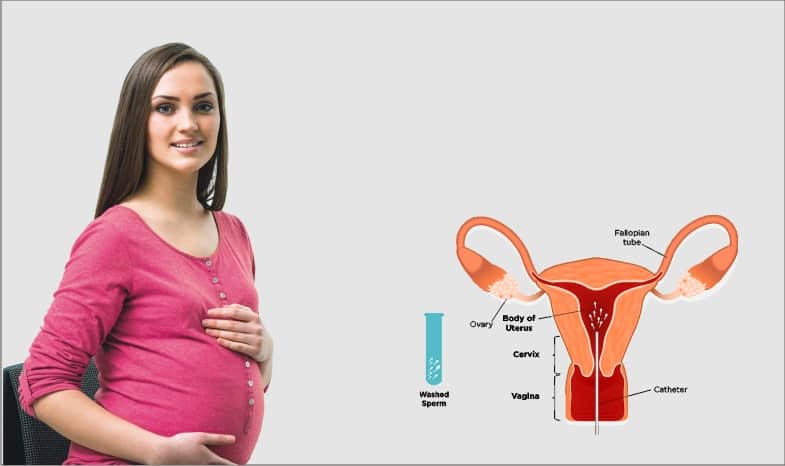
IUI is a fertility procedure where washed and prepared sperm is placed directly inside the uterus around the time of ovulation. The aim is to bring healthier sperm closer to the egg, at the right time.
That is the basic idea.
During natural conception, sperm have to travel through the cervix and uterus before reaching the fallopian tube. Sometimes that journey becomes harder because of mild sperm issues, cervical mucus problems, irregular ovulation, or unexplained infertility. IUI helps by reducing some of these barriers.
The treatment is usually done at a fertility clinic. It does not need surgery or hospital admission in most cases. The cycle may be natural or supported with ovulation medicines, depending on the patient’s condition.
For many couples, IUI becomes the first assisted fertility treatment before IVF is considered.
When Fertility Specialists Usually Recommend IUI
A fertility specialist does not recommend IUI just because a couple has been trying for a few months. The decision depends on age, reports, duration of infertility, ovulation pattern, sperm health, fallopian tube status, and past pregnancy history.
Sometimes IUI makes sense. Sometimes it does not.
This is why the first step is usually a detailed evaluation. The doctor may suggest blood tests, ultrasound monitoring, semen analysis, and tubal patency testing before deciding whether IUI is the right next step.
IUI for Unexplained Infertility
Unexplained infertility can be frustrating because the reports may look normal. The woman may be ovulating. The fallopian tubes may be open. The semen report may not show any major concern. Still, pregnancy does not happen.
Couples often find this harder to accept than a clear diagnosis. At least with a diagnosis, there is a direction.
In such cases, fertility specialists may recommend IUI because it improves both timing and sperm placement. The procedure places prepared sperm inside the uterus close to ovulation, which may improve the chances of fertilization.
This does not mean IUI guarantees pregnancy. No ethical fertility treatment can promise that. But for selected couples with unexplained infertility, IUI can be a reasonable first treatment before moving to advanced options.
IUI for Mild Male Infertility
Male fertility is a common part of infertility evaluation. Still, many couples delay semen testing because the focus usually falls on the woman first. That delay can cost time.
IUI may be suggested when sperm count, sperm movement, or sperm shape shows mild concerns, but the sample is still suitable after processing. During IUI, the semen sample is washed in the lab. Healthier and more active sperm are separated and used for insemination.
This can help in cases where sperm needs some assistance to reach the egg.
IUI may be considered for mildly low sperm count, reduced motility, mild morphology issues, or certain ejaculation concerns. But if the sperm count is very low or motility is severely affected, IUI may not be enough. In those cases, IVF with ICSI may be discussed.
The difference matters.
IUI for Ovulation Problems and PCOS
Irregular ovulation is one of the common reasons women struggle to conceive. PCOS is often involved, though it is not the only cause.
A woman may have irregular periods, delayed ovulation, or cycles where ovulation does not happen at all. In such cases, timing intercourse becomes difficult because the fertile window is unclear.
Fertility specialists may use ovulation medicines to help the ovaries develop a mature egg. The cycle is then monitored through ultrasound. Once the follicle is ready, IUI is planned around ovulation.
For women with PCOS, this approach can be useful when the fallopian tubes are open and semen parameters are suitable. The treatment still needs careful monitoring because over-response to medicines can sometimes lead to multiple follicles.
This is where clinic experience matters. The goal is not to push the body too hard. The goal is to plan safely.
IUI After Delayed Parenthood
Many couples in India now plan pregnancy later than previous generations did. Careers, financial planning, relocation, and personal readiness all play a part.
But fertility changes with age, especially for women.
After the mid-30s, egg numbers and egg quality may decline more rapidly. This does not mean every woman above 35 needs IVF immediately. It does mean doctors usually avoid waiting too long without evaluation.
A fertility specialist may recommend IUI if the woman has a reasonable ovarian reserve, open fallopian tubes, and no severe male factor infertility. If age is higher or ovarian reserve is low, the doctor may discuss IVF sooner because time becomes a real factor.
This is why two couples of the same age may receive different advice. Fertility treatment is not planned by age alone.

IUI for Cervical-Related Fertility Concerns
The cervix has a small but important role in natural conception. During the fertile window, cervical mucus usually helps sperm move into the uterus. But in some cases, the mucus may be too thick or hostile for sperm movement.
IUI bypasses the cervix.
Since prepared sperm is placed directly inside the uterus, cervical-related barriers become less relevant. This is one reason specialists may suggest IUI when cervical factors are suspected.
It is a simple idea, but it can make a difference in selected cases.
When IUI May Not Be the Right Treatment
IUI is helpful only when the basic conditions for fertilization are present. At least one fallopian tube should be open. Ovulation should happen naturally or with medical support. The processed sperm sample should be suitable for insemination.
If these conditions are not met, IUI may only waste time.
Fertility specialists may avoid IUI and discuss IVF or another treatment if both fallopian tubes are blocked, ovarian reserve is very low, severe male infertility is present, advanced endometriosis affects fertility, or multiple IUI cycles have already failed.
Age also changes the decision. For some couples, especially when the woman is older or previous treatments have failed, IVF may offer a more practical route.
Good fertility care is honest about this.
What Happens During an IUI Cycle?
An IUI cycle usually starts with a baseline assessment. The doctor checks whether the cycle is suitable and may prescribe ovulation medicines if needed.
Follicle monitoring follows. This means ultrasound scans are done to see how the egg is developing. Once ovulation is imminent, the clinic schedules the IUI.
On the day of IUI, the semen sample is collected and processed in the lab. The prepared sperm is then placed inside the uterus using a thin catheter. The procedure usually takes only a short time. Some women feel mild cramping, but most return to normal activity soon after.
The waiting period after IUI can feel longer than the procedure itself.
Couples are usually advised when to take a pregnancy test. Testing too early can create confusion, so it is better to follow the doctor’s timeline.
How Many IUI Cycles are Usually Advised?
There is no single answer for every couple. Some may conceive in the first cycle. Some may need more than one attempt. Some may be advised to move to IVF after a few failed cycles.
Doctors usually consider age, diagnosis, response to medicines, sperm quality, and emotional readiness before deciding the next step.
For younger couples with mild factors, a few monitored IUI cycles may be reasonable. For older women or couples with more complex fertility concerns, waiting through too many IUI cycles may not be the best use of time.
This part needs a frank conversation with the fertility specialist.
The Emotional Side of IUI Treatment
IUI may be less invasive than IVF, but emotionally, it can still feel heavy.
There is hope before the procedure. Then comes the two-week wait. Every small symptom starts feeling like a sign. If the result is negative, the disappointment can hit hard, even when the doctor had already explained the chances.
That reaction is normal.
Couples need clear communication during this phase. They should understand why IUI was recommended, what the realistic chances are, and when the treatment plan may need to change. Emotional support is an important part of fertility care. It often shapes how couples cope with the journey.
Why Personalized Fertility Care Matters
Two couples may both be advised to undergo IUI, but their treatment plans may look different.
A woman with PCOS may need ovulation support and careful follicle monitoring. A couple with mild male factor infertility may need a stronger lab focus on sperm preparation. A couple with unexplained infertility may need accurate timing and close cycle tracking.
This is why fertility clinics should not treat IUI like a standard package.
Femcare Fertility’s approach fits this need because the brand focuses on personalized fertility treatment, advanced reproductive support, experienced fertility specialists, and transparent care. For a treatment like IUI, that matters. The procedure may look simple on the surface, but the planning behind it determines whether the cycle is medically sensible.
The couple should know what is being done and why.
When Should Couples Consult a Fertility Specialist?
Many couples wait for years before seeking help. Sometimes they try home remedies, cycle-tracking apps, supplements, and general advice first. Some of that may support health, but it cannot replace fertility evaluation.
A consultation is usually advised if pregnancy has not occurred after 12 months of regular unprotected intercourse. If the woman is above 35, it is better to seek help after 6 months of trying. Earlier consultation is also sensible if periods are irregular, PCOS or endometriosis is known, miscarriages have happened before, or male fertility concerns are suspected.
Consultation does not always mean treatment starts immediately.
Sometimes it simply gives clarity. And for couples who are already worried, clarity itself can be a relief.
Ending note
IUI treatment is usually recommended when a couple needs medical support, but IVF may not be the first step. It can help in unexplained infertility, mild male infertility, ovulation disorders, cervical factors, and selected cases of delayed parenthood.
Still, IUI is not right for everyone. The right treatment depends on test results, age, ovarian reserve, sperm health, fallopian tube status, previous treatment history, and how much time the couple can safely spend on early treatment options.
For couples in India, the best first step is a careful fertility evaluation with a specialist who explains the options clearly. Good treatment does not rush. It also does not delay without reason.
