

Pick up your phone right now and think about how many things moved to get it to you. Conveyor systems in fulfilment warehouses. Automated sorting gates. Robotic arms in assembly lines. Adjustable equipment in the packaging facility. Most of that movement, the controlled, purposeful kind, is linear. Straight-line movement from one point to another, driven by a mechanism that most people have never examined even though they interact with it constantly.
Linear motion is older than electricity and more relevant now than it’s ever been. Understanding how it actually works changes how you see a surprising number of things.
The Conversion Problem
Rotary motion is what electric motors naturally produce. A shaft spins. That’s it. Converting that spinning into straight-line push and pull is the engineering challenge at the centre of most automated mechanical systems.
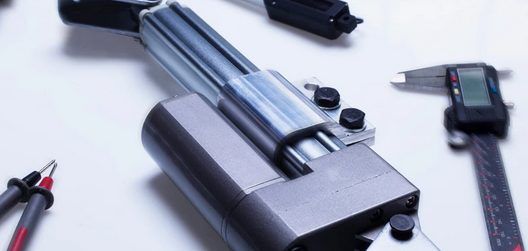
The lead screw is how linear actuators solve this. A motor turns a precisely threaded rod. A nut on that rod is prevented from rotating, so instead of spinning with the rod, it has to travel along it. As the screw turns one way, the nut moves forward. The motor reverses, the nut moves back. The rod attached to that nut extends and retracts.
That’s the whole mechanism. It sounds almost too simple. The sophistication is in the precision of the thread profile, the quality of the motor control, and the housing that protects everything and guides the movement without play or binding.
What this arrangement produces is something genuinely useful: controlled, repeatable, precise linear movement from a compact electrical input. The relationship between motor rotation and rod travel is fixed by the thread pitch. Control the motor precisely and you control exactly how far the rod moves and at what speed.
The Force-Speed Trade-Off Nobody Mentions
Here’s something that surprises people when they first encounter it. Force and speed trade against each other in lead screw mechanisms, and the relationship is direct.
A finer thread pitch, more threads per unit length, means more mechanical advantage. The motor has to turn more to move the rod a given distance, which means more force applied to the load for the same motor torque. But it also means slower movement. A coarser pitch moves the rod faster per motor revolution but with less force.
This is why you can’t just look at the force rating of a linear actuator and assume a higher rating is straightforwardly better. A higher-force unit at the same motor power will be slower. For lifting heavy loads where speed isn’t critical, that’s the right trade. For applications where cycle time matters, you might accept less force in exchange for faster movement.
Most furniture and building applications actually benefit from slower, more controlled movement. A bed that adjusts quickly feels abrupt. One that moves smoothly and deliberately feels well-engineered. The mechanism is the same. The thread pitch is different.
Self-Locking
This property doesn’t get mentioned enough in general discussions of linear motion, but it’s practically important.
With a fine enough thread pitch, the lead screw arrangement becomes self-locking. The geometry of the thread means the load can’t backdrive the mechanism when the motor isn’t powered. The rod stays where it is without the motor having to hold it there continuously.
For a hospital bed holding position while a patient sleeps, this matters enormously. For a sit-stand desk that shouldn’t drift down during the working day, same thing. For a hatch held open while someone works underneath it. The load is held mechanically by the thread geometry, not electrically by continuous motor energisation.
Not every actuator is self-locking and not every application requires it. But for the large category of applications where something needs to stay in a fixed position between movements without consuming power, it’s a property worth understanding and checking for in the specification.
Where You’re Already Encountering This
The applications are wider than most people realise once they start paying attention.
Electric recliners and adjustable bed bases use actuators to move sections of furniture precisely and quietly. The quality difference between a cheap mechanism and a well-engineered one is immediately obvious in how smooth and quiet the movement is. Car boot lids that open automatically, SUV tailgates that respond to a foot wave, these are linear actuations. Agricultural irrigation systems, flood barrier infrastructure, HVAC damper control in commercial buildings, automated window vents in greenhouses. All of it.
In healthcare the stakes are higher. Surgical tables, patient positioning equipment, rehabilitation devices. The precision and reliability requirements in these applications are exacting in ways that consumer applications aren’t, which is partly why medical-grade actuators are specified and tested differently from furniture-grade ones, even when the underlying mechanism is essentially the same.
The Control Layer
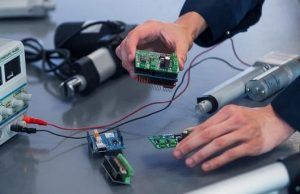
A linear actuator on its own just extends and retracts. The intelligence, the ability to stop at precise positions, respond to sensors, coordinate with other actuators, integrate into broader automation systems, comes from the control layer built around it.
The simplest control is a switch that reverses polarity to change direction. Add a relay triggered by a sensor or timer and you have automated operation. Add position feedback from a Hall effect sensor or potentiometer built into the actuator and you can stop at any point in the travel range rather than just at the ends. Connect that to a programmable controller and you can coordinate multiple actuators simultaneously, store preset positions, and integrate with building management systems or smart home platforms.
This scalability is what makes the technology so durable across such different applications. The same fundamental mechanism, scaled and controlled differently, handles a garden gate and a precision industrial positioning system. The mechanical principle doesn’t change. The sophistication of the control around it does.
Most of the purposeful movement in modern buildings, vehicles, and equipment runs on some version of this. Simple in principle. Consequential in application. Worth understanding properly.
