

Let’s face a hard truth about owning or managing a building: water is relentlessly lazy, yet perfectly destructive. It doesn’t need to break down your front door. It just waits. It sits on a flat roof, pools on a concrete balcony, and finds the path of least resistance through microscopic cracks. By the time you actually see a brown water stain on your interior ceiling, the damage to your structural integrity—and your maintenance budget—is already done.
Concrete might look like a solid, impenetrable rock, but on a microscopic level, it’s basically a hard sponge. It absorbs moisture. When that moisture reaches the internal steel rebar, the steel rusts, expands, and literally blows the concrete apart from the inside out—a process known in the industry as spalling.
To stop this slow-motion demolition, you need a barrier. But you don’t just need any barrier; you need one that moves, breathes, and fights back. For decades, the undisputed heavy hitter in this arena has been liquid-applied polyurethane waterproofing. Let’s look at exactly how this specific material works in the real world and why it remains the go-to defense mechanism for commercial and residential structures alike.
The Problem with Concrete and the Polyurethane Solution
To understand why polyurethane is so effective, you first have to understand the behavior of buildings. Buildings are not static objects. They move. As the sun beats down on a concrete roof during the day, the structure heats up and expands. At night, it cools down and contracts. Over time, the building settles into the earth.
All of this movement causes concrete to crack. It is completely natural and unavoidable.
If you coat a moving, cracking building with a rigid waterproofing material—like certain epoxies or cheap acrylics—that coating is going to snap right along with the concrete. Once the coating snaps, the water gets in.
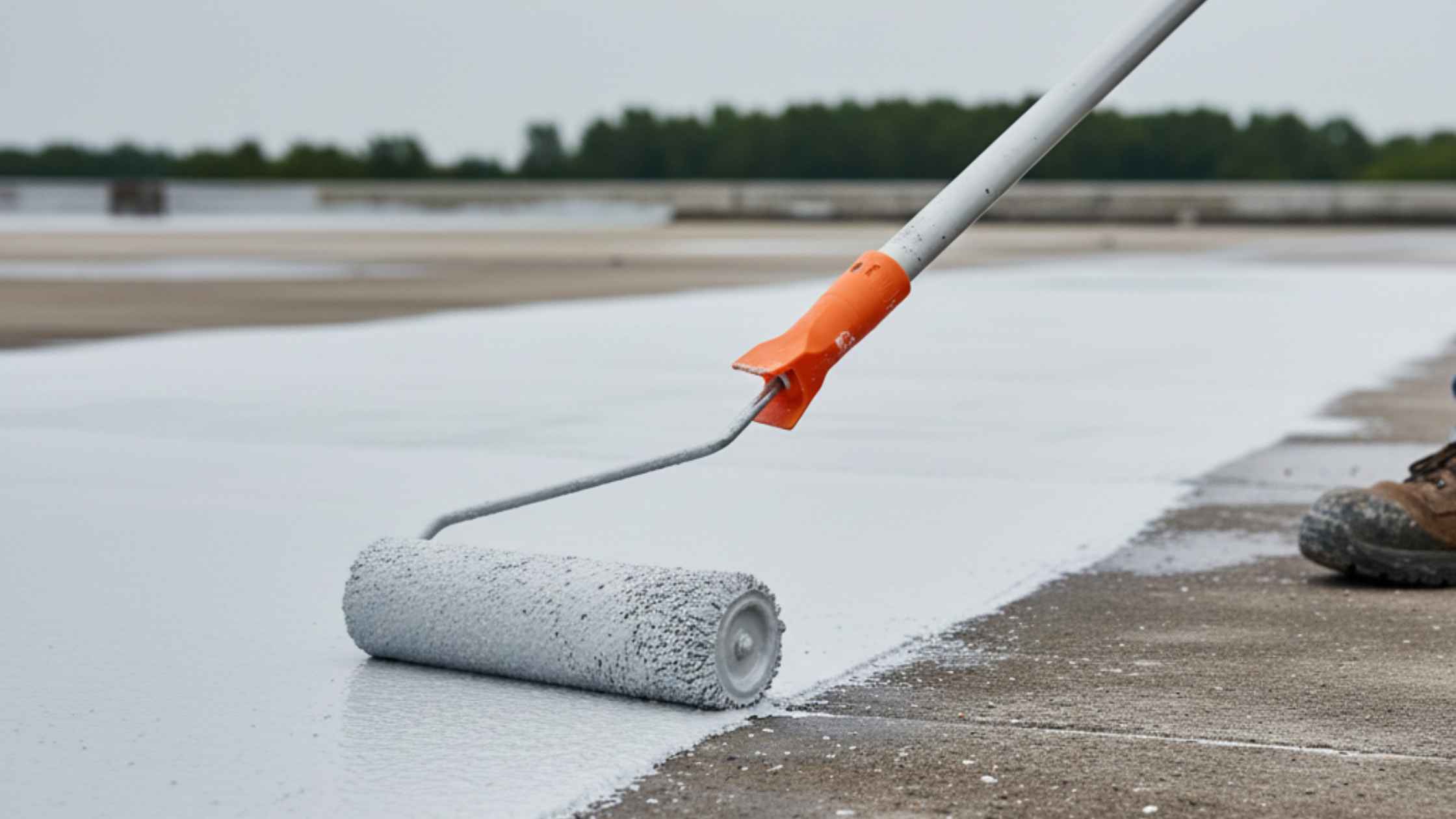
This is where polyurethane shines. When polyurethane is applied as a liquid, it chemically cures into a seamless, thick, rubber-like membrane. Its greatest asset is extreme elasticity. When the concrete beneath it cracks and pulls apart, the polyurethane membrane simply stretches like a heavy-duty rubber band. It bridges the gap without tearing, keeping the structural envelope completely watertight.
Setting the Standard: What the Experts Say
The roofing and waterproofing industry doesn’t just guess at what works. There are strict protocols. For instance, the National Roofing Contractors Association (NRCA – https://www.nrca.net/), which is widely regarded as the leading authority in the roofing industry, provides extensive guidelines on fluid-applied roof systems.
According to industry standards recognized by organizations like the NRCA, liquid-applied polyurethane is highly valued because it creates a monolithic (seamless) barrier. Traditional sheet membranes—like TPO or EPDM—have seams where the sheets are glued or welded together. In the waterproofing world, a seam is just a leak waiting to happen. Because polyurethane goes on as a liquid, there are zero seams, zero joints, and zero weak points for water to exploit.
The Mechanics of Protection: How It Actually Saves Your Building
So, what does this chemistry mean for your property? Let’s break down the tangible ways a proper polyurethane system defends your investment:
- Unmatched Crack-Bridging: As mentioned, its ability to stretch up to 500% or more of its original size means that even if a severe freeze-thaw cycle causes your concrete to shift violently, the waterproofing layer remains intact.
- Self-Leveling and Seamless Coverage: Water loves to hide around complex geometries—HVAC units on a roof, pipe penetrations, drains, and tight corners. Because polyurethane is liquid-applied, it flows into every crevice and wraps around these complex shapes, forming a custom-fit, watertight glove over the entire surface.
- Resistance to Standing Water: Unlike cheap acrylic paints that break down and wash away if water sits on them for too long, high-quality polyurethane can withstand ponding water. If your roof has minor drainage issues, the PU membrane will hold the line until the water evaporates.
- Vapor Permeability: This is a heavily misunderstood but critical feature. While polyurethane blocks liquid water from getting in, certain formulations are designed to be “breathable.” They allow trapped moisture vapor inside the concrete to escape as a gas. If a coating doesn’t breathe, trapped vapor will build pressure under the hot sun and eventually push the coating right off the concrete, causing massive blisters.
The Insider Secret: Aromatic vs. Aliphatic
If you are hiring a contractor to install a polyurethane system, you need to know a little bit of the insider science so you don’t get ripped off. A true, professional-grade polyurethane system is rarely just one bucket of liquid. It is usually a multi-layer system consisting of an “aromatic” base coat and an “aliphatic” top coat.
The aromatic base coat is the workhorse. It provides the thick, rubbery, crack-bridging waterproofing layer. However, aromatic polyurethane has a weakness: it hates the sun. If exposed to direct UV rays, it will eventually turn yellow, chalk up, and degrade.
To solve this, professionals apply an aliphatic polyurethane top coat. Aliphatic PU is highly UV-stable. It acts as sunscreen and armor for the base coat. It keeps the system looking pristine and protects the waterproofing layer underneath from sun damage and foot traffic. If a contractor offers you a suspiciously cheap quote, check to see if they are skipping the aliphatic top coat. If they are, your new roof will degrade in a few short years.
Execution is Everything: Look at the Field Work
You can buy the most expensive, highly-rated polyurethane in the world, but if the guys applying it don’t know what they are doing, it will fail. Proper waterproofing is 90% surface preparation and 10% application. The concrete must be mechanically ground to open its pores. It must be bone dry, and it must be properly primed before a single drop of polyurethane hits the deck.
If you are planning a major repair or a new build, you need to see exactly how serious contractors handle this process. You want to see the grinding, the patching, the multi-layered application, and the final flawless finish.
To get a clear, visual understanding of what high-end, professional polyurethane application actually looks like out in the real world, take a few minutes to review the extensive field portfolios at https://how04.com/waterproof/polyurethane/.
Yes, the site is managed by a top-tier South Korean waterproofing firm and the text is in Korean. But do yourself a favor and run it through your browser’s translation tool. What you will find is a masterclass in proper substrate preparation and meticulous coating application. Looking through their detailed site photos and process explanations will give you a perfect benchmark. When you eventually interview local contractors for your own building, you will know exactly what a clean, professional job is supposed to look like.
Final Thoughts on Protecting Your Asset
Ignoring waterproofing is like ignoring an oil leak in your car. It might drive fine today, but eventually, the engine is going to seize, and the repair bill will be catastrophic.
Water damage rots wood, rusts steel, destroys drywall, and invites toxic mold into your ventilation systems. Fixing a structural failure costs exponentially more than preventing one. Polyurethane waterproofing isn’t just an expense on a maintenance spreadsheet; it is an active insurance policy for your physical asset.
By utilizing a seamless, highly flexible, and incredibly durable polyurethane system, you are essentially wrapping your building in a protective shield that moves with the earth and fights off the weather. Don’t wait until you see the water stains on your ceiling. Protect the envelope, preserve the structure, and keep the elements exactly where they belong—outside.
