

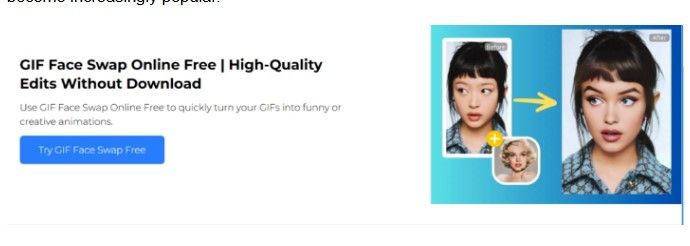
In today’s fast-evolving digital landscape, gif face swap is changing how people create and enjoy media. What once required specialized skills in film studios or research labs can now be done by anyone online. With just a few clicks, creators can insert themselves into movie scenes, customize marketing content, or make playful social clips. This shift highlights not only the power of artificial intelligence but also the growing desire for more personalized, engaging experiences, paving the way for tools like video face swap to become increasingly popular.
What is Video Face Swap?
A video face swap is the replacement of one person’s face with another in a moving sequence. Unlike static image editing, video demands frame-by-frame consistency to preserve expressions, lip synchronization, and head movement. This complexity makes the technology more advanced and computationally intensive. The appeal lies in the realism: when done correctly, the results are almost indistinguishable from unaltered footage.
How Video Face Swap Works
Modern systems rely on deep learning. Neural networks detect facial landmarks—eyes, nose, mouth, contours—and use them to align and generate a new face. Common approaches include generative adversarial networks (GANs), autoencoders, and diffusion-based models. After synthesis, blending techniques adjust lighting and skin tone, while temporal smoothing ensures consistency across frames. This combination enables high-quality swaps even in challenging conditions.
Step-by-Step: Creating a Video Face Swap
- Select the source video: Clear, well-lit footage with minimal obstructions works best.
- Choose the replacement face: High-resolution images with natural expressions improve accuracy.
- Process the swap: The AI system maps and blends the new face across all frames.
- Preview and adjust: Look for alignment issues or unnatural transitions.
- Export your video: Save in the desired format and share.
This streamlined workflow allows anyone, regardless of technical expertise, to generate convincing results in minutes.
Tips for Achieving Natural Results
- Match lighting between the source video and the replacement photo.
- Avoid rapid movements or side angles that obscure facial details.
- Use color correction or subtle post-editing for a polished finish.
- Start with short clips to test quality before processing long videos.
Common Uses of Video Face Swap
The technology is used in multiple fields:
- Entertainment: Social media users create humorous or viral clips.
- Education: Instructors and museums bring historical figures to life.
- Marketing: Brands adapt ads with familiar local personalities.
- Film production: Digital doubles and de-aging effects save time and resources.
These examples show how versatile face-swapping can be when applied creatively.
Ethical and Legal Considerations
Alongside its benefits, video face swap raises important ethical questions. Using someone’s likeness without consent can be harmful or unlawful. Non-consensual deepfakes and misleading media illustrate the risks when technology is abused. Some jurisdictions are developing regulations to address synthetic media, but responsible creators should already prioritize transparency and consent. Labeling altered content and respecting privacy are essential practices.
Detecting Altered Content
Despite improvements, most video swaps leave subtle signs. Viewers can look for mismatched lighting, irregular blinking, or unnatural lip synchronization. Researchers are also building detection tools that analyze frames for inconsistencies invisible to the human eye. As realism increases, awareness and skepticism remain critical when evaluating extraordinary footage.
FAQs on Video Face Swap
What is video face swap?
It’s the process of replacing one face with another in a video using AI.
How do I create a video face swap?
Upload your video and target face to an AI-powered tool, then export the processed clip.
Is video face swap legal?
Legality depends on consent and intent. Responsible, transparent use is key.
Are video face swap tools free?
Some services provide free versions, though advanced features often require payment.
Can a video face swap be detected?
Yes. Signs include lighting mismatches, lip-sync errors, and advanced forensic analysis.
The Responsible Future of Creative AI
The accessibility of video face swap marks a turning point in personalized content. By lowering technical barriers, these tools empower creators to explore new forms of expression, whether for fun, education, or professional storytelling. Yet their future depends on responsible use: seeking consent, disclosing alterations, and avoiding misuse. When handled with creativity and care, video face swapping is not just a novelty but a meaningful way to shape the next era of digital media.
