

Depression is arguably one of the most overwhelming conditions that you may face in your life. It can be an especially harrowing situation when standard treatments fail to bring any relief. Yes, for many people, antidepressants and therapy can prove to be quite helpful. But if you find yourself struggling, do not feel disheartened. Other options still exist, and the most promising of the bunch is rTMS. But what exactly entails an rTMS procedure, and is it the right treatment for you? Let’s find out as we explore everything about this treatment in this guide.
What is rTMS treatment?
rTMS is short for repetitive transcranial magnetic stimulation. It’s a non-invasive treatment that uses magnetic pulses to stimulate areas of the brain linked to mood regulation. This process influences your brain cells to become more active and balanced, thereby controlling a person’s depressive symptoms. What makes rTMS so special is that, unlike medication, it only targets brain regions associated with depression. It does not circulate throughout the body and, as a result, does not produce any problematic side effects. The treatment is also non-invasive, and no needles or surgery are involved in the process. All in all, it’s a comfortable procedure that is safe for most people.
Who might benefit from undergoing rTMS?
The procedure is often suggested for people with treatment-resistant depression. This depression is recognised when at least two different antidepressant medications have not provided relief. It’s a well-known fact that depression-related medication can produce side effects such as weight changes, sleep problems, or sexual side effects. Unfortunately, these can be difficult to manage and hamper our everyday living. As such, people also explore rTMS to avoid the side effects caused by antidepressants since it does not affect the body’s overall chemistry. People who cannot take antidepressants due to medical reasons, may also be good candidates for this treatment. So, if any of these situations fit your case, then the first thing to do is consult a psychiatrist trained in rTMS. They can help you determine whether you should go for this treatment or explore other options.
What happens during an rTMS treatment session?
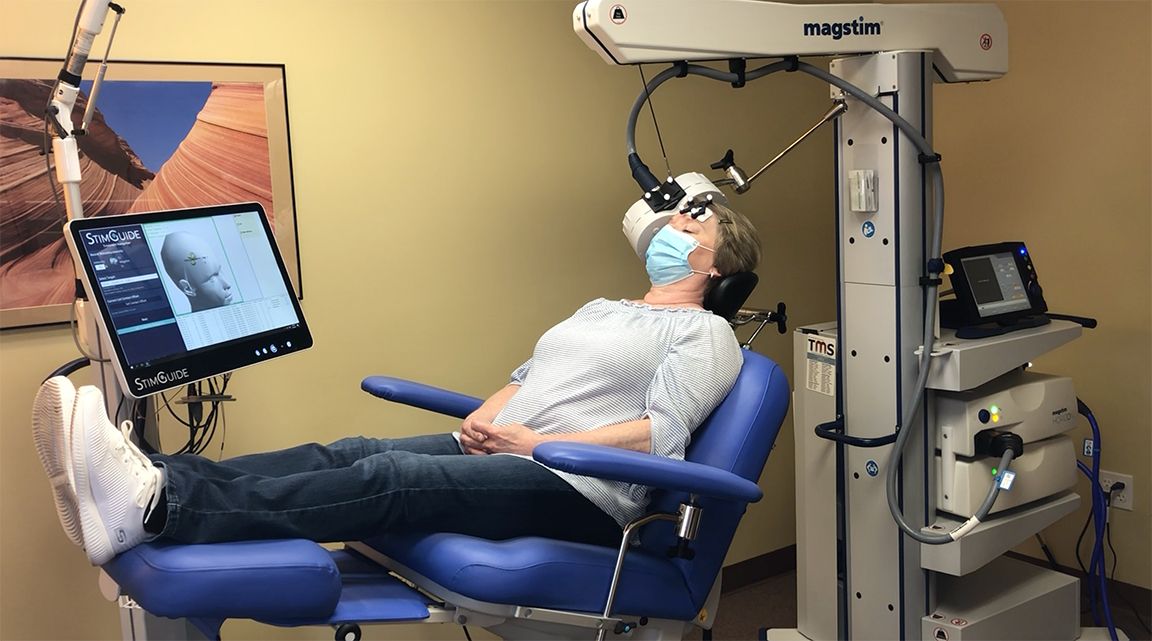
An rTMS session is about as straightforward as it gets. You sit in a comfortable chair, and a magnetic coil is placed gently against your scalp. Once the procedure begins, the machine delivers brief magnetic pulses that will create a tapping sensation on your head. It may feel unusual at first, but it is easy to get used to and not painful at all.
Depending on the type of stimulation, your session may last anywhere from 3 to 20 minutes. You’ll be awake through most of it and are free to return to your normal activities after the session ends. Speaking of frequency, most treatment plans involve daily sessions, five days a week, for about four to six weeks. After the final session, your psychiatrist will review progress and adjust the schedule as required. The treatment will continue or come to a close depending on how much your symptoms improve by the end.
What are the benefits of undergoing rTMS?
As stated before, the most significant advantage of rTMS is that it does not involve any major side effects. Because this treatment only targets the brain, there is zero impact on other organs. Not only that, but you also do not need anaesthesia or any form of sedation for it. What’s even more impressive is that rTMS does not interfere with your life at all. Twenty minutes a day, and you can resume your daily life without worries. That convenience can be particularly valuable if you find yourself balancing job, family, and other responsibilities.
Are there risks involved with rTMS?
rTMS is a safe procedure with no risks involved. That being said, you may experience some temporary and mild side effects after the process. These may include scalp discomfort, headache, or some facial muscle twitches. If any of these symptoms do show up, your provider will adjust the level of stimulation to reduce them. They will monitor you closely to ensure you remain comfortable throughout the process.
How effective is rTMS treatment?
Although not everyone who undergoes rTMS experiences complete remission, research suggests that the majority of candidates report a noticeable improvement in mood. What’s more interesting to note is the longevity of the positive effects. Most studies indicate that the benefits of rTMS continue for months, after the initial course. But in rare instances, you may need to undergo maintenance sessions after some time to prolong the results. Keeping everything we have discussed in mind, please note that rTMS is not an instant cure for depression. Improvements often appear gradually throughout the treatment, as the brain needs time to respond to the stimulation. Patience is key here!
How can you best prepare for rTMS?
Before starting rTMS, you will have a complete assessment with the psychiatrist of your choice. The first thing they’ll do is conduct a comprehensive review of your medical history, existing medications, and previous treatments. Then, you will be asked about any metal implants in your head or neck, as these can interfere with the magnetic pulses. For instance, if you have cochlear implants or a pacemaker, you may not be allowed to start the treatment. But if you clear all these prerequisites, your psychiatrist will give you the green light to undergo rTMS.
What happens after the treatment?
Once your course ends, your doctor will schedule a follow-up to assess your mood and changes in symptoms. If your depression shows a clear improvement, you may not need any further sessions. If you still have symptoms, maintenance sessions will be arranged as stated previously. These sessions are fewer in number and spaced further apart than the initial treatment plan. You can also continue other forms of therapy during and after rTMS. Many people find a combination of lifestyle changes, counselling, and rTMS to be the best solution for their symptoms.
Why rTMS matters
Depression is the kind of condition that can make even small tasks feel impossible. It is easy to lose hope when you find yourself spiralling and nothing seems to be helping. rTMS offers a path you may not have taken yet and eases the pain of fighting this condition for months or even years. Even if it does not entirely remove depression, it can create space for other treatments to work better and for life to feel more manageable. Remember: rTMS is not simply another treatment for trying your luck. It represents a scientifically grounded alternative for those who feel stuck with depression. If you are struggling, rTMS may be the step you needed to take all along—the one that finally puts you on the path to recovery.
