


Sugar scrubs have gained popularity as an exfoliating agent to achieve healthy, glowing skin and a radiant appearance. In contrast to rough chemical exfoliants, sugar scrubs are made with a combination of natural sugar grains and nourishing oils or butters, providing both physical exfoliation and hydration.
But it is also important to know how much scrub to apply. Any less, and you will not achieve uniform coverage; too much, and you are likely to suffer from irritation, excessive dryness, or waste of product.
Moreover, the skin between different parts of the body differs, as some parts are delicate, while others are rougher and require more care.
This article will examine how to calculate the correct amount of sugar scrub to apply to different parts of the body, as well as some tips to follow when using it and the recommended frequency of use.
Understanding Sugar Scrubs
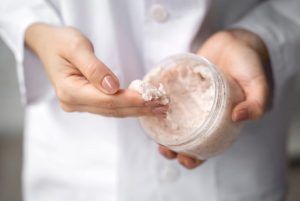
Sugar scrubs are mild exfoliators that assist in exfoliating the dead skin cells of the skin without drying it. The sugar grains focus on dry and rough patches, whereas oils or lotion are used to lock in the moisture.
A sugar scrub reduces skin redness and wrinkles when used regularly, which improves the absorption of lotions and other skincare products. It can also be used on most skin types, although it must be applied with care, as excessive use may cause irritation.
If you are unsure about the proper technique to use, you can always learn how to use sugar scrub safely and effectively to achieve the best result.
Benefits of Sugar Scrubs
- Exfoliation: Peels off dead skin cells, leaving the skin smoother and more even toned.
- Hydration: Oils in scrub absorb moisture into the skin and help avoid dehydration.
- Improved Absorption: Skin care products applied afterward absorb better.
- Avoiding Ingrown Hair: Frequent exfoliation helps clear hair follicles, which in turn decreases the likelihood of ingrown hair.
Determining the Right Amount
How much sugar scrub you require will rely on the area you are treating and the type of skin you have:
- Large Body Parts: Just a handful or so is sufficient to cover
- Arms: One palmful per arm is normally sufficient
- Feet and Ankles: Half a palmful, one foot at a time, and heels and soles
- Hands: A little pea-sized is enough
- Sensitive Areas: A half-palmful is sufficient to prevent irritation
One of the general rules is to begin with less and add more only when necessary. The amount you require also depends on the quality and size of the granule used in the scrub.
How to Apply Sugar Scrubs
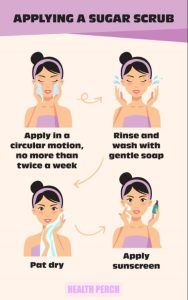
Step 1: Prep your skin with lukewarm water to relax and dilate pores.
Step 2: Gently massage the area with light pressure and circular movements, ensuring the granules of sugar are removed without causing irritation.
Step 3: Take care of the coarse areas, including the knees, elbows, and heels, which need more attention.
Step 4: Rinse well in lukewarm water and gentle soap to remove all the sugar particles and prevent stickiness.
Step 5: Pat dry the area treated with a soft towel so as not to irritate the skin.
Step 6: Immediately apply lotion and sunscreen to keep the skin hydrated and seal in the moisture when the skin is slightly wet.
Step 7: Do not expose the scrub to sensitive skin, including broken, irritated or sunburned skin.
Frequency of Use
In most cases, exfoliating twice a week using a sugar scrub would suffice to keep the skin smooth and healthy. People with sensitive skin are advised to use it at most once a week, and possibly even less frequently, as their skin is more prone to irritation.
A little more frequent exfoliation may be required in thicker areas, such as the elbows and heels. Over-exfoliation should also be avoided, as it may destroy the skin barrier, leading to dryness or redness.
Seasonal and Skin-Specific Considerations
- Winter Months: The skin is drier; therefore, exfoliate less frequently or with smaller quantities of scrub to prevent excessive drying.
- Summer Months: Exfoliation is most helpful during heat, sweat and sun exposure. Frequent scrubbing helps remove dead skin, sweat accumulation, and residues, making the skin soft and clean.
- Use with Other Products: Do not use sugar scrubs directly after chemical exfoliants, retinoids or strong treatments since it will over-exfoliate the skin and become irritating. Never apply two exfoliation techniques consecutively to ensure that the skin barrier is not compromised.
Safety and Storage
- Storage: Sugar scrubs must always be stored in an airtight container to prevent exposure to air, water, or bacteria. Store in a cool and dry space where the scrub is not subjected to direct sunlight or the dampness of the shower.
- Sensitive or Broken Skin: Scrubs must never be applied over sunburned, inflamed or peeling skin. These areas may also be irritated further by the abrasive granules, causing healing to be slowed down and potentially introducing bacteria. The exfoliation should be done after the skin has completely bounced back.
- Keep an Eye on Skin Response: You should be aware of any unusual response, including redness, stinging, or itching. In case of persistent irritation, you should stop taking it and get in touch with a dermatologist.
Bottomline
To achieve smooth, soft, and hydrated skin, it is important to use the correct amount of sugar scrub. The benefits of exfoliation can be safely enjoyed by massaging the skin, adjusting the volume according to the body area, and following the correct post-scrub steps.
Regular, moderate use is good to keep the skin healthy, without irritation or overuse. Sugar scrubs are known to increase the effectiveness of moisturizers and other skin care products, besides enhancing the texture and tone.
Sugar scrubs can also be an important part of your weekly skincare regimen, with careful usage and consideration of the needs of your skin, which could also make your skin shine and stay hydrated.
