

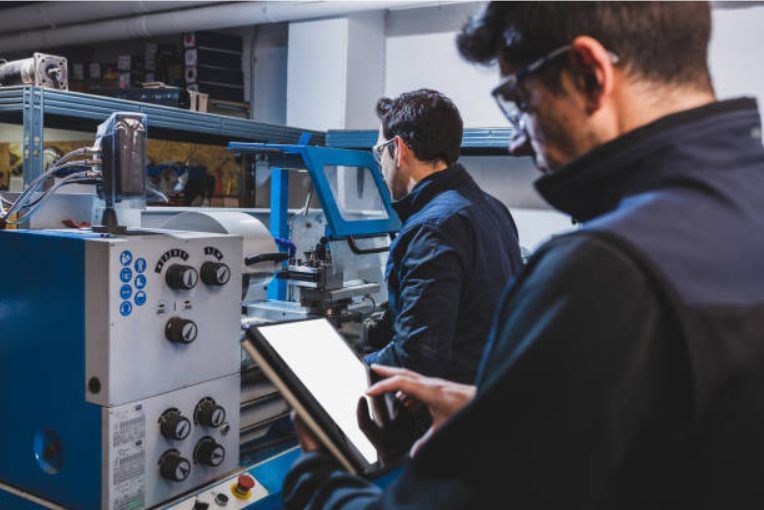
Every advancement in technology requires a major shift in production techniques. Getting medical, automotive, aviation, or robotic parts created accurately requires fabrication of precise components. This accuracy also comes with profound fabrication innovations that enhance product durability, condition, and overall functionality. Moreover, a manufacturer of CNC turning parts comes into play to provide precision-based components meeting industry standards. The report further evaluates how precision parts and their fabrication holds greater customization flexibility, serving the purpose of innovation. and primary for the industrial revolution.
The Need For Precision in Parts Along With Their Custom Fabrication
Business today relies on the ability to mass produce a tailored component to fit a unique or pre defined application best possible. In order to achieve desired Industrial Productivity, manufacturers need to achieve a certain standard or set of requirements in terms of component tolerance and grade of quality. Industries like aerospace, automotive, and the medical field need highly engineered and tailored components to be produced in efforts to guarantee safety performance and durability further maintain these technologies.
Customization in fabrication empowers manufacturers to produce parts to requisite specifications, minimizing required modifications and ensuring easy integration into the assemblies. A CNC turning parts manufacturer uses advanced machining techniques like turning, milling, and laser cutting which enable these manufacturers to achieve high tolerances with great accuracy. These techniques assist in minimizing the used material, saving money, and improving production efficiency, which makes custom fabrication a desirable option for custom complex engineering designs.
In addition, the development and implementation of CAD (Computer Aided Design) and CAM (Computer Aided Manufacturing) software enhanced extensive tracking fabrication. Engineers can now design complex parts digitally and analyze their expected functionality and make alterations as needed before actually starting the machining process. This ensures that every part is customized to every detail, resulting in the production of highly efficient and long-lasting components.
Revolutionary Custom Fabrication with CNC Machining
One of the single most important technological advancements in precision parts and custom fabrication is the use of CNC (Computer Numerical Control) machining systems. CNC technology enables the construction of highly sophisticated parts with little or no operator input. This provides the assurance of consistency, repeatability, and great accuracy. Among the most used machining operations within this technology is CNC milling and turning for complex parts with tight tolerances.
A CNC turning parts manufacturer specializes in producing cylindrical components such as shafts, bushings, and fasteners. The workpiece is rotated while a cutting tool extracts material which gives even and accurate results. These techniques are extensively applied in the automotive, aerospace, and industrial automation fields which depend on precision for the functionality of components.
Manufacturers are able to create advanced geometries with multi angled CNC machines saving on production time and costs. For example, five axis CNC machines can rotate a workpiece to multiple sides enabling complex features to be added with ease. Furthermore, CNC machining is made easier with real-time monitoring paired with AI driven quality control for tool path optimization, defect detection, and overall effectiveness.
The Role of Customization in Industry Innovation
The custom fabrication trend has greatly increased with the growing orders for fabrication of precise parts for industries with specialized components. Such fabrication gives businesses room to apply fresh custom solutions aimed at fulfilling specific requirements. Pieces from aircrafts and advanced medical grade implants are a few examples of what customization enables, elevating industry standards.
To improve productivity, a CNC turning parts manufacturer working in custom fabrication processes needs to implement advanced technologies such as smart manufacturing, 3D modeling and prototyping. These technologies allow engineers to improve design concepts, quickly test prototypes, and deliver quality products into the marketplace at a faster rate. Custom fabrication in the medical industry is an example, where implants, prosthetics, and surgical instruments are designed to suit individual patient needs to enhance patient care.
Moreover, customization leads to new materials. Engineering specialists are working on stronger, lighter, and more corrosion-resistant alloys, composites, and hybrid advanced materials. For instance, in the electric vehicle (EV) industry, precision fabrication is used to create lightweight and energy-efficient components that improve battery performance and increase the driving range of the vehicle.
Additionally, there is a growing trend of merging traditional machining processes with additive manufacturing (3D printing) to create hybrid processes of manufacturing. This enables the creation of complex internal structures, minimal usage of raw materials, reduced cycle times, and increased competitiveness. Integrating CNC machining with 3D printing opens new avenues for industries to customize parts and optimize structures.
The Integration of Smart Technology In Precision Parts and Fabrication
The integration of automation and sustainability together affects the future of processes such as fabrication and smart manufacturing. AI-powered CNC machining, robotics, and IoT-enabled manufacturing all improve the efficacy, precision, and costs of production. Manufacturers are now able to work with real-time information, optimize tool utilization, and monitor potential problems before they come in the way of production.
A CNC turning parts manufacturer is going to use AI and predictive maintenance to improve on machine uptime and reduce production costs. Smart sensors are being deployed on machining equipment so performance metrics can be measured, tool wear can be detected, and needed adjustments can be over to maintain the specified precision. Such an automated system brings about a high level of assurance on quality while eliminating human errors, making machining more dependable.
Another focal point of the industry is sustainability. In growing numbers, companies are using eco-friendly processes such as recycling of metal shavings, utilizing energy-efficient machines, and waste minimization through advanced optimization of materials. These eco-friendly methods of fabrication will reduce the negative impact on the environment while maintaining an efficient rate of production.
The future of precision fabrication shifting on the developing hybrid manufacturing processes. The innovations that can be made are limitless due to the fusion of CNC machining, additive manufacturing, and laser cutting, which enables companies to create more complex structures that are not only stronger but lighter as well. This approach is more useful in hybrid with aerospace and medical industries where the components need to be lightweight while still being highly functional.
With the explosion of customization options available, efficiency along with performance turned into an important factor which decreases the reliance of industries on precision fabrication to develop technologies which in turn increases the product’s performance as well as its manufacturing efficiency. The customization of precision engineering serves industry’s needs and guarantees that the competition is abundant and overwhelming in the market.
Conclusion
The hybrid approach of precision fabrication along with customization is revolutionizing industries by offering sophisticated engineering solutions which are precisely tailored to the requirement. A CNC turning parts manufacturer helps customize precision components, thus contributing to the modern world of efficiency, performance, and durability.
The future of precision parts manufacturing looks positive due to the advancements in CNC machining, smart manufacturing and sustainable fabrication technologies. In modern production, customization is not a luxury but a requirement, leading to rapid innovation, cost reduction, and performance optimization across numerous industries. With the evolution of technology, precision fabrication will always be at the cutting edge of manufacturing and will lead the next wave of industrial revolutions.
