Most parents spend more time researching a family holiday than they do planning their child’s education pathway.
That is not a criticism. It is simply the reality of how overwhelming the modern education landscape has become.
There are more options, more opinions, and more conflicting advice than at any point in history.
And the stakes feel enormous, because they are.
The decisions made in the early years of a child’s life set the tone for how they learn, how they relate to others, and how confident they feel in a classroom for years to come.
The decisions made in the secondary years determine which doors open and which stay closed.
Getting both right matters. And it starts with knowing what is actually available to you.
Why the Early Years Are Not the Warm-Up Act
There is a persistent myth that early childhood education is essentially glorified childcare.
It is not.
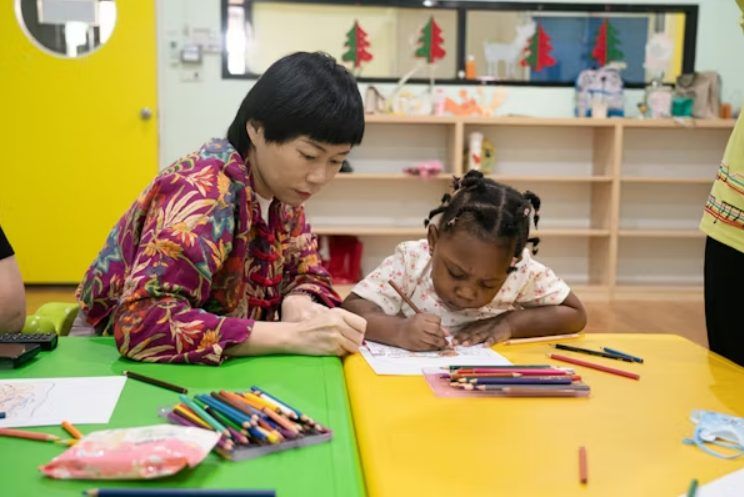
The research on this has been consistent for decades. Children who access quality early learning programs develop stronger language skills, better emotional regulation, and a far more positive relationship with structured learning.
They enter formal schooling more prepared. Not just academically, but socially.
They know how to share. How to listen. How to recover from small frustrations without falling apart.
That foundation does not disappear. It compounds.
By the time a child reaches the middle years of primary school, the gap between those who had strong early learning experiences and those who did not is already visible to their teachers.
By secondary school, it has often become entrenched.
This is why the conversation about education cannot start at high school enrollment. It has to start much earlier, ideally before formal schooling begins at all.
For many families, cost has historically been the barrier. Quality early childhood programs are not cheap, and the expense comes at a time when household finances are often already stretched.
That is exactly why government-supported early learning initiatives deserve serious attention from every parent of a young child.
Knowing what financial support is available, and acting on it promptly, can be the difference between accessing a quality program and missing out entirely.
If you have a child approaching kindergarten age, exploring the eligibility criteria for free kindy qld 2026 is a genuinely practical first step.
Programs like this exist to remove the cost barrier so that early learning quality is not determined by income alone.
Taking advantage of supported early learning is not a shortcut. It is smart parenting.


The Middle Years: Where Interest Either Grows or Quietly Dies
Primary school tends to be the period that parents watch most closely.
Report cards get scrutinised. Reading levels are compared. Math benchmarks become dinner table conversation.
What often gets far less attention is something harder to measure: whether the child is actually enjoying learning.
A child who finds learning genuinely interesting in the primary years is an asset to themselves for life.
A child who learns early that school is something to be endured rather than engaged faces a much harder road ahead.
This is not about making school easy or avoiding academic pressure. Challenges are valuable.
But challenge needs to be paired with engagement, relevance, and a sense that effort is connected to outcomes.
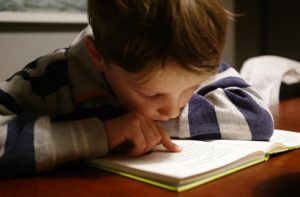
Parents can support this in practical ways. Reading widely with children, not just to them, builds comprehension and vocabulary in ways that structured classroom time alone cannot replicate.
Connecting learning to real-world curiosity, whether through cooking, sport, building things, or simply asking questions together, keeps the spark alive between formal lessons.
Conversations about what children find interesting, rather than just what grades they received, send a clear message.
Learning is not a performance. It is a process.
The habits built in these years carry directly into secondary school. A student who arrives at high school with genuine intellectual curiosity is already ahead, regardless of what any standardised test says.

Secondary Education Has Changed More Than Most Parents Realise
Here is where many families encounter their first serious surprise.
The secondary education landscape looks very different from what most parents experienced themselves.
Flexibility has become a genuine feature of modern schooling, not a fringe alternative pursued only by families in unusual circumstances.
Students today can access rigorous, accredited secondary education through models that would have seemed radical a generation ago.
Online learning, in particular, has moved well beyond the correspondence course model that some parents still picture.
The best programmes offer live instruction, qualified subject specialists, structured assessment, peer interaction, and pastoral support that rivals what traditional schools provide.
For some students, this flexibility is simply a preference. For others, it is genuinely transformative.
Students managing health challenges, family circumstances, professional commitments in sport or performance, or who simply learn better outside a traditional classroom, now have real and credible options.
The range of accredited online high schools available to secondary students has grown substantially.
The quality across that range varies, so careful research matters. Look for programmes with qualified teachers, clear accreditation, structured academic support, and a proven track record of student outcomes.
Do not assume that flexibility means reduced rigour.
The best online secondary programmes are as academically demanding as their traditional counterparts. In some cases, more so, because students must develop strong self-management skills alongside their academic learning.
That combination of academic challenge and self-directed discipline is, incidentally, exactly what universities and employers consistently say they are looking for.
Exploring these options early, well before secondary school begins, gives families time to make a considered decision rather than a reactive one.
How to Make These Decisions Without Losing Your Mind
The volume of information available to parents making education decisions is not the problem.
It is the absence of a clear framework for evaluating it.
Here is a practical way to think through education choices at any stage.
Start with the child, not the institution. What does this particular child need right now? What are their strengths, their challenges, their social needs, their learning style?
No school or programme is universally best. The best choice is always the one that fits this specific child at this specific moment.
Then look at outcomes, not reputation. Brand recognition in education can be misleading.
A well-known school with a prestigious name is not automatically the right environment for every student. Look at what actually happens to the students who come through a given programme.
Talk to people who have been through it. Parents who have navigated the same decisions, in either direction, are often the most honest and useful source of information.
Not because their experience will be identical to yours. But because they will tell you things that admissions brochures never will.
Revisit decisions regularly. An education choice that was right at one stage may not remain right as a child grows and changes.
Building in regular moments of reflection, rather than treating decisions as permanent, reduces the cost of course-correcting when it becomes necessary.
And read widely. The business and leadership press consistently surfaces education research and insights that parent-focused media tends to underreport. The resources on this site regularly cover the intersection of education, leadership development, and future workforce preparation in ways that are worth following closely.
The Longer Game
Education is not a series of isolated decisions. It is a continuous investment in a person who is still becoming who they are going to be.
The early years build the foundation.
The primary years cultivate the love of learning.
The secondary years open or narrow the range of possibilities.
Every stage is shaped by the choices made before it.
The parents who navigate this most effectively are not the ones who panic at every decision point.
They are the ones who stay informed, stay curious, and treat education as an evolving conversation rather than a fixed plan.
Start early. Research genuinely. And do not wait for decisions to feel urgent before giving them the attention they deserve.
The window for some choices is shorter than it looks.