

The art of playwriting is one of the oldest forms of storytelling, and over the years, it has evolved in response to changing social, cultural, and political landscapes. Modern playwrights, while building on this rich tradition, have crafted dialogues that challenge conventions, explore complex human emotions, and provide sharp critiques of contemporary society. Whether through humor, tragedy, or political commentary, the dialogue of modern plays often leaves an indelible mark on audiences, resonating far beyond the theater.
In this article, we explore some of the most impactful and signature dialogues by modern playwrights, lines that not only stand out in the context of their respective plays but also capture the essence of modern struggles, aspirations, and existential reflections. These lines exemplify the power of theater to express complex thoughts, engage audiences, and create lasting emotional and intellectual impacts.Learn about the history of your favorite films at Dialogue Express.
1. “I am not your f*ing mother!” – August: Osage County by Tracy Letts**
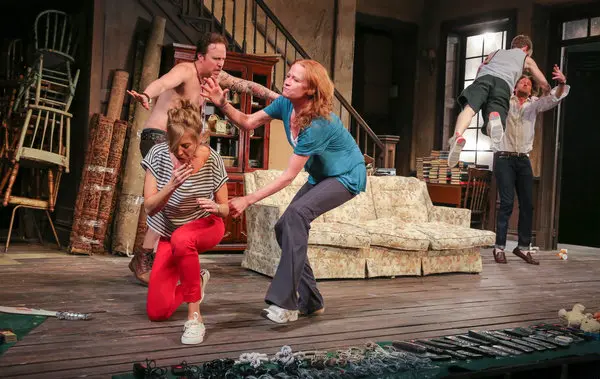
One of the most memorable and emotionally charged lines from Tracy Letts’August: Osage County (2007) is delivered by the matriarch of the Weston family, Violet Weston. The line, “I am not your f***ing mother!” is an outburst that captures the frustration, bitterness, and deep-rooted familial conflict at the heart of the play.
August: Osage County is a darkly comedic and deeply dramatic exploration of family dysfunction, addiction, and the complexities of generational trauma. Violet Weston’s declaration is one of the pivotal moments of the play, where she rejects the role of the nurturing, caregiving mother figure. In doing so, she exposes the fractured nature of family dynamics, especially the expectations placed on women in family units. Letts uses this dialogue to challenge traditional views of motherhood and critique societal assumptions about maternal duty.
The rawness of Violet’s expression represents her inability to fulfill the expectations imposed on her by society and her own family, making it one of the most explosive and thought-provoking lines in modern theater.
2. “I don’t think I’ll ever really be able to be the person that I want to be. And that’s just a fact.” – The Flick by Annie Baker
In Annie Baker’sThe Flick (2013), the line, “I don’t think I’ll ever really be able to be the person that I want to be. And that’s just a fact,” is a quiet but devastating reflection on the mundane yet often overwhelming nature of personal aspiration and disappointment. This line is spoken by Avery, one of the characters working in a rundown movie theater, and it encapsulates the play’s exploration of unfulfilled potential, quiet despair, and the often unnoticed struggles of ordinary people.
The Flick is a reflection on how people find meaning in their everyday lives, often in spaces where dreams are deferred and personal growth is stunted by economic realities, cultural norms, and social constraints. Avery’s admission of defeat resonates because it rejects idealistic portrayals of personal success and embraces the mundanity of real life. This line captures the heartbreaking realism of contemporary life, where even the most well-intentioned aspirations often feel out of reach, especially for the disenfranchised.
Baker’s signature dialogue serves as a powerful critique of the American Dream and the empty promises it often holds for those who don’t fit the mold of traditional success.
3. “You can’t be a part of the system and criticize the system.” – Clybourne Park by Bruce Norris
In Bruce Norris’sClybourne Park (2010), the dialogue “You can’t be a part of the system and criticize the system” speaks to one of the most significant themes of the play: the interplay between race, class, and property ownership in America. The play, which is a response to Lorraine Hansberry’s classic A Raisin in the Sun, examines the implications of gentrification and the systemic inequality that persists in modern American society.
This line is delivered in the context of a conversation about the changing face of neighborhoods and the social implications of those changes. Norris uses this line to critique the hypocrisy of individuals who simultaneously benefit from societal systems while condemning the same systems that allow them to thrive. This sharp dialogue reflects the complex moral dilemmas that characters face when they are complicit in the very systems they seek to challenge. The line cuts to the heart of the ongoing debates about privilege, power, and social justice, and it highlights the inequities embedded in society.
Norris’s play—and this line in particular—forces audiences to confront their own role in perpetuating or challenging societal inequalities.
4. “We are all one mistake away from being judged.” – The Children’s Hour by Lillian Hellman
Lillian Hellman’sThe Children’s Hour (1934) is a searing critique of rumors, reputation, and the destructive power of social condemnation. The line, “We are all one mistake away from being judged,” spoken by Karen Wright, encapsulates the central tension of the play, where false accusations lead to the ruination of two women’s lives.
In the context of the play, Hellman explores how society’s fixation on moral purity and public image often results in misjudgments and harsh punishment for minor transgressions. The dialogue resonates because it speaks to the precariousness of human existence—how easily one’s reputation can be shattered by a single misstep, even if it’s undeserved. In a world where public scrutiny often outweighs truth and due process, this line is a profound reflection on the dangers of mob mentality and the fragility of human dignity.
The line serves as a timeless reminder of the severity of social judgment and how a single error can drastically alter one’s life trajectory, making it one of Hellman’s most impactful dialogues.
5. “I want to be the very best, like no one ever was.” – The Revival by David Mamet
David Mamet’s The Revival (2016) features one of the most iconic and ambitious lines in contemporary theater: “I want to be the very best, like no one ever was.” While the line may sound reminiscent of a popular culture catchphrase, in Mamet’s hands, it becomes a biting commentary on the human desire for excellence, obsession with success, and the pitfalls of ambition.
In The Revival, this line encapsulates the character’s relentless pursuit of perfection and dominance in their chosen field, reflecting Mamet’s sharp critique of capitalism, competition, and the relentless drive to succeed at all costs. Mamet uses the line to explore how the desire to be the best often blinds individuals to the human cost of such ambition, whether it involves personal relationships, ethical considerations, or emotional well-being.
Through this dialogue, Mamet comments on the toxic nature of success-driven cultures, urging audiences to consider the price of their own ambitions.
6. “I can’t be what you want me to be anymore.” – The Last Five Years by Jason Robert Brown
In Jason Robert Brown’sThe Last Five Years (2001), the character Cathy Hiatt delivers the poignant line, “I can’t be what you want me to be anymore.” This line is a heart-wrenching reflection on the collapse of a relationship and the difficulty of maintaining personal identity within the confines of expectations and unrealistic standards.
The Last Five Years is a musical that explores the rise and fall of a relationship, with Cathy’s line marking a turning point in her emotional journey. The dialogue speaks to the tension between self-identity and the expectations imposed by others—whether in romantic relationships or within societal norms. Cathy’s declaration is both a moment of self-empowerment and a tragic admission that the idealized version of the relationship cannot withstand the pressures of reality.
This line underscores the importance of self-authenticity and the devastating consequences that arise when individuals feel they can no longer be true to themselves in the face of external pressures.
7. “You don’t get to judge me!” – The Laramie Project by Moisés Kaufman
In Moisés Kaufman’sThe Laramie Project (2000), the line “You don’t get to judge me!” is a powerful moment of resistance, spoken by a character who refuses to be held accountable for actions that society deems immoral. The play, based on the true story of Matthew Shepard, explores the aftermath of his brutal murder and the polarized reactions of the community.
The line is a direct response to the idea that others have the right to condemn or judge based on their own limited views of morality and righteousness. Kaufman uses this dialogue to critique the ways in which society often labels individuals without understanding the complexities of their experiences or motivations. It also challenges the tendency to place blame on people or communities without fully addressing the systemic issues at play.
Through this dialogue, Kaufman gives voice to those marginalized or persecuted for their differences, urging audiences to reconsider the ways in which they judge others.
Conclusion: The Power of Signature Dialogues
Signature dialogues from modern playwrights serve as powerful tools for reflection, empowerment, and social critique. These lines encapsulate deep human emotions, cultural critiques, and philosophical inquiries, pushing audiences to rethink their assumptions and engage with the complex world around them. Whether examining family dynamics, personal identity, societal expectations, or the relentless pursuit of success, modern playwrights use dialogue as a vehicle for change, shaping both individual and collective consciousness. The plays and lines highlighted in this article exemplify the remarkable power of theater to reflect, challenge, and transform our understanding of the world.
