

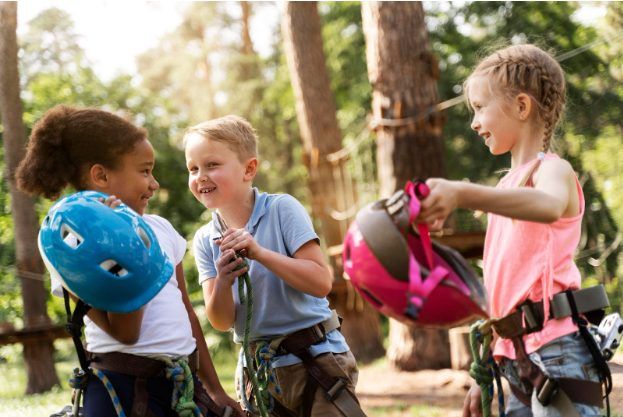
There’s a particular kind of chaos that fills homes with young children. Bikes scattered across the front yard. Art supplies covering the kitchen table. Endless questions about why the sky is blue and whether dinosaurs could swim. For parents navigating these early years, the challenge isn’t just managing the mess or answering the questions. It’s about creating an environment where children develop both physically and creatively, building confidence through movement while nurturing their imagination through hands-on creativity.
We live in an age of extremes when it comes to childhood. Some kids spend hours glued to tablets and televisions, their physical development stunted by sedentary habits. Others are shuttled from one structured activity to another, their schedules packed tighter than most executives. What gets lost in both extremes is the beautiful messiness of childhood that previous generations took for granted: unstructured outdoor play that builds strength and coordination, quiet creative time that develops focus and imagination, and the freedom to simply explore the world at their own pace.
The parents who seem to get it right aren’t necessarily doing anything revolutionary. They’re simply being intentional about creating opportunities for both active play and creative expression. They understand that a child who spends the morning racing around on wheels needs different stimulation in the afternoon. They recognize that the skills developed through outdoor adventure complement those built through patient, focused craft work. And they’ve learned that childhood doesn’t need to be overly structured to be enriching.
This article explores how to create that balance in practical, actionable ways. We’ll look at the developmental benefits of different types of play, discuss how to support your child’s physical confidence, and explore creative pursuits that genuinely engage young minds. Whether you’re a new parent trying to figure out this whole raising humans thing or a seasoned pro looking for fresh ideas, these insights will help you foster the kind of childhood that builds capable, confident, creative kids.
Building Physical Confidence From the Ground Up
The foundation of physical confidence starts younger than most parents realize. Before kids are riding two-wheelers or mastering skateboard tricks, they’re learning fundamental movement patterns that will serve them for life. Balance, coordination, spatial awareness, and the kind of body confidence that comes from understanding how to move through space all develop during these early years.
This is where thoughtful parents can make a real difference. Rather than waiting until age five or six to hand a child a traditional bicycle with training wheels, starting earlier with tools designed for natural progression makes more sense. Toddlers as young as 18 months can begin developing balance and coordination through age-appropriate riding toys that let them explore movement at their own pace.
The beauty of starting physical development early is watching confidence compound over time. A two-year-old who’s comfortable scooting around on ride-on toys transitions more naturally to the next stage of development. A three-year-old who’s spent a year developing balance and steering skills approaches new physical challenges with less fear and more capability. By the time they’re ready for pedal bikes, the hard part is already mastered.
This progression matters because early experiences with physical challenges shape how children approach difficulty throughout life. Kids who develop movement skills gradually, experiencing success along the way, build positive associations with trying new things. They learn that initial awkwardness is normal and that persistence leads to mastery. These lessons transfer far beyond just riding bikes.
For parents ready to support this developmental journey, balance bikes represent one of the most effective tools available. Unlike traditional bikes with training wheels that teach pedaling but delay balance development, balance bikes focus on the hardest skill first. Kids learn to balance and steer without the complication of pedals, building genuine riding skills through natural progression. The result is children who transition to pedal bikes easily, often skipping training wheels entirely because they’ve already mastered the fundamental challenge of staying upright on two wheels.
The practical benefits extend beyond just learning to ride. Balance bikes get kids outside and active, developing gross motor skills, building leg strength, and providing cardiovascular exercise disguised as play. They facilitate family outings to parks and bike paths, creating opportunities for active time together that beats screen time every time. And they give children genuine independence and mobility, letting them explore their environment in ways that build confidence and spatial awareness.
Choosing the right balance bike involves considering a few key factors. Adjustability matters since kids grow quickly and you want equipment that grows with them. Weight is important because lighter bikes are easier for small children to control and maneuver. Quality construction ensures safety and durability through the inevitable bumps and drops that come with learning. And design features like ergonomic seats and proper handlebar positioning make the experience comfortable enough that kids actually want to ride.
The investment in early physical development pays dividends for years. Children who develop strong balance and coordination early often excel in other sports and physical activities later. They approach playgrounds and outdoor challenges with confidence rather than hesitation. They’re more likely to choose active play over sedentary alternatives because they’ve built positive associations with movement. And they develop the kind of physical literacy that serves them throughout life.
The Safety Conversation: Protecting Adventurous Spirits
As children develop physical confidence and start taking on more challenging activities, the safety conversation becomes crucial. This is where many parents struggle with balance. On one hand, we want kids to be adventurous, to push boundaries, to develop resilience through minor scrapes and tumbles. On the other, we want to protect them from genuinely dangerous injuries that could have been prevented.
The key is distinguishing between necessary risks that build capability and unnecessary risks that just increase injury likelihood without developmental benefit. A child learning to balance on a bike will wobble and might fall. That’s part of learning and not something to prevent. But a child riding without proper head protection faces risks that offer no learning value. Smart parents embrace reasonable challenge while eliminating unnecessary dangers.
This philosophy extends across childhood activities. As kids progress from balance bikes to scooters, skateboards, and bicycles, their speed and potential for injury increase. What was a minor tumble at toddler speeds becomes more significant as they gain confidence and velocity. This is exactly when proper protective gear transitions from nice-to-have to essential.
Head injuries represent the most serious risk in wheeled sports and activities. Unlike scraped knees or bruised elbows that heal quickly, head trauma can have lasting consequences. The statistics are sobering: thousands of children visit emergency rooms each year for head injuries related to bikes, scooters, and skateboards. The vast majority of these injuries could be prevented or significantly reduced in severity with proper helmet use.
Yet helmet usage remains inconsistent among families. Some parents are diligent about safety gear for bicycles but casual about scooters. Others enforce rules at home but let them slide at friends’ houses or parks. The most effective approach is making helmet use non-negotiable from the start, as automatic as buckling a seatbelt in the car.
For families with kids engaged in wheeled activities, investing in quality scooter helmets appropriate for your child’s age and head size is essential. Modern helmets are lightweight, well-ventilated, and come in designs that kids actually want to wear. This last point matters more than parents often realize. A helmet that sits unused because your child refuses to wear it provides zero protection. Finding one they’ll actually put on willingly makes safety rules easier to enforce.
Proper fit is crucial for effectiveness. A helmet should sit level on the head, covering the forehead without tilting back. The straps should form a V-shape under each ear, and the chin strap should be snug enough that you can’t fit more than two fingers between the strap and chin. The helmet shouldn’t rock forward and back or side to side when properly adjusted. Taking time to ensure proper fit means the helmet will actually protect your child in the event of a fall.
Beyond just having the right equipment, establishing good safety habits early makes them automatic later. When putting on a helmet is as routine as putting on shoes before going outside, kids stop resisting and parents stop nagging. This consistency matters because as children get older and gain more independence, they’ll only follow safety practices they’ve internalized through repetition.
The conversation around safety gear also provides opportunities to teach kids about risk assessment and personal responsibility. Explaining why helmets matter, discussing how injuries happen, and involving children in choosing their protective gear helps them understand safety as something they control rather than arbitrary rules parents impose. This understanding becomes increasingly important as kids gain independence and make their own decisions about activities and risk.
The Indoor Alternative: Building Skills Through Creative Pursuits
While outdoor activity and physical development are crucial, balanced childhood includes quiet, focused time that develops different but equally important skills. After hours of running, jumping, and riding, kids need opportunities to slow down, concentrate, and create. This isn’t just about preventing exhaustion, though that matters. It’s about developing the patience, focus, and fine motor skills that complement physical capabilities.
Many parents struggle with this balance, particularly when trying to reduce screen time. It’s easy to let kids vegetate in front of tablets or television when they need quiet time. Finding engaging alternatives that genuinely hold their attention requires more effort. But the developmental benefits of hands-on creative activities far exceed passive entertainment.
Craft and textile arts offer particularly rich opportunities for skill development. Activities like knitting, crochet, sewing, and weaving develop fine motor skills, hand-eye coordination, and bilateral coordination in ways that few other activities match. They require sustained focus and attention to detail. They involve following patterns and sequences, building both spatial reasoning and executive function skills. And they produce tangible results that give children genuine pride in their capabilities.
The cognitive benefits extend beyond just the physical skills. Fiber arts involve mathematics through counting stitches, measuring materials, and understanding patterns. They teach planning and problem-solving as children figure out how to execute their vision. They build patience and persistence as children work through the inevitable mistakes and challenges that come with learning complex skills. And they create natural opportunities for intergenerational connection, as grandparents or other family members share traditional skills.
For parents interested in introducing children to fiber arts, starting is easier than it once was. While craft stores can be overwhelming, having materials delivered to your door simplifies the initial barrier. You can shop yarn online for quality materials appropriate for beginners, from chunky yarns perfect for little hands learning basic stitches to complete starter kits that include everything needed for first projects.
The key is matching projects to your child’s age and skill level. Young children might start with finger knitting or simple loom projects that teach basic concepts without requiring complex hand positions. As they develop, they can progress to traditional knitting or crochet with appropriately sized needles or hooks. Choosing projects with visible progress and relatively quick completion keeps kids engaged rather than frustrated.
The beauty of craft activities is how they scale with skill development. A beginning project might be a simple scarf or dishcloth. As skills improve, children can tackle more complex patterns, different techniques, and bigger projects. This progression mirrors the physical development we discussed earlier, building confidence through achievable challenges that gradually increase in difficulty.
Beyond the developmental benefits, creative pursuits provide practical life skills increasingly rare in our consumer culture. Children who can make things develop different relationships with objects. They understand the time, skill, and effort required to create. They’re more likely to value and care for possessions they’ve made themselves. And they gain independence from constantly needing to purchase every toy or item they want.
Family craft time also creates opportunities for connection different from active play. Sitting together working on projects facilitates conversation in ways that face-to-face demands for discussion often don’t. Kids share what they’re thinking about, ask questions, and open up about their days while their hands are busy with creative work. This side-by-side time, where you’re both focused on your own projects while being together, can be more valuable for relationship building than direct interaction.
Creating Sustainable Routines
Understanding the benefits of balanced childhood is one thing. Actually implementing routines that support both active play and creative pursuits while managing all the other demands of family life is another challenge entirely. The parents who succeed aren’t necessarily doing anything complicated. They’re building simple rhythms that make diverse activities natural rather than forced.
Seasonal and weather patterns create natural structures. Summer and nice weather days emphasize outdoor activities, with evenings potentially including outdoor creative pursuits like sidewalk chalk art or nature crafts. Cold or rainy days shift focus to indoor activities, with craft projects taking center stage while outdoor play might be limited to shorter bursts between storms.
Weekly rhythms help too. Perhaps mornings emphasize active play when kids have energy to burn, while afternoons after lunch move toward quieter activities. Or maybe weekends include family bike rides and park visits, while weekday evenings focus on creative projects. The specific pattern matters less than establishing some consistency that kids can anticipate.
The key is avoiding the trap of overscheduling. Kids need unstructured time to pursue activities at their own pace without adults directing every moment. This means resisting the urge to fill every hour with organized activities and instead creating space for self-directed play and creativity. The magic often happens in those unstructured moments when kids follow their curiosity without adult intervention.
Equipment and materials matter for supporting diverse activities. Having balance bikes, scooters, and safety gear readily accessible makes outdoor play easier to facilitate. Keeping craft supplies organized and available means creative projects can start spontaneously rather than requiring extensive setup. This doesn’t mean buying everything at once or having a perfectly organized craft room. It means gradually building resources that support the activities you want to encourage.
Moving Forward With Intention
Raising confident, capable, creative children doesn’t require expensive programs or exhausting schedules. It requires intention about creating opportunities for diverse experiences. Physical challenges that build body confidence and coordination. Safety practices that protect without preventing necessary risk-taking. Creative pursuits that develop focus, patience, and fine motor skills. And enough unstructured time for kids to simply be kids, exploring their world at their own pace.
The parents who navigate this well focus on creating environments and routines that make diverse activities natural rather than forced. They invest in a few key tools like balance bikes that support physical development and safety gear that protects adventurous spirits. They keep creative materials accessible and find resources that make starting new activities less daunting. And they build family rhythms that include time for both active play and quiet creativity.
Most importantly, they resist the perfectionism that makes parenting exhausting. Not every day will be perfectly balanced. Some weeks will be heavy on outdoor adventure with minimal craft time. Other periods might see more indoor focus due to weather or circumstances. That’s normal and fine. What matters is the overall pattern over months and years, not achieving perfect balance every single day.
The investment in creating these diverse opportunities pays off in children who are physically confident, creatively capable, and genuinely engaged with the world around them. They’re comfortable taking on new challenges because they’ve experienced success across different domains. They can focus and persist through difficulty because they’ve developed those skills through practice. And they approach life with curiosity and confidence because their childhood gave them space to explore, create, and grow.
That’s the real goal, isn’t it? Not raising perfect kids who excel at everything, but raising human beings who are comfortable in their bodies, confident in their capabilities, and creative in their approach to life’s challenges. The outdoor adventures and creative projects are just tools supporting that larger aim. Used intentionally, they help create the kind of childhood that builds strong foundations for whatever comes next.
