

Repair networks face a critical challenge that has been present in the automotive industry for decades: the inconsistency of repair cost estimates across different locations and technicians. This lack of standardization creates friction between repair shops, insurance partners, and customers while undermining trust and operational efficiency throughout the repair ecosystem.
Traditional estimation methods rely heavily on human judgment, regional variations, and subjective assessments that produce wildly different quotes for identical damage. These inconsistencies not only frustrate customers who receive different estimates but also weaken relationships between repair networks and insurance providers who tend to look towards these methods as reliable, accurate pricing for claims processing.
Artificial intelligence is revolutionizing repair cost estimation by providing standardized, objective assessments that eliminate human subjectivity while accounting for regional variations and market conditions. AI-powered systems offer the consistency and accuracy that repair networks need to build trust with partners and customers while streamlining their operations.
This examination explores the estimation challenges facing repair networks, how AI addresses these issues, and the substantial benefits that standardized estimates provide for businesses, customers, and industry partners.
The estimation challenge in repair networks
Repair cost estimation has long been one of the most problematic aspects of the automotive repair industry, creating inconsistencies that affect customer satisfaction, business relationships, and operational efficiency across the entire repair ecosystem.
The core problem: inconsistency, subjectivity, and time consumption
Estimating repair costs has been inconsistent, subjective, and time-consuming, creating challenges for a long time, and this is now hugely affecting every aspect of repair network operations. Traditional estimation methods depend heavily on individual technician expertise and judgment, leading to significant variations in quoted prices for identical damage.
The estimation process traditionally requires a bunch of experienced technicians to physically examine vehicles, identify all damaged components in detail, research parts costs, and compile comprehensive estimates. This manual process consumes a lot of time while bringing in multiple opportunities for errors and inconsistencies that cascade through the entire repair workflow.
Time consumption impact: Manual estimation processes typically require 30-60 minutes per vehicle, creating a lot of downsides that affect customer service and operational efficiency. During busy periods, estimation delays can extend customer wait times and reduce overall throughput capacity. These delays become particularly problematic when customers are dealing with accident-related stress and need quick resolution.
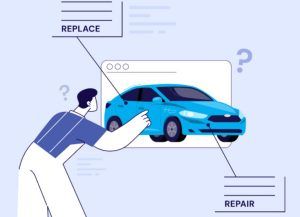 Subjectivity issues: Individual technicians may interpret damage differently based on their experience, training, and personal assessment styles. What one technician considers minor damage requiring simple repair, another might classify as extensive damage requiring component replacement. This subjectivity creates confusion for customers who may receive dramatically different assessments from equally qualified professionals.
Complexity challenges: Modern vehicles include a lot of technologies and materials that require specialized knowledge for accurate estimation. Advanced driver assistance systems, aluminum body panels, and high-strength steel components all require specific repair procedures that affect cost calculations. Technicians may lack expertise with specific vehicle types or damage patterns, leading to inaccurate assessments.
Different shops quote different prices for similar damage.
Different shops quote different prices for similar damage due to personal bias of technicians, varying regional prices, or human error, creating a lot of confusion for customers and challenges for insurance partners who need consistent pricing information for effective claims management.
Personal bias factors: Technician bias can significantly influence estimation outcomes in ways that go beyond simple experience differences. Some technicians may tend toward conservative estimates that include additional safety margins, while others might provide aggressive estimates that minimize quoted costs to win business. These personal situations create a lot of inconsistencies that affect customer and insurer confidence.
Regional price variations: Labor rates, parts costs, and operational expenses vary significantly across different geographic regions, leading to legitimate price differences that can confuse customers who don’t understand regional market factors. However, even within similar markets, shops often quote dramatically different prices for identical work due to varying assessment approaches and business strategies.
Human error impact: Manual estimation processes are prone to various types of human error, including missed damage, incorrect parts identification, inaccurate labor calculations, and transcription mistakes.
Impact on repair networks and partnerships
For large repair networks, lack of standardization affects the trust with insurance partners and customers, creating operational challenges that affect business growth and profitability.
Insurance partner relationships: Insurance companies depend on repair networks to provide accurate, consistent estimates that support fair claims processing. When estimates vary a lot between the network locations, insurers lose confidence in the network’s ability to provide a reliable service, which potentially affects partnership agreements and referral volumes.
Customer trust issues: Customers who receive dramatically different estimates from network locations may question the network’s integrity and expertise. This confusion can damage brand reputation and reduce customer loyalty across the entire network, affecting long-term business sustainability.
Role of AI in repair cost estimation
Artificial intelligence addresses the fundamental challenges of traditional estimation methods by providing objective, consistent, and accurate assessments that eliminate human subjectivity while incorporating relevant market factors.
Damage detection using computer vision
Advanced image analysis capabilities: Computer vision algorithms trained on extensive databases of vehicle damage can identify subtle damage indicators that human assessors might miss while maintaining consistent evaluation standards across all assessments. These systems can detect dents, scratches, paint damage, structural issues, and component damage with high accuracy rates.
Consistent evaluation standards: Unlike human assessors who may apply subjective judgment, AI systems use standardized criteria that eliminate personal bias and ensure consistent damage evaluation across all estimates. This consistency builds trust with customers and insurance partners who depend on reliable assessments.
 AI-powered cost estimation
 AI-powered cost estimation
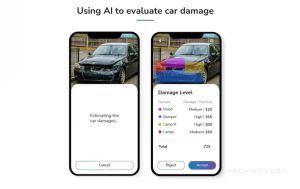
Beyond damage detection, AI systems can generate accurate cost estimates by analyzing damage types, researching current parts prices, calculating labor requirements, and applying regional market factors.
Integrated parts pricing: AI systems can access real-time parts pricing databases to ensure that estimates reflect current market costs rather than outdated pricing information. This integration eliminates the research time traditionally required for parts cost lookup while improving estimate accuracy.
Labor calculation optimization: AI algorithms can calculate labor requirements based on industry standards, damage complexity, and regional labor rates, providing consistent labor estimates that reflect actual work requirements rather than subjective assessments.
Regional market adjustments: AI systems can apply appropriate regional adjustments for labor rates, parts availability, and market conditions while maintaining consistent evaluation standards across different locations.
Historical data analysis: AI systems can analyze historical repair data to refine cost estimates based on actual repair outcomes, continuously improving estimate accuracy through machine learning capabilities that incorporate real-world feedback.
Benefits of standardized estimates
Implementing AI-powered standardized estimates delivers substantial benefits across multiple dimensions of repair network operations, improving efficiency, customer satisfaction, and business relationships.
Operational consistency across locations
Standardized estimates ensure that all network locations provide consistent pricing and service standards, improving brand reputation and customer confidence across the entire network.
Brand integrity protection: Consistent pricing and service standards protect brand reputation by ensuring that customers receive uniform treatment regardless of which network location they visit. This consistency builds customer trust while supporting brand value and market positioning.
Quality control improvement: Well-planned estimation processes make it easier to keep track of the performance across network locations, identify training needs, and ensure that all locations meet established quality standards. This monitoring capability supports continuous improvement initiatives.
Performance benchmarking: Consistent estimation standards enable accurate performance comparisons between locations, supporting data-driven decisions about resource allocation, training programs, and operational improvements across the network.
Faster turnaround time
AI-powered estimation systems significantly reduce the time that is required to generate accurate estimates, improving customer service while also hugely increasing operational efficiency.
Immediate estimate generation: AI systems can generate comprehensive estimates within minutes of receiving damage documentation, eliminating the extended wait times associated with manual estimation processes. This speed improvement significantly enhances customer satisfaction.
Reduced bottlenecks: Faster estimation processes reduce challenges that might limit the repair network throughput, enabling higher volume capacity without proportional increases in staffing or overhead costs in the traditional methods.
Enhanced scheduling efficiency: Rapid estimate generation enables more efficient scheduling of repair work, reducing idle time and improving resource utilization across repair facilities while supporting better customer service delivery.
Technician efficiency
Standardized AI systems enable technicians to focus on actual repair work rather than spending extensive time on estimation activities, improving both productivity and job satisfaction.
Reduced estimation workload: AI automation eliminates much of the manual work traditionally required for estimation, enabling technicians to focus on repair activities that provide greater value and job satisfaction while utilizing their skills more effectively.
Improved accuracy: AI systems reduce the pressure on technicians to provide perfect estimates while eliminating the stress associated with potential estimation errors that could affect customer relationships or profitability.
Enhanced expertise utilization: Technicians can focus their expertise on complex repair challenges rather than routine estimation activities, and this is seen to improve the overall service quality and technician development while also maximizing the value of skilled labor.
Strengthened partnership with insurers
Consistent, accurate estimates improve relationships with insurance partners who depend on reliable pricing information for claims processing and customer service.
Trust building: Insurance companies develop greater confidence in repair networks that provide consistent, accurate estimates, leading to stronger partnership relationships and increased referral volumes that support business growth.
Streamlined claims processing: These well-planned estimates reduce the disputes and negotiations that are brought on by the traditional, complicated claims processing method, enabling faster claim resolution and improved customer satisfaction for both repair networks and insurers.
Reduced administrative overhead: Fewer estimation disputes and corrections reduce administrative overhead for both repair networks and insurance partners, improving operational efficiency for all parties while reducing costs.
Scalable quality control
AI-powered standardization enables repair networks to maintain consistent quality standards across growing numbers of locations without proportional increases in management overhead.
Automated quality monitoring: AI systems can very efficiently monitor estimation quality and identify locations that may need additional training or support, enabling proactive quality management and continuous improvement.
Growth facilitation: Standardized processes enable repair networks to expand more easily by ensuring that new locations can quickly adopt established quality standards and operational procedures without extensive training periods.
Real-world use cases
AI-powered estimation standardization is being successfully implemented across various types of repair network operations, demonstrating practical benefits and addressing specific industry challenges.
Franchise repair networks using AI to enforce uniformity.
Franchise repair networks using AI to enforce uniformity across franchisees face unique challenges related to maintaining brand standards while accommodating individual franchise operations.
Brand consistency requirements: Franchise repair networks must ensure that customers receive consistent service and pricing regardless of which franchise location they visit. AI-powered estimation systems help enforce brand standards while reducing the management overhead required for quality control.
Franchisee support: AI systems provide franchisees with professional estimation capabilities that might otherwise require extensive training or experienced personnel, enabling smaller franchise operations to compete effectively while maintaining brand standards.
Quality monitoring capabilities: Franchise networks can use AI estimation data to monitor franchisee performance, identify training needs, and ensure compliance with brand standards without requiring extensive on-site oversight.
OEM-certified body shops maintain brand reputation.
OEM-certified body shops maintaining brand reputation through accurate and fair estimates face pressure to meet manufacturer standards while remaining competitive in local markets.
Manufacturer standard compliance: OEM-certified shops must follow specific repair procedures and quality standards that affect estimation accuracy and consistency. AI systems help ensure compliance with these requirements while maintaining competitive pricing.
Reputation protection: Accurate estimates that reflect actual repair requirements help OEM-certified shops to be on top of their reputation for quality and integrity, supporting continued certification and customer trust.
Competitive positioning: Consistent, accurate estimates help OEM-certified shops differentiate themselves from general repair facilities by demonstrating superior expertise and reliability.
Rental or fleet return centers using AI for instant assessment
Rental or fleet return centers using AI to instantly assess liability and chargebacks face unique challenges related to high-volume processing and dispute prevention.
High-volume processing: Rental return centers must process numerous vehicles daily while maintaining accuracy and customer satisfaction. AI systems enable rapid assessments that support efficient operations without compromising quality.
Dispute prevention: Accurate, objective damage assessments reduce disputes about damage responsibility and repair costs, improving customer relationships while protecting rental company interests.
Cost recovery optimization: Accurate damage assessments ensure appropriate chargeback calculations that recover legitimate costs without overcharging customers, maintaining fairness while protecting profitability.
Challenges to address
While AI-powered estimation systems offer a lot of benefits, successful implementation requires addressing several important challenges that affect system accuracy and effectiveness.
Training AI on local repair costs
Training AI on local repair costs to ensure regional accuracy requires comprehensive data collection and ongoing system updates that reflect changing market conditions.
Regional variation accommodation: AI systems must account for legitimate regional differences in labor rates, parts costs, and market conditions while maintaining consistent evaluation standards for damage assessment.
Data collection requirements: Training effective AI systems requires extensive local market data, including current parts pricing, labor rates, and repair time standards that may vary significantly between markets.
Ensuring AI systems stay up-to-date
Ensuring AI systems stay up to date with changing parts availability and pricing requires ongoing maintenance and data management that can be complex and resource-intensive.
Dynamic pricing integration: Parts pricing changes frequently based on market conditions, supplier availability, and manufacturer updates. AI systems must integrate with current pricing databases to maintain estimated accuracy.
Technology evolution tracking: Vehicle technologies evolve rapidly, requiring AI systems to stay current with new repair procedures, parts specifications, and labor requirements for emerging vehicle technologies.
Combining AI with human oversight
Combining AI with human oversight to handle complex or borderline cases requires a careful balance between automation efficiency and human expertise for optimal results.
Complex case identification: AI systems must be able to identify cases that require human review while handling routine estimates automatically, ensuring that complex situations receive appropriate attention.
Quality assurance protocols: Effective implementation needs a process of quality assurance protocols that monitor AI performance while ensuring that human oversight adds value without creating unnecessary challenges.
Conclusion
Repair cost estimation has been a way into this industry that carries a lot of inconsistency and inefficiency in the automotive repair industry, creating challenges for repair networks for years. Traditional manual estimation methods introduce a perspective of subjectivity and produce inconsistent results that undermine trust and operational efficiency.
As AI technologies continue to evolve and increase across the repair industry by companies like Inspektlabs, estimation capabilities will become a lot essential for maintaining competitive positions in evolving markets. Organizations that embrace these technologies position themselves for success while delivering superior value to customers and partners.
