

Termites are among the most destructive pests that can invade your home, known as silent destroyers for their ability to cause extensive, costly damage long before homeowners become aware of their presence. Their relentless feeding on wood and other cellulose materials can threaten the structural integrity of your property, leading to costly repairs. Fortunately, you can dramatically reduce the likelihood of such devastation by acting early and educating yourself on prevention techniques. For homeowners who value the long-term health and safety of their investment, scheduling a termite inspection in Aiken, SC is a prudent first step. Inspections provide a baseline assessment, revealing any risk factors or early signs of infestation you might otherwise miss. Understanding the most effective termite prevention strategies gives you the power to keep your living environment healthy and your property free from hidden damage.
Effective termite prevention involves managing moisture, regular inspections, and utilizing advanced pest-control methods. Key actions include repairing leaks, ensuring proper drainage, and sealing foundation cracks. Working with professionals can enhance prevention strategies and reduce repair costs. Maintaining vigilance about entry points and conducting regular maintenance can minimize the risk of extensive termite damage, which may lead to costly reconstructions. Comprehensive inspections in less visible areas are crucial for a termite-resistant setting.
Maintain Regular Inspections
Diligent monitoring of your property remains the primary defense against a termite problem that could otherwise go undetected for months or even years. At least once or twice a year, walk through and around your home, carefully checking foundational walls, crawl spaces, and all wooden structures, including flooring, window sills, and beams, for subtle warning signs. Look for mud tubes along the foundation, piles of discarded wings near windowsills or doors, and wood that sounds hollow when tapped. Early detection is crucial, as these signs often precede any visible surface damage and may be your only clue that a colony is present. Acting at the first hint of trouble helps you avoid infestations that escalate into expensive repairs or structural overhauls. Thorough annual or biannual inspections are essential, especially if your area is prone to termite activity.
Control Moisture Levels
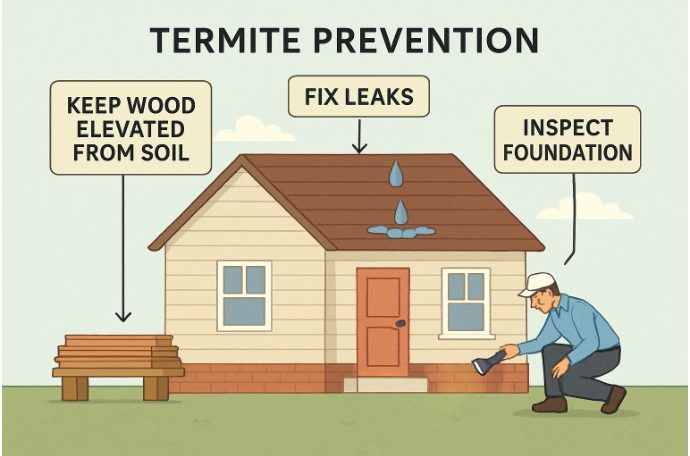
Termites are strongly attracted to moisture, as their colonies need damp environments to thrive and expand. Any persistent dampness around your home’s foundation or woodwork poses a serious risk, as termites can quickly capitalize on it to gain entry and begin feeding. Addressing this means checking for and repairing any leaks in water pipes, roofing, air conditioning units, or faucets as soon as they’re discovered. Clean out gutters and make sure downspouts direct water several feet away from your home’s foundation to eliminate puddling or water runoff that can seep into wood or the basement. In areas like basements and crawl spaces, consider using high-quality dehumidifiers and ensuring proper ventilation to keep humidity levels as low as possible. The best prevention is ongoing vigilance—by regularly inspecting for water accumulation, you create an environment that is naturally resistant to termites.
Eliminate Wood-to-Soil Contact
Maintaining a clear separation between wood and soil is a proven way to deny termites direct access to the structures they crave. Exterior elements such as siding, trim, door frames, and latticework should be set at least 6 inches above the ground to make it difficult for termites to bridge the gap into your home. Decks, fence posts, and backyard structures should be supported by concrete or metal bases instead of resting directly on the ground. This prevents hidden entry points that termites could exploit. Gardening features, such as mulch and wood chips, should also be kept well away from your foundation, as they can create moisture-rich zones that invite termite activity.
Implementing these construction and landscaping best practices serves as an additional line of defense for any homeowner looking to prevent unnecessary colony invasions.
Utilize Natural Repellents
Using natural repellents is an eco-conscious way to discourage termites, reducing your reliance on chemical pesticides near your living spaces. Boric acid, expertly applied in powder or solution form to suspected trouble spots, disrupts termites’ ability to digest food and eventually reduces their populations. Another effective method, especially for homes with children or pets, is applying orange oil. Orange oil contains d-limonene, a compound lethal to termites but gentle on people and pets. Treating wood surfaces with orange oil both deters termite presence and kills those that come into contact with it. These strategies can be used in combination for added effectiveness, providing an affordable layer of defense for those who prioritize sustainability.
Implement Baiting Systems
Modern termite baiting systems combine cutting-edge science with ease of use, making them an excellent solution for long-term termite management. Carefully positioned along the perimeter, these bait stations attract foraging termites with a specially formulated bait. Upon ingesting the bait, termites carry it back to the rest of the colony, where it is shared, ensuring the entire colony is targeted and eventually eradicated. What makes baiting systems especially valuable is their non-invasive nature and the fact that they do not require large quantities of chemical sprays. The system’s monitoring component provides frequent updates on termite activity, enabling early detection and targeted intervention before visible damage occurs. Regularly checking and maintaining these stations provides a reliable, discreet means of protecting your family and your investment.
Seek Professional Assistance
While at-home efforts can go a long way, certain infestations call for the expertise and resources of a professional pest control service. Experienced exterminators possess deep knowledge of detecting hidden colonies, identifying subtle risk factors specific to your region, and applying treatments that are far more potent than DIY options. They employ high-tech solutions, including soil treatments, advanced baiting systems, and, if necessary, structural modifications. Scheduling periodic visits from a local professional gives you access to continued surveillance and peace of mind, knowing that if termites do become a threat, they will be handled swiftly and thoroughly. The investment in professional support often pays for itself many times over, particularly by avoiding the catastrophic expense and disruption of major repairs down the road.
Conclusion
Protecting your home against termite infestations requires a combination of awareness, diligence, and proactive measures. By layering regular inspections, moisture control, careful landscaping, natural repellents, baiting systems, and professional guidance, you create a robust barrier that stands between your property and the costly consequences of termite invasions. Taking action today ensures the long-term health, safety, and value of your home, providing you and your family a secure environment free of hidden threats.
