



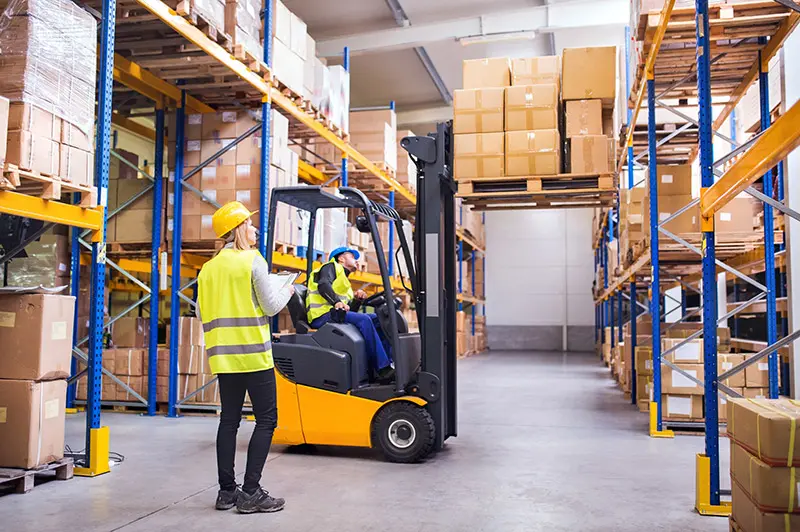
Cash flow pressure rarely comes from one dramatic expense. More often, it builds through a series of decisions that look sensible on paper but reduce flexibility in practice. Buying forklifts is a good example. On the surface, ownership can seem like the more economical route: you pay once, put the asset on the books, and use it for years. But for many businesses, especially those managing seasonal demand, project-led workloads, or tight working capital, hiring is often the smarter financial move.
That is because forklifts are not just operational tools. They are also balance sheet decisions. And when margins are being squeezed by labour costs, energy prices, and supply chain volatility, tying up capital in non-core assets deserves closer scrutiny.
Ownership Can Drain Cash Before It Creates Value
A forklift purchase affects cash flow immediately, while the return on that investment arrives gradually. Even when financed, ownership typically involves an upfront deposit, ongoing repayments, insurance, servicing, and the internal time needed to manage the asset. That is cash committed before the truck has moved a single pallet.
For businesses where liquidity matters day to day, this can create unnecessary strain. Capital tied up in equipment is capital that cannot be used elsewhere, whether that means hiring staff, increasing stock levels, investing in sales, or simply maintaining a healthier operating buffer. In uncertain trading conditions, that buffer matters more than many businesses admit.
There is also the issue of mismatch. Forklift needs are not always constant. Warehouses expand and contract. Contracts start and end. Peak periods come and go. If demand falls, the forklift still needs to be paid for. Ownership assumes steady utilisation. Real business conditions rarely cooperate.
Hiring Preserves Working Capital
The strongest case for hiring is simple: it keeps more cash available for the parts of the business that directly generate revenue. Instead of making a large capital outlay, companies can spread costs into predictable operating expenses. That improves short-term liquidity and often makes financial planning easier.
This matters particularly in sectors such as logistics, manufacturing, retail distribution, and construction, where activity levels can shift quickly. If the workload changes, hired equipment can be scaled up or down with far less financial friction than owned assets.
That flexibility is often overlooked when businesses compare only purchase price against hire rate. The better comparison is broader. Ask what the cash could be doing if it were not locked into equipment. In many cases, the answer is more valuable than ownership itself.
Around this point, many operations managers start looking for external help that supports capacity without compromising liquidity. Access to reliable material handling equipment rental support can be useful in exactly those situations, especially when short-term demand spikes or replacement trucks are needed faster than a purchase cycle would allow.
Flexibility Has Financial Value
Flexibility is not just an operational benefit; it has measurable financial consequences. When businesses hire, they reduce the risk of overcommitting capital based on forecasts that may change. They can respond faster to new contracts, temporary site requirements, or warehouse reconfigurations without taking on a long-term asset burden.
This becomes even more valuable when equipment needs are specialised. A business may need a high-capacity truck for one project, a reach truck for another, and a short-term replacement during maintenance on an existing fleet. Buying each unit would be expensive and hard to justify. Hiring keeps the spend aligned with actual use.
The Hidden Costs of Ownership Add Up
Purchase price is only part of the ownership equation. The true cost includes maintenance, breakdowns, compliance checks, operator training implications, battery care for electric models, and eventual resale risk. Some of these costs are predictable. Others are not.
Depreciation is another factor that can distort decision-making. A forklift may remain useful operationally while losing value financially. That creates a gap between what the asset costs the business and what it could realistically recover if sold. In a weak second-hand market, that gap can widen quickly.
Then there is downtime. If an owned forklift fails at the wrong moment, the cost is not limited to repair. Delayed loading, disrupted shifts, missed dispatch windows, and idle labour can all hit cash flow indirectly. Hire arrangements often reduce that exposure by making replacement and service support more straightforward.
Cash Flow Management Is About Timing, Not Just Cost
A lower total lifetime cost does not automatically make ownership the best choice. Cash flow management is about when money leaves the business, how predictable those outflows are, and how much resilience remains afterwards.
That distinction matters. A company might save money over five years by buying, but still put itself under strain in the next six months. If that affects payroll timing, supplier relationships, or the ability to fund growth, the theoretical saving may not be worth it.
Hiring shifts the emphasis from asset accumulation to financial agility. For many finance teams, that is a more useful objective.
When Hiring Makes the Most Sense
Hiring tends to be particularly effective in a few common scenarios:
- seasonal operations with fluctuating demand
- project-based work with defined equipment timelines
- fast-growing businesses that need capacity before committing to fleet ownership
- companies replacing trucks temporarily during repair, upgrade, or site changeovers
In each case, the financial logic is similar. The business pays for capability when it needs it, rather than funding idle capacity in advance.
A More Practical Approach to Equipment Spending
None of this means buying forklifts is always the wrong decision. For businesses with stable utilisation, strong reserves, and a clear long-term requirement, ownership can still make sense. But it should be a deliberate choice, not a default one.
Too often, equipment purchasing is treated as a routine operational decision when it is really a cash flow strategy decision. That shift in perspective changes the conversation. Instead of asking, “Should we own this asset?” the better question is, “What does this choice do to our liquidity, flexibility, and risk exposure?”
For many businesses, hiring provides the better answer. It reduces upfront strain, keeps capital available, and aligns equipment costs more closely with real trading conditions. In a market where agility is increasingly valuable, that is not just convenient. It is financially sound.


