



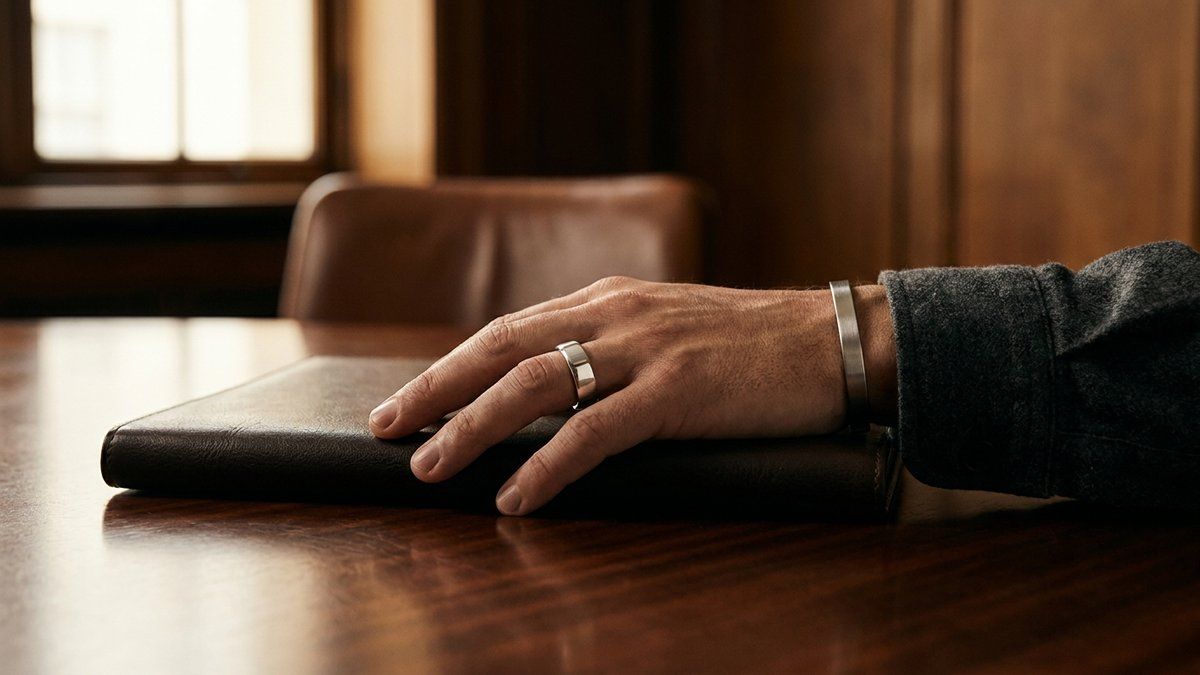
Look at any boardroom photo from 2015 and count the brand stamps. Belt buckles with letter monograms. Watches with logo dials. Wallets with screen-printed insignia. Now look at one from 2025. Most of those signals are gone — not because executives lost interest in expensive things, but because they stopped letting the things announce themselves.
Quiet luxury for men is no longer a trend story. It’s a measured shift in how power dresses itself. North American retailers sold roughly 40 percent fewer heavily-logoed luxury products in 2023 than the year before. Search interest in “quiet luxury” rose more than 700 percent year-over-year through early 2024. The men’s category leads the move — and accessories are where it shows up first.
The Logo Tax Nobody Talks About
The visible brand stamp used to be a shortcut. Wear the LV monogram and people knew the price. Wear the Rolex bezel and the room knew the watch. That signaling worked when the goal was being recognized as wealthy by strangers.
The math changed when those same strangers started buying convincing counterfeits. A four-figure logoed wallet and an eighty-dollar fake of the same wallet now read identically across a conference table. Anyone with a phone can verify a serial number, but no one ever does. The stamp lost its information value.
What it kept was a tell.
A 2025 YouGov consumer survey found that only 10 percent of luxury buyers say they make those purchases to show off. The other 90 percent cite quality, durability, and personal satisfaction — reasons that don’t require visible branding to deliver. Once buyers internalized the math, the logo stopped functioning as proof of taste and started functioning as proof of needing taste verified by others.
Executives noticed first. The C-suite is full of people who already won the recognition battle. They don’t need the room to know they spent. They need the room to know they don’t have to.
What Replaced the Logo: Three Tells
When the brand stamp went away, three quieter markers took its place. None of them broadcast. All of them reward inspection.
Weight
A solid sterling silver ring sits differently than a stamped, plated, or hollow-cast lookalike. The same effect carries to the wrist — pick up a hand-finished sterling silver chain bracelet and you feel the metal across the whole forearm: usually 50 to 90 grams of solid mass settling against skin, with a temperature lag that hollow pieces never produce. Cheap metal warms to skin in about three seconds. Solid silver takes thirty. The hand registers the difference before the eye does.
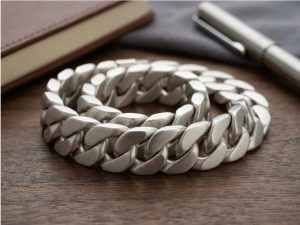

This is why men’s quiet luxury skews toward heavier accessories than the broader category. Rings, bracelets, cuff links, money clips — items where mass is part of the function. A pen can lie about its build. A solid sterling silver chain bracelet that passes the same weight test cannot.
Texture
The second tell is grain. Premium materials have surface character that synthetic substitutes can’t fake under close inspection. Stingray pebble. Crocodile horn-tip scales. Ostrich quill follicles. Brushed sterling matte against polished mirror. None of these need a logo because the surface itself is the credential — anyone who has handled the real thing recognizes it on contact.
Patina
Logos don’t age. They scuff, fade, peel — the brand stamp on most bifold wallets is the first thing that fails. Quality materials do the opposite. They get more identifiable with time. A sterling silver ring darkens in the recesses where fingers don’t touch, leaving the high points bright. Vegetable-tanned leather develops a deep amber. Both processes take roughly 18 to 36 months of daily wear and cannot be replicated from the factory.
The Three-Question Test for Quiet Luxury Accessories
Before any accessory purchase, run three questions. They take less than a minute and screen out most of the trend’s worst offenders.
1. If the logo were removed, would the piece still read as expensive? A heavily-logoed bifold usually fails this. A hand-stitched ostrich bifold of the same price tier passes it. The first one’s value lives in recognition. The second’s lives in the leather.
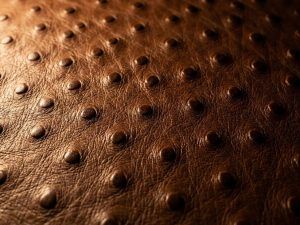
2. Does it require a glance, or does it require a touch? Quiet luxury rewards the second. Genuine ostrich leather wallets with quill-pattern texture register on contact — those raised follicle dots run roughly 5,500 per square inch on a mature bird. No print, emboss, or stamping reproduces the depth.

3. Will it look better in five years than it does now? If yes, the construction is doing the work. If no, the brand was. The first kind builds equity. The second is a depreciating asset with a logo on it.
This test isn’t about minimalism. Quiet luxury isn’t anti-decoration — heavy sculpted silver rings, embossed leather, hand-engraved bracelets all qualify. The rule isn’t avoid detail. It’s avoid a stranger’s logo doing the talking.
Why This Shift Is Permanent
Three forces suggest this isn’t a fashion cycle that will reverse in twenty-four months.
The first is sales data. Loro Piana, Zegna, and Brunello Cucinelli — brands built on discreet branding — kept growing through the same window when several logo-forward megabrands stalled. North American retailers cut heavily-logoed inventory by roughly 40 percent in a single year. The market voted, and it voted quiet.
The second is the buyer profile. Logos peaked when luxury wealth was newer, more concentrated in finance and tech, and trying to telegraph itself across rooms. The current buyer is more diffuse — first-generation founders, mid-career professionals, dual-income executives — and the average net worth is older than it was a decade ago. Older money has always preferred the quieter signal. The current shift is younger money learning the lesson.
The third is structural. AI-driven counterfeiting has collapsed the cost of producing a convincing fake of any logoed product. Distinguishing a high-end logoed accessory from its bargain-bin replica across a conference table is essentially impossible without a serial check.
The logo stopped being unfakeable, which means it stopped being a useful signal of authentic spending. Materials remained unfakeable. So materials kept their meaning.
Quiet luxury is what happens when the signaling layer breaks and people fall back on the substrate.
Frequently Asked Questions
What’s the difference between quiet luxury and minimalism?
They overlap, but they aren’t the same thing. Minimalism reduces visual noise. Quiet luxury replaces visible branding with invisible quality. A heavy carved sterling silver ring is quiet luxury but not minimalist. A blank logo-free t-shirt is minimalist but not necessarily luxury. The shared trait is that neither leans on a brand stamp to do the work.
Why do executives gravitate toward quiet luxury accessories?
Three reasons. C-suite professionals already won the recognition battle, so they don’t need their accessories to telegraph wealth. They tend to operate in environments where overt logos read as insecurity rather than status. And accessories like rings, bracelets, and money clips are inspected at close range — where material quality outperforms visible branding every time.
Is quiet luxury just an excuse to charge premium for plain things?
Sometimes. The trend has produced its share of marked-up plain t-shirts that are functionally Gildan with better marketing. The honest version delivers measurable build quality — actual gauge of metal, actual leather grade, hand-finishing time you can verify by inspection. The fake version delivers nothing except the absence of a logo. Pick by feel, not by retail price.
What men’s accessories embody quiet luxury best?
The rule of thumb is mass plus material specificity. Heavy sterling silver rings without a maker mark on the face. Hand-tooled leather wallets. Exotic skin bifolds where the texture is the credential. Brushed sterling money clips. Unbranded woven bracelets. Anything where the price tag would still make sense if you cut off the logo with scissors.
The cleanest test for whether a piece is real quiet luxury or just paying for the absence of a logo is to imagine it five years in. If it’ll have darker recesses, deeper grain, or developed character — it’s earning its place. If it’ll just look like a five-year-old version of itself — the brand was the only thing carrying it.
Build the second category out of your accessories drawer first. The closet can wait.
Marcus Halloran has worked in men’s accessories — sterling silver jewelry, exotic leather goods, and metal hardware — for over fifteen years, with a focus on hand-finished pieces that age into character rather than out of it. He oversees product curation at Bikerringshop.


