



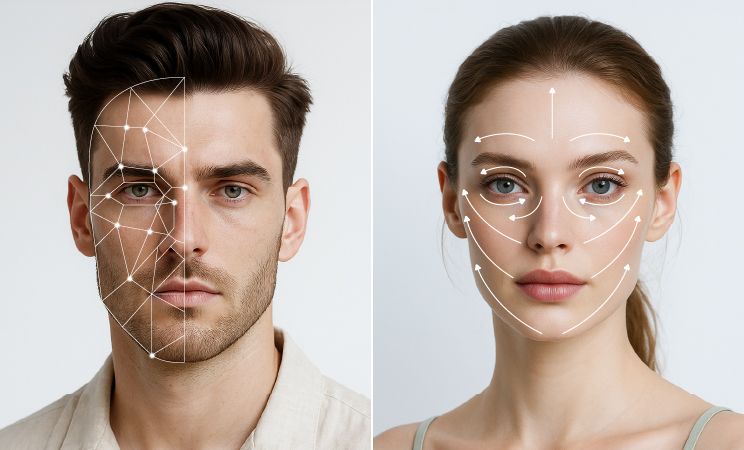
Most people notice slight differences in their features when looking at a photograph. A smile that looks perfectly aligned in the mirror might suddenly seem slightly uneven on a computer screen. This happens because camera lenses capture a flattened, static version of reality that highlights natural variations.
Understanding how to manage these variations can dramatically improve your confidence during photoshoots or video calls. You do not need perfect genetics to take a great photo. You simply need to understand how angles, lighting, and underlying structural factors influence the final image.
By applying a few basic principles, you can easily minimize the appearance of asymmetry. The following sections explore practical ways to present a balanced, natural look every time the camera flashes.
Understanding Natural Asymmetry
Nobody possesses a perfectly symmetrical face. If you were to split a photograph of your face down the middle and mirror each side, the resulting images would look like two completely different people. Genetics, sleeping habits, and everyday expressions shape how our features develop over time.
Sleeping on the same side of your face every night can gradually flatten that cheek. Chewing food predominantly on the right or left side can build up jaw muscles unevenly. These are completely normal human traits. The goal is not to eliminate them entirely, but rather to understand how they interact with a camera lens.
When a camera lens gets too close to your face, it can distort your features and exaggerate these natural imbalances. Standing slightly further back and using a zoomed-in lens often provides a much more accurate and flattering representation of your true facial structure.
Posture and Camera Angles
Your posture dictates how your face aligns with the lens. Slouching or leaning forward can push your jaw out of alignment and create uneven shadows across your neck and chin. Sitting up straight elongates the neck and naturally balances the lower half of your face.
The angle of the camera is equally important. Placing a camera directly at eye level provides the most realistic perspective. If the lens sits too low, it emphasizes the chin and nostrils, often making the lower jaw look wider and less symmetrical. If the camera sits too high, it distorts the forehead and makes the eyes appear uneven.
You can also experiment with slight head tilts. Turning your head just a few degrees away from a straight-on profile can hide minor imbalances in the nose or jawline. Find your “good side” by taking a few test shots at different angles to see which positioning looks the most balanced.
The Role of Dental Health in Facial Structure
Your teeth and jawbone provide the foundation for the lower half of your face. When this foundation shifts, it directly impacts your facial symmetry. Over time, natural wear, missing teeth, or jaw misalignment can cause one side of the face to appear shorter or more sunken than the other.
The jawline requires continuous stimulation from teeth to maintain bone density. When teeth are missing for extended periods, the underlying bone can begin to deteriorate. This deterioration often leads to sagging cheeks and a visibly uneven smile. Maintaining a healthy bite and addressing missing teeth promptly helps preserve the natural contours of the lower face.
Sometimes, restoring this underlying structure requires specific dental interventions. For instance, patients suffering from severe bone loss in their upper jaw might receive zygomatic dental implants in Kilgore TX to properly support their facial framework and restore a symmetrical appearance. Preserving your dental health is essentially preserving the architectural support of your face.
Lighting Techniques for Balance
Lighting can either hide or highlight asymmetrical features. Harsh, directional light coming from a single side will cast deep shadows across half of your face. This instantly draws attention to any unevenness in your cheekbones, nose, or jawline.
To achieve a balanced look, opt for soft, even lighting. Facing a large window provides excellent natural illumination that wraps around the face smoothly. If you are using artificial lights, place a ring light or two identical lamps directly in front of you. This fills in harsh shadows and creates a uniform, symmetrical glow across all your features.
Putting Your Best Face Forward
Achieving a balanced appearance on camera is a combination of good posture, strategic lighting, and structural health. While nobody is perfectly symmetrical, understanding how a camera lens captures your features allows you to present yourself in the best possible light.
Small adjustments to your environment and daily habits can make a significant difference in how your face translates to a photograph or video feed. By focusing on steady angles, even lighting, and underlying dental health, you can confidently step in front of any camera knowing your features are beautifully represented.


