



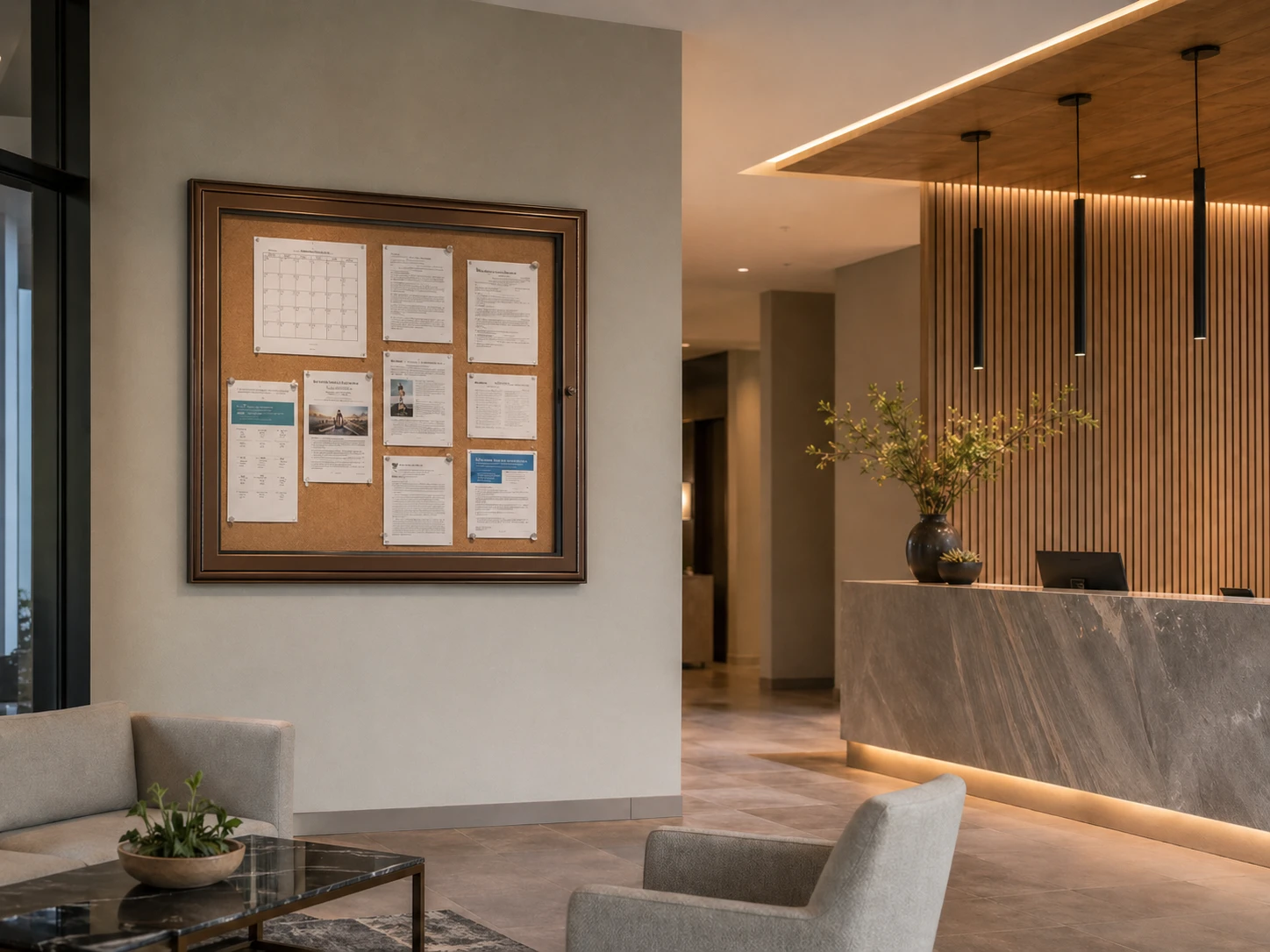
A business interior should feel organized, professional, and easy to understand from the first glance. Visitors notice not only furniture, lighting, and signage, but also how a company presents everyday information. That is why choosing the right bulletin board manufacturer can help a business keep announcements, notices, and printed materials neat without making the space look temporary or cluttered.
An enclosed bulletin board is a practical display solution for offices, hotels, schools, clinics, restaurants, retail stores, and other commercial interiors. It protects printed materials, keeps communication visible, and makes public information look more polished. Unlike a basic open cork board, an enclosed model usually includes a frame, a transparent cover, and sometimes a lock, which makes it more suitable for customer-facing and high-traffic spaces.
For many businesses, a bulletin board is not just a place to pin papers. It is part of the interior and part of the customer experience. The right board helps people find information quickly, supports a cleaner visual environment, and shows that the company pays attention to details.
Why an Enclosed Bulletin Board Matters in a Commercial Space
Printed information is still important in many business environments. Companies need to display working hours, safety rules, staff notices, event updates, menus, certificates, promotions, schedules, and visitor instructions. When these materials are taped to walls or placed randomly, the space can quickly start to look unprofessional.
An enclosed bulletin board creates one clear and controlled area for communication. It helps keep notices in order and protects them from dust, damage, or casual handling. This is especially valuable in lobbies, reception areas, corridors, waiting rooms, schools, medical centers, apartment buildings, and hospitality interiors where many people pass by every day.
A well-designed board also improves the visual impression of the space. Instead of looking like a temporary notice area, it becomes a clean interior element. For businesses that care about brand image, this matters because small details often influence how professional and trustworthy the company appears.
How to Choose the Right Size, Layout, and Placement
The size of an enclosed bulletin board should match both the amount of information and the wall where it will be installed. A small board may work well in a private office, staff room, or compact reception area. A larger board is better for schools, hotels, clinics, public buildings, retail spaces, and other locations where many notices need to be displayed at once.
The layout should also feel natural. A horizontal board often works better on wide walls, in corridors, or above furniture. A vertical board can be a good choice near doors, elevators, entrance zones, or narrow wall spaces. The goal is to make the information easy to see without overwhelming the interior.
Before buying a board, a business should consider:
- where the board will be installed;
- who will read the information;
- how often notices will be updated;
- whether the area is public or private;
- how much wall space is available;
- whether the board needs a lock or protective cover;
- whether the frame matches the interior style.
Placement is just as important as size. The board should be installed at a comfortable reading height and in a location where people naturally stop or pass by. It should not block movement, create visual noise, or be placed where glare from windows or lighting makes the content difficult to read.

Materials, Frame Style, and Security Features to Consider
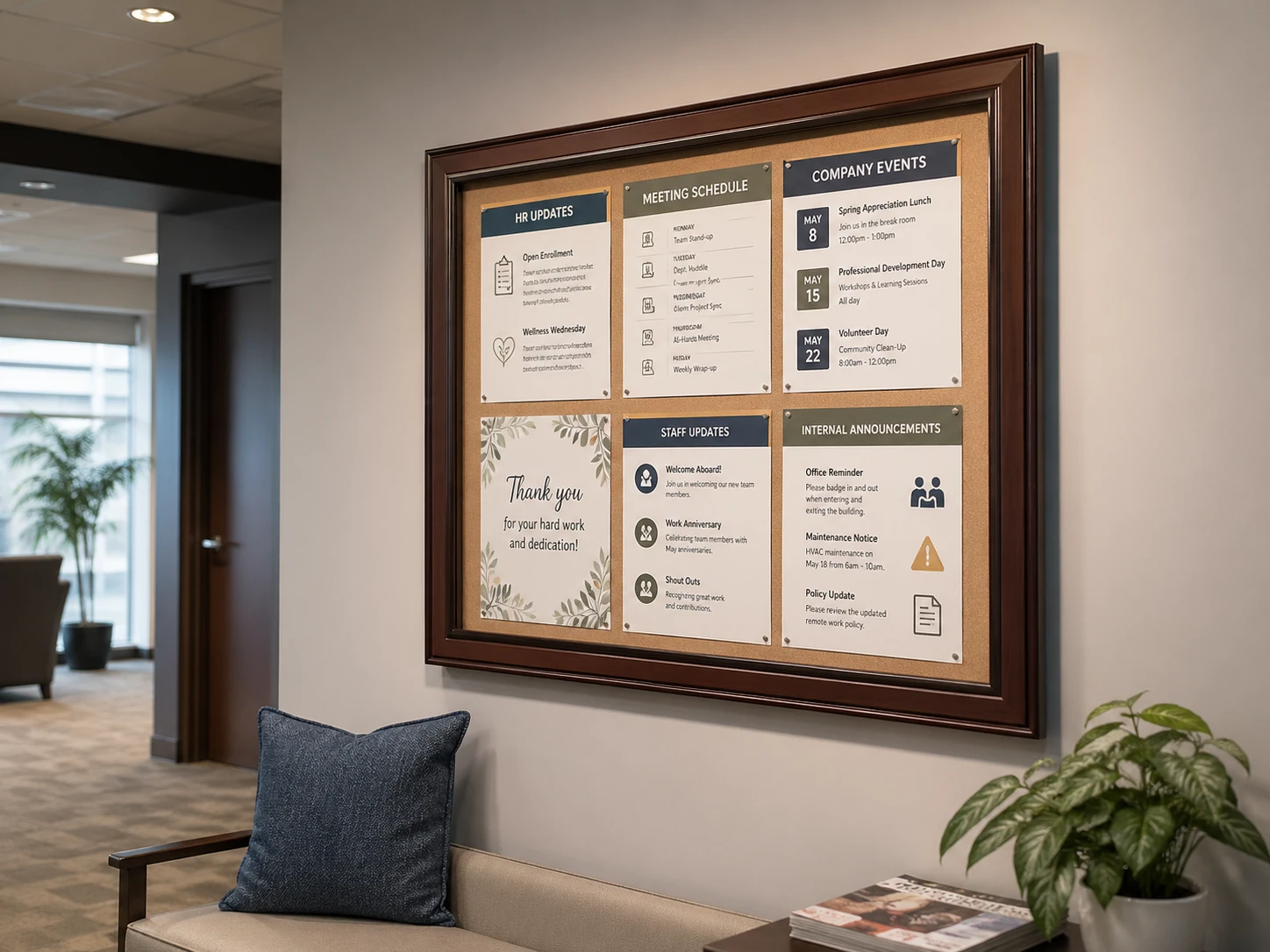
The frame has a strong effect on how the board fits into the interior. A wood frame can work well in hotels, restaurants, universities, law offices, and classic business interiors. It gives the display a warmer and more traditional appearance. A metal frame may be better for modern offices, clinics, schools, retail stores, and high-traffic commercial spaces because it looks clean, durable, and minimal.
The inside surface also matters. Cork is practical for pinned notices and regular updates. A fabric-covered surface can look softer and more premium, especially in lobbies, conference areas, and hospitality spaces. Neutral background colors usually work best because they help printed materials stay readable and do not compete with the message.
A transparent cover is one of the main advantages of an enclosed bulletin board. Acrylic or glass-style panels help protect notices from touch, dust, and damage. They also keep the display looking cleaner for a longer time. In public areas, this protection is especially useful because it prevents papers from being moved, removed, or changed without permission.
A lockable design is useful when the information must stay controlled. This can be important for schools, hospitals, apartment buildings, government offices, staff areas, and public corridors. If the board displays policies, safety instructions, schedules, or official announcements, a lock helps keep the content secure and consistent.
Matching the Bulletin Board to Your Brand and Interior Design
An enclosed bulletin board should look like part of the business interior, not like a random item added later. The frame color, material, size, and finish should work with the surrounding furniture, signage, doors, wall colors, and brand style. This is especially important in spaces where customers or guests form their first impression.


