

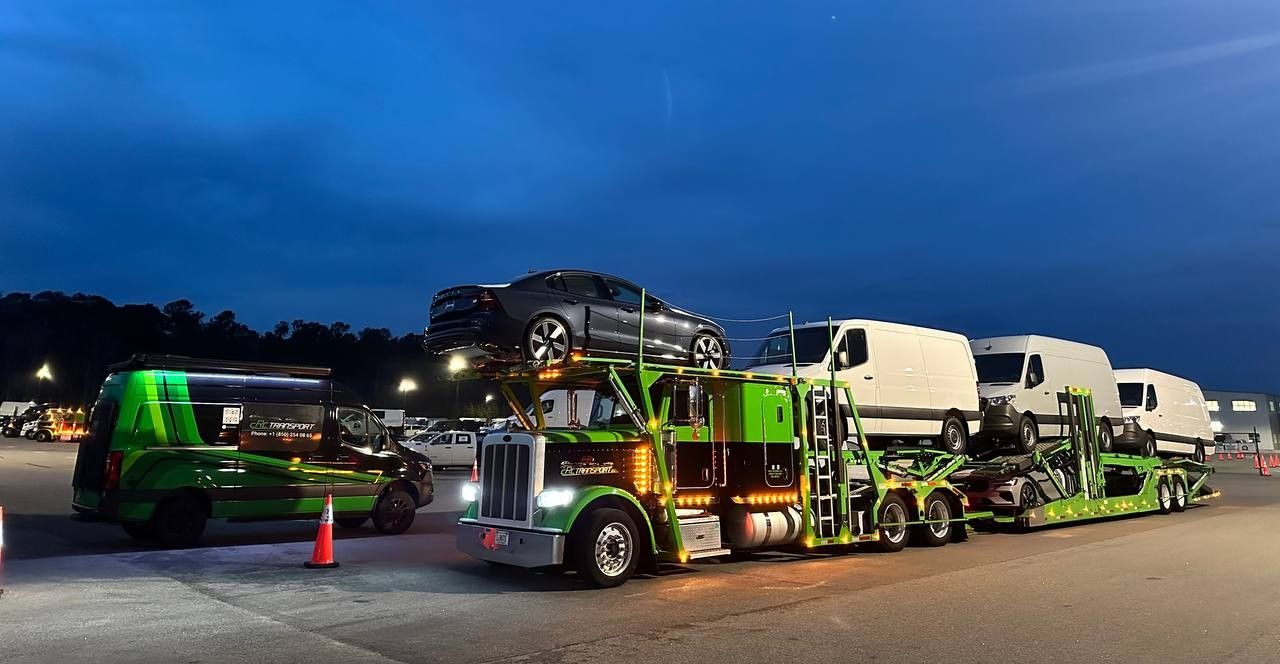
When you are shipping a single car for a one-time move, it’s a personal transaction. You worry about the scratches, you track the truck like a hawk, and once the car arrives, the relationship with the transporter ends. But for a business, whether you’re a dealership, a corporate relocation manager, or a fleet operator, vehicle logistics is a different beast entirely. It’s not a transaction; it’s a vital organ in your operational body.
If the cars don’t move, the revenue doesn’t flow. A two-day delay might be an inconvenience for an individual, but for a business, it can mean a missed sale, a frustrated executive starting a new role without their vehicle, or a logistical bottleneck that ripples through your entire quarter.
Choosing a partner for business-to-business (B2B) auto transport requires looking past the flashy websites and the “lowest price” guarantees. You need a partner that understands that your reputation is on the line every time their driver pulls into a lot.
The High Stakes of Business Vehicle Logistics
In the B2B world, the “product” isn’t just the transportation of metal from point A to point B. The product is predictability.
Think about a dealership waiting for a shipment of luxury SUVs. They’ve already run the ads, the sales team has scheduled test drives, and the floor plan interest is ticking away every day those vehicles aren’t on the lot. Or consider a corporation moving fifty employees to a new regional hub. If those employees arrive but their cars are stuck three states away, productivity drops as they struggle with rentals and Uber receipts.
This is why “cheap” is the most expensive word in business logistics. A cut-rate broker might save you $200 on a manifest, but if they disappear when a trailer breaks down or if they hire a carrier with subpar insurance, that $200 “saving” can quickly turn into a $20,000 liability.
Moving Beyond the “Broker vs. Carrier” Debate
You’ll often hear people argue about whether it’s better to go directly to a carrier or use a broker. For a business, the answer is usually: You need a scalable solution.
Working with a single carrier who owns three trucks is great for a very specific, local route. But what happens when you need to move ten cars from Florida to Seattle during peak season? That small carrier can’t help you. You need a partner with a deep network, someone who has the “logistical reach” to find capacity when the market is tight.
However, the vetting process for a business partner needs to be much more rigorous than for a consumer. You aren’t just looking for someone with a truck; you’re looking for a company that acts as an extension of your own logistics team.
Vetting for the Long Haul: What Really Matters
When you’re sitting across the (virtual) table from a potential logistics partner, stop asking about the price for five minutes and start asking about their infrastructure.
Financial Stability and Insurance
It sounds boring, but it’s the most critical part of the conversation. In the auto transport world, “under-insured” is a common problem. If a carrier’s policy has a $100,000 cargo limit, and they are hauling six Teslas worth $60,000 each, you have a $260,000 insurance gap. A reliable partner will proactively verify the insurance of every driver they assign to your load, ensuring the coverage actually matches the value of your inventory.
Compliance and Safety Ratings
Don’t take their word for it. Every professional logistics entity has a DOT (Department of Transportation) and MC (Motor Carrier) number. Use the FMCSA’s Safety and Fitness Electronic Records (SAFER) system to check their “crash” and “inspection” history. If you see a pattern of equipment violations or safety issues, that’s your cue to walk away. Business moves don’t have room for “accidents” that could have been prevented by a basic maintenance check.
Transparency and Technology
In 2026, there is no excuse for “I don’t know where the truck is.” For a business, real-time data is a necessity. You should be able to log into a portal or receive automated updates that tell you exactly where your assets are. If a company relies solely on “calling the driver” to give you an update, they aren’t ready for B2B scale.
Finding the Right Fit for Your Specific Industry
Not all auto transport is created equal. A company that is great at moving salvaged cars from auctions might be the wrong choice for moving high-end corporate assets.
To make the right choice, many companies turn to Monarch auto shippingas a proven provider of secure and efficient long-haul vehicle transport. Their approach often bridges the gap between the rigid logistics of a large-scale operation and the personalized care needed for sensitive shipments.
Different industries have different “pain points”:
- Dealerships: Need volume, speed, and clean Bill of Ladings to ensure vehicles can be sold the moment they hit the ground.
- Relocation Companies: Need “high-touch” communication because they are dealing with stressed employees.
- Fleet Managers: Need detailed reporting and bulk invoicing to keep the accounting department happy.
The Importance of Scalability and Capacity
One of the biggest mistakes businesses make is choosing a partner based on their “slow season” performance. It’s easy to move cars in February. It’s a nightmare to move them in May or June when the “snowbirds” are moving back North and the college kids are moving across the country.
A reliable partner should be able to demonstrate how they handle peak capacity. Do they have “priority” relationships with carriers? Do they have a dedicated dispatch team for their business accounts? If you grow by 20% next year, can they grow with you, or will your logistics be the thing that holds you back?
Communication: The “Soft” Skill that Saves Hard Cash
In my experience, the number one reason business partnerships in this industry fail isn’t because of a damaged car it’s because of a lack of communication.
If a truck breaks down in the middle of Missouri, that’s life. Machines fail. But if the logistics partner doesn’t tell you about that breakdown until three days later, when you call to ask why the cars aren’t there, that’s a failure of the partnership.
When interviewing a potential partner, ask them: “What is your protocol when a delay happens?” If they say “We don’t have delays,” they are lying. If they say, “We notify you within two hours and provide a secondary ETA,” they are worth their weight in gold.
Risk Mitigation: Beyond the Certificate of Insurance
Having an insurance certificate in a digital folder is one thing; knowing how to use it when a crisis hits is another. For a business, risk management isn’t just about covering the cost of a repair. It’s about “business continuity.”
If you are a relocation manager and an executive’s vehicle is damaged during a cross-country move, the cost of fixing the dent is secondary to the “cost” of that executive’s frustration and lost time. A reliable logistics partner doesn’t just pass the buck to the carrier’s insurance; they facilitate the entire process.
When vetting a partner, ask about their claims ratio and their internal claims department. Do they have a dedicated person who handles disputes, or are you expected to chase a driver across the country to get a signature? A true B2B partner acts as an intermediary, using their leverage with the carriers to ensure that your claims are prioritized and settled fairly.
The Pricing Strategy: Volume vs. Value
Every CFO wants to see “volume discounts.” And while it’s true that shipping 50 cars a month should yield a better per-unit price than shipping one car a year, there is a floor to how low that price can go.
In the auto transport industry, the price is dictated by the “Spot Market.” This is the real-time cost of diesel, driver hours, and trailer space. If your logistics partner promises you a “fixed rate” for the entire year, be careful. If the market price of a route jumps by 30% due to a fuel spike or a seasonal shift, a fixed-rate provider will simply stop picking up your cars because they can’t find a driver willing to take the lower rate.
A sophisticated partner will offer you transparent pricing models. They will show you the market data and explain why a route costs what it does. They won’t just give you the lowest number; they will give you the lowest sustainable number that guarantees your cars actually move. For a business, the cost of a car sitting on a lot for two weeks is almost always higher than the $100 you might “save” by choosing a cut-rate provider.
Streamlining the Paperwork: The “Digital Trail”
One of the biggest headaches for business-scale vehicle shipping is the sheer volume of paperwork. If you’re moving 20 cars from different locations, that’s 20 different Bill of Ladings, 20 invoices, and 20 sets of inspection photos.
If your partner is still faxing documents or sending blurry photos via text message, they are costing you money in administrative hours. Look for a partner who offers:
- Centralized Billing: One weekly or monthly statement for all shipments.
- Digital Inspection Reports: High-resolution photos and electronic signatures that are archived and searchable.
- Integration Capabilities: Can their system talk to your inventory management software or your CRM?
The more “hands-off” the logistics process is for your internal team, the more valuable the partnership becomes. You want your team focused on selling cars or managing talent, not chasing down a delivery receipt from a driver in Montana.
The “Preferred Customer” Advantage
In auto transport, the relationship goes both ways. When you find a reliable partner and stick with them, you become a “preferred account.” This status is your best insurance policy during the peak season.
When every dealership in the country is screaming for trucks in the middle of the spring rush, carriers will prioritize the brokers and logistics firms they trust the ones who provide consistent volume and clear communication. By extension, that priority is passed on to you. If you constantly jump from provider to provider to save $50, you have no loyalty to lean on when the market gets tight.
Building a long-term relationship allows your partner to learn your specific needs. They’ll know that your Seattle office has a low-clearance parking garage, or that your dealership doesn’t accept deliveries after 4:00 PM on Fridays. This “institutional knowledge” prevents the small, annoying mistakes that eat up your time.
Navigating the Challenges of Corporate Relocation
Corporate relocation is perhaps the most sensitive area of B2B car shipping. Unlike a dealership shipment, you are dealing with an individual’s personal life. The “human element” here is at 100%.
A partner who specializes in corporate moves knows that they aren’t just moving a car; they are moving a family’s primary mode of transport. This requires a higher level of communication. Proactive updates, “white-glove” enclosed options for executives, and a high degree of empathy are non-negotiable.
If your logistics provider treats a corporate relocation move like a “salvage yard pick-up,” you’re going to hear about it from your HR department. Choose a partner who can adjust their “tone” and service level based on the specific needs of the shipment.
Final Evaluation: The “Trial Run”
Before you sign a master service agreement or hand over your entire fleet’s logistics, do a trial run. Pick your most difficult route, the one that always seems to have delays or issues, and see how the potential partner handles it.
Pay attention to:
- Response Time: How long does it take to get a quote and a confirmed pickup?
- Driver Quality: Is the carrier professional, and is the equipment in good repair?
- The Hand-off: How smoothly is the vehicle delivered, and is the paperwork perfect?
- The “Oh No” Test: If a minor issue arises, how quickly do they fix it?
Conclusion: Logistics as a Competitive Advantage
In today’s fast-paced market, logistics shouldn’t be an afterthought. It is a strategic tool. A company that can move its inventory faster, more safely, and more predictably than its competitors has a massive advantage.
Choosing the right partner is about finding a balance between technological efficiency and old-school reliability. It’s about finding someone who will pick up the phone at 6:00 PM on a Sunday when a driver is lost, and someone who has the data-driven insights to help you plan your shipping budget for the next fiscal year.
Stop looking for a “vendor” and start looking for a “logistics arm.” When you find a partner that treats your business like their own, the “smooth experience” you’ve been looking for finally becomes the standard, not the exception.
Summary Checklist for Business Partners:
- Verify Insurance: Ensure cargo limits match your vehicle values.
- Demand Data: Look for real-time tracking and digital documentation.
- Prioritize Communication: Choose a partner who tells you about problems before you find them yourself.
- Value over Price: Avoid low-ball quotes that lead to delays.
- Audit Regularly: Periodically review safety ratings and compliance with the FMCSA.
