

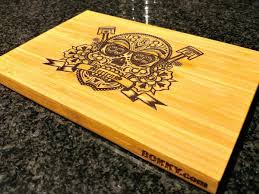
Laser engraving machines have exploded in popularity among hobbyists, small business owners, and industrial fabricators alike, and for good reason. While you might associate these tools with rustic wood signs or personalized cutting boards, the scope of what laser engravers can do stretches far beyond home décor.
With the right machine and materials, laser engraving opens doors to a surprisingly wide set of creative, commercial, and technical applications. If you’re running a business or just exploring what’s possible, it’s worth understanding the capabilities of a laser engraving machine.
Precision Customization at Scale
The hallmark of laser engraving is its ability to deliver exacting detail. We’re talking about micron-level precision that allows for consistent, repeatable output on everything from stainless steel to slate. This is why industries like aerospace, medical devices, and electronics manufacturing rely on laser systems for permanent compliance part labelling and traceability.
But precision also unlocks amazing potential for personalization. If you’re engraving custom leather goods, smartphone cases, or anodized aluminum business cards, laser accuracy means every run can be uniquely tailored while maintaining high-end polish.
A World of Material Options Beyond Wood
While natural hardwoods and plywood remain popular materials for laser engraving, modern machines handle a diverse substrate roster including:
- Metals. Stainless steel, aluminum, brass, and copper (especially with fiber lasers or CO₂ lasers paired with metal marking spray).
- Plastics. Acrylic, Delrin, polycarbonate, and ABS, though care must be taken with potentially toxic fumes.
- Leather. Natural and vegetable-tanned leathers engrave beautifully for wallets, journals, belts, and accessories.
- Glass and Crystal. Used for etching awards, wine glasses, or commemorative gifts.
- Stone and Slate. Engrave signage, tiles, or memorials with incredible permanence.
Different materials require different wattages and settings, but the capability is built into many mid-range and high-end machines.
Product Prototyping and Engineering Applications
Laser engravers play a supporting role in product development and prototyping. Engineers and product designers use them to:
- Rapidly etch schematics or circuit layouts onto enclosures
- Mark serial numbers or QR codes for inventory tracking
- Produce working prototypes using laser-cut parts with engraved labels or instructions
This makes laser systems especially valuable in maker labs, universities, and tech startups that need a fast turnaround for iteration and functional testing.
Jewellery and Small Object Detailing
Engraving metals and delicate materials with microscopic precision is where laser engravers really earn their owners a quick ROI in the jewelry industry. From engraving wedding bands and dog tags to decorating pendants and lockets, lasers produce sharp, permanent detailing without the wear-and-tear that comes with traditional mechanical methods.
Some engravers even offer photo etching, where grayscale images are translated into complex dot matrices burned into metal or stone, creating heirloom-quality photo engravings with astonishing realism when done correctly.
Restoration and Conservation Work
One of the lesser-known but highly specialized uses of laser engraving machines lies in art and artifact restoration. Conservators working with museums, libraries, and historical societies are beginning to use laser technology for:
- Surface cleaning. Low-power laser systems can remove layers of oxidation, corrosion, soot, or pollution from delicate surfaces like stone sculptures, painted canvases, or ancient manuscripts without the use of abrasive chemicals.
- Non-invasive marking. For cataloging and tracking artifacts, lasers can add microscopic identification codes to objects without causing visible alteration or damage, essential for maintaining historical integrity.
- Precise infill or reconstruction templates. Lasers can replicate missing ornamental pieces from broken artifacts by scanning originals and reproducing matching components using engraving or cutting.
In these environments, the laser’s ability to deliver controlled, localized energy makes it ideal for tasks where preservation is critical. The key lies in using the correct wavelength and pulse duration for the material, which is why conservation labs often work with specialists in photonics or optical engineering.
This highlights just how sophisticated laser engraving has become; not just a creative tool, but a precision instrument contributing to the protection of cultural heritage.
Small Business Revenue Streams
Laser engraving machines are often the foundation for successful micro-businesses and side hustles. Here are just a few business-ready ideas:
- Corporate Gifts. Custom tumblers, power banks, pens, and USB drives.
- Wedding and Event Décor. Engraved table numbers, acrylic signage, favours, or invitations.
- Pet Products. Personalized tags, bowls, or memorial stones.
- Ecommerce Merchandise. Leather goods, coasters, and cutting boards sold on platforms like Etsy or Shopify.
Being able to produce personalized, premium-looking products with relatively low overhead creates real revenue opportunities, especially when coupled with good branding and customer service.
Architectural and Interior Design
Laser engraving intersects with architecture and interior design in unexpected ways. It’s used to:
- Etch patterns into tiles, backsplashes, or countertops
- Create custom signage, address numbers, and wayfinding systems
- Produce laser-cut room dividers and wall panels
- Customize furniture pieces with engraved branding or decorative motifs
Acrylic, plywood, and MDF are particularly popular materials for laser-cut architectural elements thanks to their affordability and adaptability.
Education and STEM Enrichment
Schools and STEM programs increasingly include laser engraving machines in their maker spaces, teaching students about:
- Computer-aided design (CAD) and vector file preparation
- Material science (understanding substrate behaviour under heat and light)
- Rapid prototyping and design iteration
- Entrepreneurship through the creation of marketable items
The visual feedback and tangible output of laser engraving make it a powerful teaching tool that connects theory to practice in a way few other tools can.
Branding and Packaging
For businesses looking to elevate their product presentation, laser engravers offer a unique branding opportunity. Engrave logos directly onto packaging, stamp foam inserts with intricate brand patterns, or etch QR codes and serial numbers onto product packaging for high-end appeal and traceability.
Custom-engraved packaging functions beyond protecting a product; it’s used to reinforce brand identity and elevate customer perception.
Signage and Industrial Labelling
Backlit acrylic signs, brushed aluminum placards, directional signage, safety labels—laser engraving is the industry standard for permanence and clarity. These signs are resistant to weather, chemicals, and abrasion, making them ideal for factories, hospitals, and public infrastructure.
Some laser systems can even engrave barcodes and UID codes required by government or military suppliers, meeting durability and compliance standards with ease.
In Short
A laser engraving machine is a versatile, high-precision instrument capable of cutting across industries; pun intended. From manufacturing and design to art and education, the range of use cases is both practical and profitable.
If you’re aiming to prototype an invention, build a brand, or produce something memorable, the question isn’t what a laser engraver can do. It’s what you want to do with it and how far you’re willing to take it.
