

Labor is the single biggest, most variable cost on any construction project. It’s a fundamental truth every owner, project manager, and CFO knows. But how much of that cost is silently leaking away due to inefficiency, inaccuracy, and outdated processes? The numbers are staggering.
This problem is widespread and directly erodes profit margins. According to Hubstaff (citing a study by Deputy), the average employee steals roughly 4.5 hours per week from their employer. For a crew of just 20, that’s nearly 90 hours of paid, unworked time disappearing every single week.
Key Takeaways
- Direct Financial Savings: Beyond stopping “buddy punching,” the software delivers measurable financial savings by eliminating costly payroll errors and improving the accuracy of your job costing.
- A Powerful Compliance Shield: It protects your business from substantial fines and legal risks related to complex labor laws by creating an undeniable digital audit trail.
- Amplified Efficiency Through Integration: Modern solutions integrate seamlessly with your existing systems (payroll, HR, project management) to provide invaluable operational insights and a single source of truth for labor data.
- Long-Term Strategic Value: The true value lies in enhanced productivity, improved employee morale, and access to data that informs strategic forecasting, making it a critical investment for sustainable growth.
Beyond the Punch Card: What is Modern Construction Time & Attendance Software?
At its core, construction time and attendance software is a digital system for recording employee work hours. However, today’s platforms have evolved far beyond the simple digital punch clock, leaving outdated paper timesheets and clumsy spreadsheets in the past.
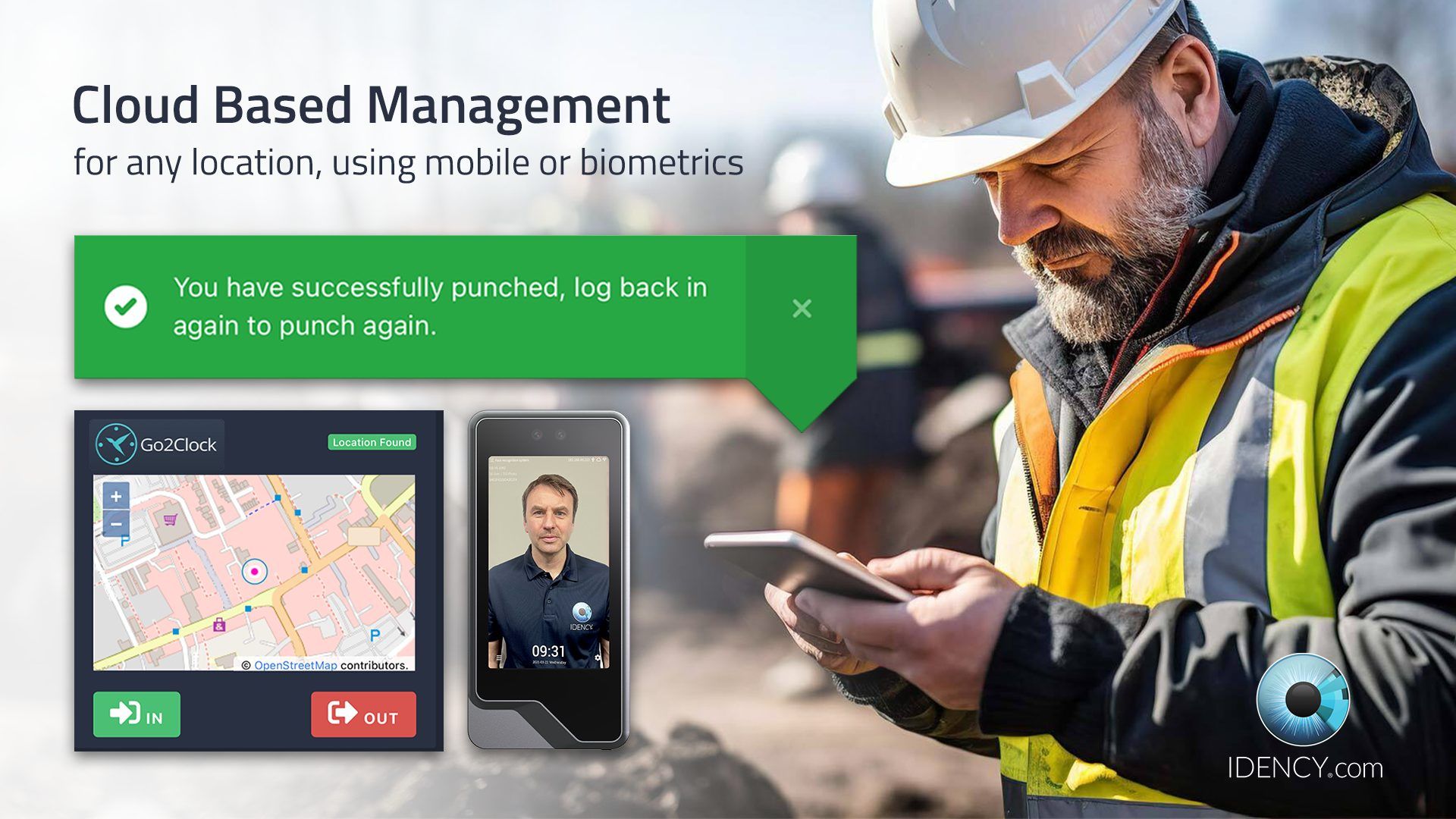
Modern platforms are sophisticated tools engineered for the unique challenges of the construction environment. They are built to handle multiple job sites, ensure worker identity, and provide real-time data from the field. Today’s modern construction time and attendance software integrates advanced technologies like geofencing and facial recognition to provide a level of accuracy and security that was previously impossible. These systems are defined by key capabilities like cloud-based access, intuitive mobile apps, GPS location tracking, and even AI-powered analytics.
The Hard Numbers: Direct Financial ROI You Can Count On
These benefits represent the most straightforward part of the ROI calculation. They are the tangible, quantifiable savings that directly impact your bottom line from day one.
Eliminate Time Theft and “Buddy Punching”
“Buddy punching”—when one employee clocks in for an absent or late colleague—is a persistent drain on profits. Combined with the common practice of rounding time up on manual timesheets, these small increments of lost time add up to a significant financial burden.
Modern software makes these practices impossible. Features like facial recognition technology and geofencing precisely verify both a worker’s identity and their physical location at the moment of clock-in. This ensures you only pay for the exact hours worked on-site. The financial impact is immediate and substantial. This problem is more common than many realize and it directly eats into profit margins. QuickBooks reports that U.S. employers collectively lose an estimated $11 billion every year due to time theft—from practices like buddy punching, inaccurate clock-ins, and untracked breaks. For teams of any size, even small leaks in attendance tracking can compound into serious financial losses.
Drastically Reduce Payroll Errors and Administrative Costs
Think about the hours your administrative team spends each week deciphering handwritten timesheets, correcting errors, and manually entering data into your payroll system. This process is not only slow and inefficient but also a major source of costly mistakes.
A digital system automates this entire workflow. Hours are captured accurately, approved digitally by supervisors, and synced directly with payroll software, minimizing human error and the associated costs of fixing them. According to an article, companies can speed payroll processing by over 70% with digital time tracking, freeing up your team to focus on more strategic, value-added tasks.
Improve the Accuracy of Job Costing and Bidding
To bid profitably, you must know your true costs—and labor is the biggest variable. When time tracking is inaccurate, your job costing is based on guesswork. You might be underbidding and losing money, or overbidding and losing projects.
With precise labor tracking, you can allocate every hour to the specific project, phase, and cost code it belongs to. This granular data gives you a true understanding of your labor costs, which leads to more competitive bids, improved profitability, and a better understanding of which projects are truly making you money.
The Hidden Goldmine: Uncovering the Indirect ROI
While the hard numbers are compelling, the true, transformative value of this technology lies in the “soft” benefits. These are the strategic advantages that enhance operational excellence, protect your business, and drive long-term growth.
Fortify Your Business Against Compliance Risks
Construction companies must navigate a maze of complex labor laws like the Fair Labor Standards Act (FLSA), the Davis-Bacon Act, and various union rules. A single misstep in tracking overtime, breaks, or prevailing wages can trigger a costly audit or lawsuit.
Automated systems are your best defense. They create an undeniable, digital audit trail for every work hour, break, and overtime calculation. In the event of an inspection or dispute, you have irrefutable, time-stamped records to prove compliance. The cost of not having this protection is enormous. As data reports, fines for unpaid back wages can range from $100,000 to $200,000 before civil lawsuits even begin.
Boost Job Site Productivity and Project Visibility
When supervisors and project managers are constantly chasing down timesheets and verifying hours, they aren’t managing the job. Automating time collection frees them to focus on what they do best: overseeing progress, ensuring quality, and keeping the project on schedule.
Furthermore, real-time attendance data gives managers immediate insight into workforce deployment. Is a crew short-staffed? Did everyone arrive at the right site? This visibility allows for agile adjustments and better labor allocation, ensuring projects stay staffed for maximum efficiency.
Improve Employee Morale and Accountability
Fairness and transparency are key to a positive work culture. When time is tracked manually, perceptions of favoritism or unfairness can arise. Digital systems eliminate this by applying the same objective, unbiased tracking methods to every single employee.
This transparency builds trust. Employees can easily access their own time records, see their hours, and feel confident that they will be paid accurately and on time. This reduces payroll disputes, improves morale, and fosters a culture of personal accountability.
Unlock Data for Strategic Decision-Making
The data your time and attendance system collects is a strategic asset. It goes far beyond simply processing payroll. Over time, this data reveals critical labor cost trends, helps identify your most efficient crews, and shows you which types of tasks take more or less time than projected.
This historical data is invaluable for strategic planning. You can use it to forecast labor needs for future projects with much greater accuracy, optimize crew assignments, and make smarter, data-driven decisions that give you a significant competitive edge.
The Multiplier Effect: How Integration Maximizes Your Return
Standalone software provides value, but integrated software is transformative. When your time tracking system “communicates” with other core business systems, you eliminate data silos, streamline workflows, and create a single source of truth across your entire operation.
- Payroll Systems (e.g., ADP, QuickBooks): Integration allows you to seamlessly push accurate, approved hours directly into your payroll system. This eliminates redundant data entry and ensures error-free, rapid payroll processing.
- HR Software: By linking attendance data with employee profiles, you gain a comprehensive view of workforce management, from certifications and scheduling to performance and punctuality.
- Project Management & Accounting Software: This is where the magic happens. Feeding real-time labor costs directly into your job costing reports provides unparalleled accuracy for budgeting, profitability analysis, and percent-of-completion reporting.
A Simple Guide: How to Estimate the ROI for Your Business
You can perform a quick, practical calculation to see the potential returns for your company.
Step 1: Calculate Your Cost of Time Theft
Use this simple formula to estimate your annual loss from unworked paid time.
- Formula: (Number of Employees) x (Estimated Weekly Lost Time) x (Average Hourly Wage) x 52 Weeks
- Example: For a 50-employee company losing just 2 hours/week per employee at an average wage of $25/hour: 50 employees * 2 hours * $25 * 52 weeks = $130,000 lost annually.
Step 2: Estimate Administrative Savings
Calculate what you spend on manual payroll processing, then apply the potential efficiency gains.
- Formula: (Hours Spent on Manual Payroll Weekly) x (Administrator’s Hourly Wage) x 52 Weeks
- Example: If your admin spends 10 hours a week on payroll at $30/hour, that’s $15,600 per year. Applying the potential 70% time savings from automation equals $10,920 in administrative savings.
Step 3: Consider the “Cost of a Mistake” (Compliance)
This isn’t a calculation but a risk assessment. Remember the potential fines of $100,000 to $200,000 for a single compliance violation. How much is it worth to you to insure your business against that catastrophic risk?
Conclusion: Your Time Tracking System is More Than a Clock—It’s a Compass
Investing in modern time and attendance software is not merely an operational expense; it is a critical investment in financial clarity, operational control, and competitive advantage. The ROI is a powerful combination of direct, tangible cost savings (the “clock”) and the strategic, long-term benefits that guide your business forward (the “compass”).
It moves you from reacting to problems to proactively managing your greatest asset and biggest cost: your labor. It provides the essential, data-driven direction needed to navigate the complexities of modern construction, helping you build a more profitable, compliant, and resilient business for years to come.
