



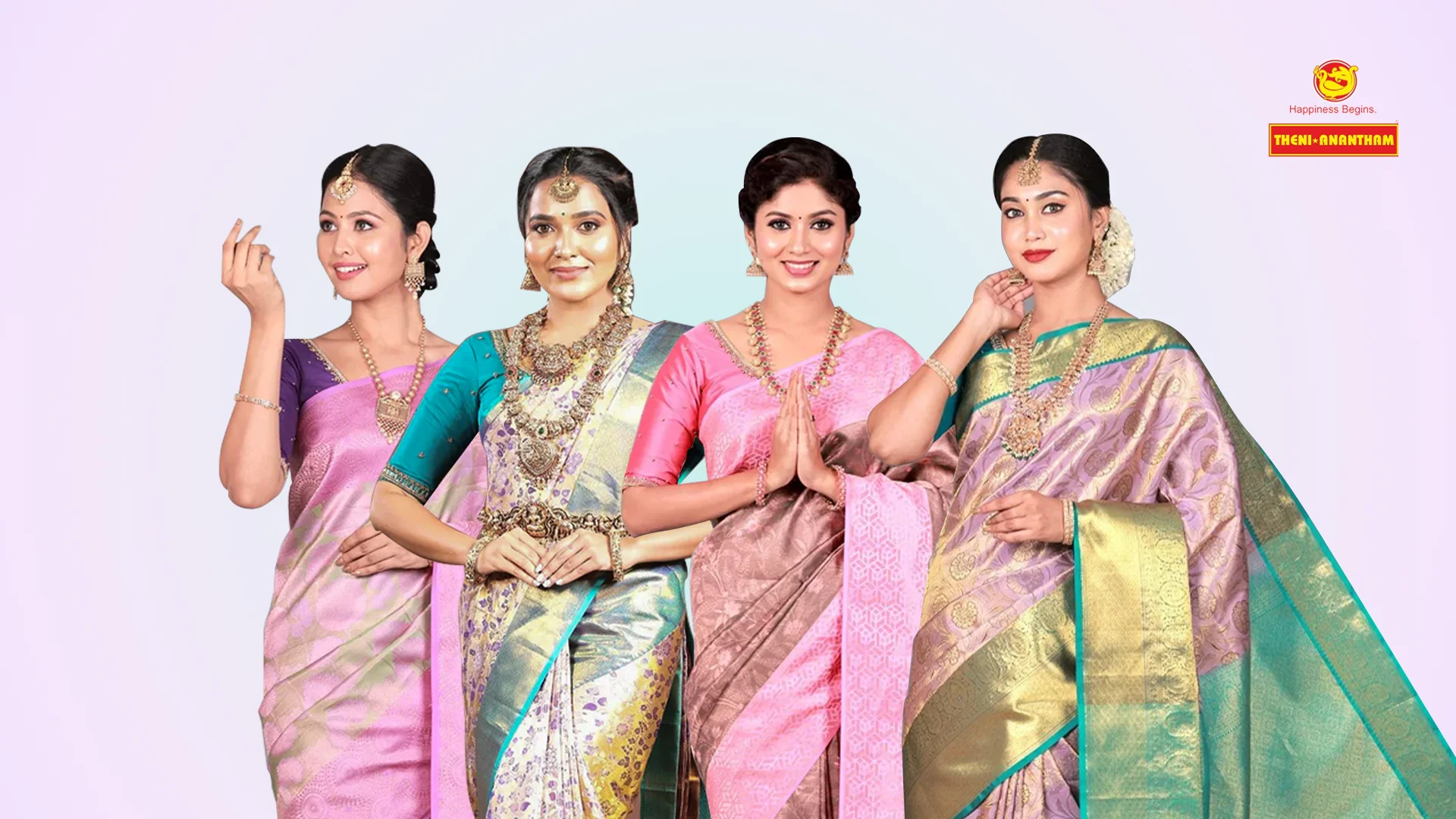
In this saree buying guide, we’ll walk you through common pitfalls to avoid and share expert saree buying tips to help you pick the perfect saree that’ll have you looking like a patakha at every wedding function.
So grab a cup of chai, get comfy and let’s master the art of saree shopping together!
Understanding the Importance of a Saree Buying Guide
A saree is not just a garment—it’s an emotion, a statement, a canvas for self-expression. With so many options available, from classic Kanjivarams to trendy pre-stitched sarees, it’s easy to feel overwhelmed and make costly mistakes.
That’s where a comprehensive saree buying guide comes in handy. It helps you navigate the vast world of sarees with confidence.
A complete saree buying guide covers:
- Fabrics and their suitability for different occasions
- Saree styles for various body types
- Trending colours and prints
- Blouse designs and neck styles
- Accessorising tips
Having this knowledge can turn your saree from a 10/10 masterstroke instead of a 2/10 fail.
Common Saree Buying Mistakes to Avoid
1. Overlooking Price and Quality
One of the biggest mistakes is choosing based on price alone.
- Cheap sarees may compromise on quality
- Expensive sarees don’t always guarantee value
Tip: Research fabrics, compare prices, and ask questions about materials and craftsmanship.
2. Ignoring the Occasion
Always match your saree to the event.
- Day events: Light fabrics like chiffon, georgette, linen
- Night events: Rich fabrics like silk, velvet, satin
Choosing according to occasion ensures you always look appropriate and stylish.
3. Choosing the Wrong Fabric
Fabric directly impacts comfort and appearance.
Popular options:
- Silk: Rich and luxurious
- Organza: Structured and crisp
- Georgette: Flowy and flattering
- Cotton: Breathable and comfortable
Tip: Always check fabric feel and weight before buying.
4. Not Knowing Your Body Type
A saree should enhance your natural shape.
Quick tips:
- Pear-shaped: Heavy pallu, detailed blouse
- Apple-shaped: Flowy fabrics, structured blouse
- Rectangular: Add volume with ruffles or prints
- Hourglass: Highlight waist with fitted drapes
Confidence is key—wear what makes you feel your best.
Essential Saree Buying Tips for First-Time Buyers
1. Balance Price and Quality
- Invest in classic sarees (like silk)
- Save on trendy styles
2. Consider the Occasion
- Weddings: Rich colours, heavy fabrics
- Casual events: Light fabrics, soft tones
3. Choose the Right Fabric
Start with easy-to-handle fabrics:
- Georgette
- Crepe
- Chiffon
If choosing silk, go for lighter options like tussar or chiffon silk.
4. Know Your Body Type
- Slim borders for heavier lower body
- Wide borders for broader shoulders
- Small prints for petite frames
These are guidelines—your comfort matters most.
Saree Buying Tips for a Smooth Shopping Experience
- Set a budget: Avoid overspending
- Shop with someone: Get honest feedback
- Check the drape: Try it before buying
- Inspect fabric: Look for flaws or transparency
- Look for details: Unique prints, blouse contrast, tassels
- Take your time: Don’t rush decisions
Wrapping Up
We hope this saree buying guide helps you shop with confidence.
The key to finding your perfect saree is:
- Understanding your style
- Knowing your body type
- Matching the occasion
Don’t be afraid to experiment with fabrics, colours and drapes until you find what makes you feel amazing.
And remember—the best saree is the one that makes you feel confident, comfortable and absolutely stunning.


