

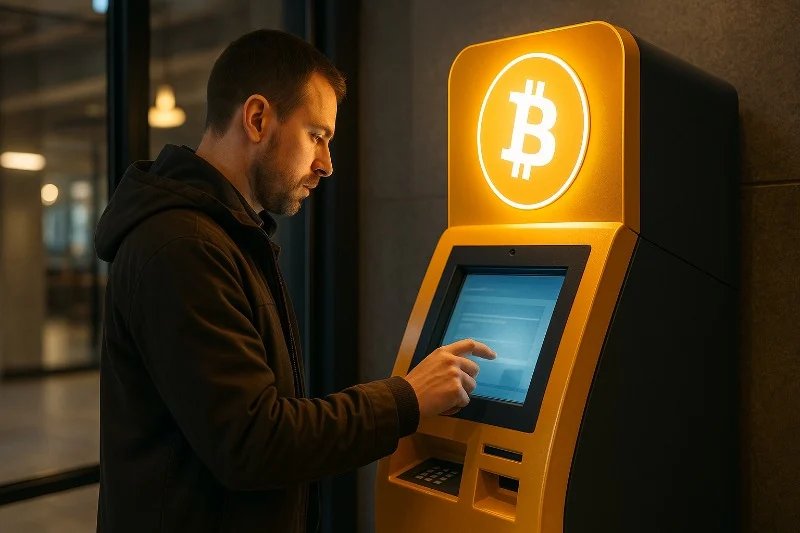
Over the past decade, Bitcoin has evolved from an obscure experiment in digital money to a globally recognized asset class. With its rise in popularity, new ways of buying and selling Bitcoin have emerged. One of the most accessible and increasingly common methods is through Bitcoin ATMs (BTMs). These machines look and function much like traditional cash ATMs, but instead of dispensing fiat currency from a bank account, they allow users to purchase or sometimes sell Bitcoin directly.
But as with any financial tool, a key question arises: How safe are Bitcoin ATMs?
This article takes a technical and practical look at Bitcoin ATM safety—from how they operate under the hood to the security risks and protections involved.
1. How Bitcoin ATMs Work
Bitcoin ATMs connect the physical world of cash with the digital world of cryptocurrency. The general workflow is:
- User Authentication (Optional): Some machines require ID verification or phone number entry, while others allow anonymous purchases (depending on regulations).
- Transaction Input: The user selects how much Bitcoin to buy (or sell) and provides a wallet address, typically by scanning a QR code from their mobile wallet app.
- Cash Insertion / Withdrawal:
- For purchases: The user inserts fiat cash, and the equivalent amount of Bitcoin (minus fees) is sent to their wallet.
- For sales: The user sends Bitcoin to the ATM’s wallet address, and the machine dispenses cash once confirmed.
- For purchases: The user inserts fiat cash, and the equivalent amount of Bitcoin (minus fees) is sent to their wallet.
- Blockchain Settlement: The transaction is confirmed on the blockchain, usually within 10–30 minutes.
While conceptually simple, the underlying process involves a blend of blockchain technology, internet connectivity, encryption, and compliance tools—all of which factor into the safety question.
2. Potential Risks of Using Bitcoin ATMs
Like any financial system, Bitcoin ATMs carry certain risks. Some are technical, while others are user-related.
a. Machine-Level Security Risks
- Unlicensed Operators: Some ATMs are installed by independent operators without proper registration, making them prone to misuse or fraud.
- Hardware Tampering: Just like card skimming at bank ATMs, malicious actors could potentially tamper with Bitcoin ATMs to steal funds or data.
- Software Vulnerabilities: Outdated firmware or weak security patches can expose machines to hacks.
b. User Privacy Concerns
- Many ATMs require identity verification to comply with KYC/AML laws. While this is good for legal compliance, it may reduce anonymity, one of the original appeals of Bitcoin.
- Some ATMs that don’t enforce verification can be used for illicit purposes, which attracts stricter regulatory scrutiny.
c. Transaction Risks
- High Fees: Bitcoin ATMs typically charge between 6–20% in fees, significantly higher than online exchanges.
- Delayed Confirmations: If the blockchain is congested, users may face delays in receiving their funds.
- Wrong Address Entry: If a user scans the wrong QR code or makes a typo, the Bitcoin may be irretrievably lost.
d. Scams and Fraud
Unfortunately, scammers sometimes exploit Bitcoin ATMs. Victims are instructed to deposit cash and send Bitcoin to a scammer’s wallet under the guise of paying bills, taxes, or fines. This misuse has made regulators more cautious about Bitcoin ATMs.
3. Safety Advantages of Bitcoin ATMs
Despite the risks, Bitcoin ATMs also provide important benefits that contribute to their safety and usability.
- Direct Fiat-to-Crypto Access: Users don’t need to link bank accounts or credit cards, reducing exposure to identity theft.
- No Custodial Risk: Funds go directly into the user’s wallet instead of being stored on a third-party exchange.
- Regulated Operators: In many regions, operators must register with financial authorities, comply with AML laws, and ensure machine integrity.
- Secure Hardware Design: Modern Bitcoin ATMs often use encrypted communication, secure booting, and tamper-resistant designs.
For many, the convenience of cash-to-Bitcoin conversion outweighs the higher fees and slower confirmations.
4. Global Regulations and Compliance
The safety of Bitcoin ATMs depends heavily on local regulations.
- United States: Bitcoin ATM operators must register as Money Service Businesses (MSBs) with FinCEN and comply with AML/KYC requirements. Many states also require money transmitter licenses.
- European Union: Operators must follow EU’s AML directives, which include customer verification and record-keeping.
- Asia: Regulations vary widely, with some countries (like Japan) allowing regulated Bitcoin ATMs, while others (like China) banning them outright.
Regulation helps improve safety by holding operators accountable, but it can also reduce privacy and increase friction for users.
5. Technical Security Features of Bitcoin ATMs
From a technical perspective, modern Bitcoin ATMs incorporate multiple layers of protection:
- End-to-End Encryption: Transactions are encrypted to prevent interception.
- Secure Wallet Management: Machines often use hot wallets for instant transfers, but funds are safeguarded with multisignature schemes.
- Compliance Integration: Built-in ID scanners, cameras, and phone verification systems to prevent misuse.
- Remote Monitoring: Operators monitor activity in real-time to detect tampering or suspicious patterns.
These security layers make Bitcoin ATMs significantly harder to compromise than they were in the early days.
6. Comparing Bitcoin ATMs vs. Online Exchanges
For many users, the real question is not whether Bitcoin ATMs are safe in an absolute sense, but how they compare to online exchanges.
| Factor | Bitcoin ATMs | Online Exchanges |
| Fees | High (6–20%) | Lower (0.1–1%) |
| Convenience | Instant cash-to-BTC | Bank transfers/credit cards needed |
| Custody Risk | Low (funds go straight to wallet) | Medium (funds often stored online) |
| Anonymity | Medium to Low (depending on KYC) | Low (strict KYC almost everywhere) |
| Regulatory Safety | Increasing with oversight | Well-established in many regions |
For users who prioritize speed, convenience, and cash usage, Bitcoin ATMs are a strong option. For those who prioritize low fees and advanced trading, online exchanges remain more practical.
7. Best Practices for Safe Bitcoin ATM Use
If you’re considering using a Bitcoin ATM, following best practices can greatly reduce risks:
- Use Trusted Operators: Check if the ATM is run by a licensed operator.
- Verify URLs and Wallets: Double-check that the QR code scanned matches your intended wallet.
- Avoid Public Wi-Fi: Use a secure internet connection when accessing your wallet app.
- Keep Receipts: Most machines provide a paper or digital receipt for transaction tracking.
- Start Small: If it’s your first time, test with a small amount before committing larger funds.
- Stay Aware of Scams: Never use Bitcoin ATMs to pay bills, fines, or taxes if someone asks you to—these are almost always scams.
For a deeper discussion on risks and precautions, you can check this detailed guide on are Bitcoin ATMs safe.
8. The Future of Bitcoin ATMs
The number of Bitcoin ATMs worldwide continues to grow, with thousands already in operation. Trends shaping their future include:
- Integration with Other Cryptos: Many ATMs now support Ethereum, Litecoin, and stablecoins in addition to Bitcoin.
- Lower Fees: Competition and scale may help reduce transaction costs.
- Better Compliance Tools: AI-driven fraud detection, biometric verification, and enhanced KYC systems.
- Cross-Border Expansion: Emerging markets with large unbanked populations may see rapid adoption.
As adoption grows, so will the emphasis on balancing convenience, safety, and compliance.
Conclusion
So, how safe are Bitcoin ATMs?
The answer lies in perspective. From a technical standpoint, modern machines are equipped with robust security features and regulatory oversight. For users who follow best practices and remain cautious of scams, Bitcoin ATMs provide a reasonably safe and highly convenient gateway into cryptocurrency.
However, they are not without risks—higher fees, privacy trade-offs, and scam potential remain concerns. As with any financial tool, informed use is the key to safety.
Bitcoin ATMs represent a unique blend of digital innovation and traditional cash handling. When used responsibly, they are not only safe but also an important bridge to mainstream cryptocurrency adoption.
