

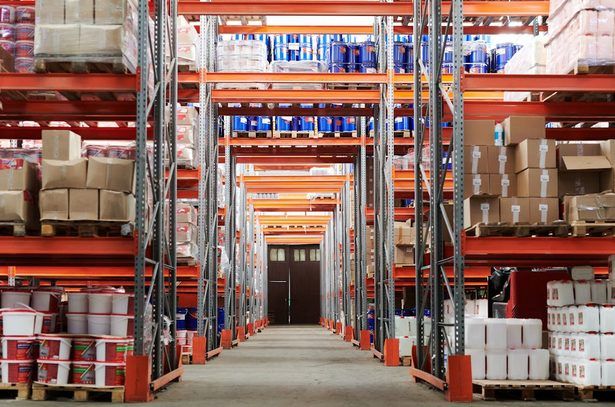
The warehousing industry is experiencing an ever increasing demand for delivering quick and efficient storage solutions. This need for faster processing of goods means that improving workflows is essential. From implementing automated storage and retrieval systems to upgrading software, there are many ways to stay competitive in the supply chain environment.
What is Warehouse Automation?
It’s not as complicated as it sounds. Warehouse automation is basically where technology is used to streamline goods management. This includes optimizing the retrieval, storage, and movement of items in the warehouse space and beyond.
This doesn’t mean that warehouse automation will replace the human workforce. Instead, warehouse automation systems collaborate with warehouse employees to relieve the strain of monotonous, time-consuming tasks. Your workforce can then focus its efforts on other areas of the business, such as fine-tuning customer service and taking care of bespoke orders.
Types of Warehouse Automation Systems
New technologies can lend a hand to many departments in a warehouse. Once you open your mind to the opportunities warehouse automation can offer, there is no limit to how much more efficient, profitable, and scalable your business can become. Here are a few examples to start with.
Automated Storage and Retrieval System
Making the most out of the space you have in your warehouse is an art form in itself. As your business grows, so does your inventory. This means that space can often be in short supply. To effectively manage the storage space you have to work with, try turning to automated storage and retrieval systems (AS/RS).
AS/RS limits the hassle of employees searching for items by automatically storing them and retrieving them in specific locations. This automation system takes your warehouse’s organization to the next level, as the AS/RS locates and retrieves items, improving order fulfillment and speeding up operations.
It’s not solely about speed. There is no need for wide aisles with AS/RS, which means that aisles can be positioned closer together, providing more storage space within the warehouse. In this business, time equals money, but so does space.
Warehouse Management System
Data processing can also be automated. Warehouses handle a lot of incoming and outgoing information, from sending invoices to tracking inventory. A warehouse management system (WMS) is a type of software used to ensure the smooth running of day-to-day warehouse operations.
WMS can be used to help with:
- Coordinating shipping
- Tracking inventory in real-time
- Receiving incoming orders
- Workforce management
- Analyzing data and producing reports
Automated Sortation System
The problem with sorting by hand is that there is a high chance of human error. Now, that’s not to say that your workforce is incapable of sorting orders, but with repetitive tasks, the human brain gets tired, leading to lapses in judgment.
One way to counteract this issue is to introduce automated sortation systems into the order picking and sorting process. These systems can scan barcodes and ensure that orders go to the right place. As your business grows, automated sortation systems can cope with the increased workload without the need to hire more staff.
Automatic Guided Vehicles
Instead of relying on manual labour and forklift operators, large objects can be moved from one place to another using automated guided vehicles (AGV). Essentially, these are robots that operate without the need for human intervention. They move along pre-programmed paths, following magnetic strips or using lasers and cameras to find their way around.
The advantages of AGV are twofold. They reduce the risk of accidents involving manual handling and forklift operation, keeping the workforce safe. Secondly, AGVs limit human error and improve efficiency by navigating the warehouse space with ease.
How to Implement an Automated Storage and Retrieval System in Your Warehouse
It’s clear that there are many benefits to using warehouse automation. Let’s use automated storage and retrieval systems as an example. To successfully implement AS/RS into your warehouse, take these steps.
- Assess your current warehouse layout, workflows, and inventory management
- Set out the goals you want to achieve by using AS/RS and how this will help
- Source a reputable AS/RS supplier
- Choose the right types of AS/RS that correspond with your warehouse space
- Ensure that the AS/RS is synced with your warehouse management software
- Invest time and resources to train your workforce to use the AS/RS correctly
- Before launching, test the new system and make adjustments as needed
- Maintain the system to ensure the AS/RS continues to work efficiently
Now, you have some options to consider, are aware of how they can benefit your business, and know how to implement them. It’s time to take the next steps to future-proof your warehouse business. After all, warehouse automation will continue to evolve, incorporating machine learning and AI. Upgrading your systems ensures that you are not left behind your competition.
