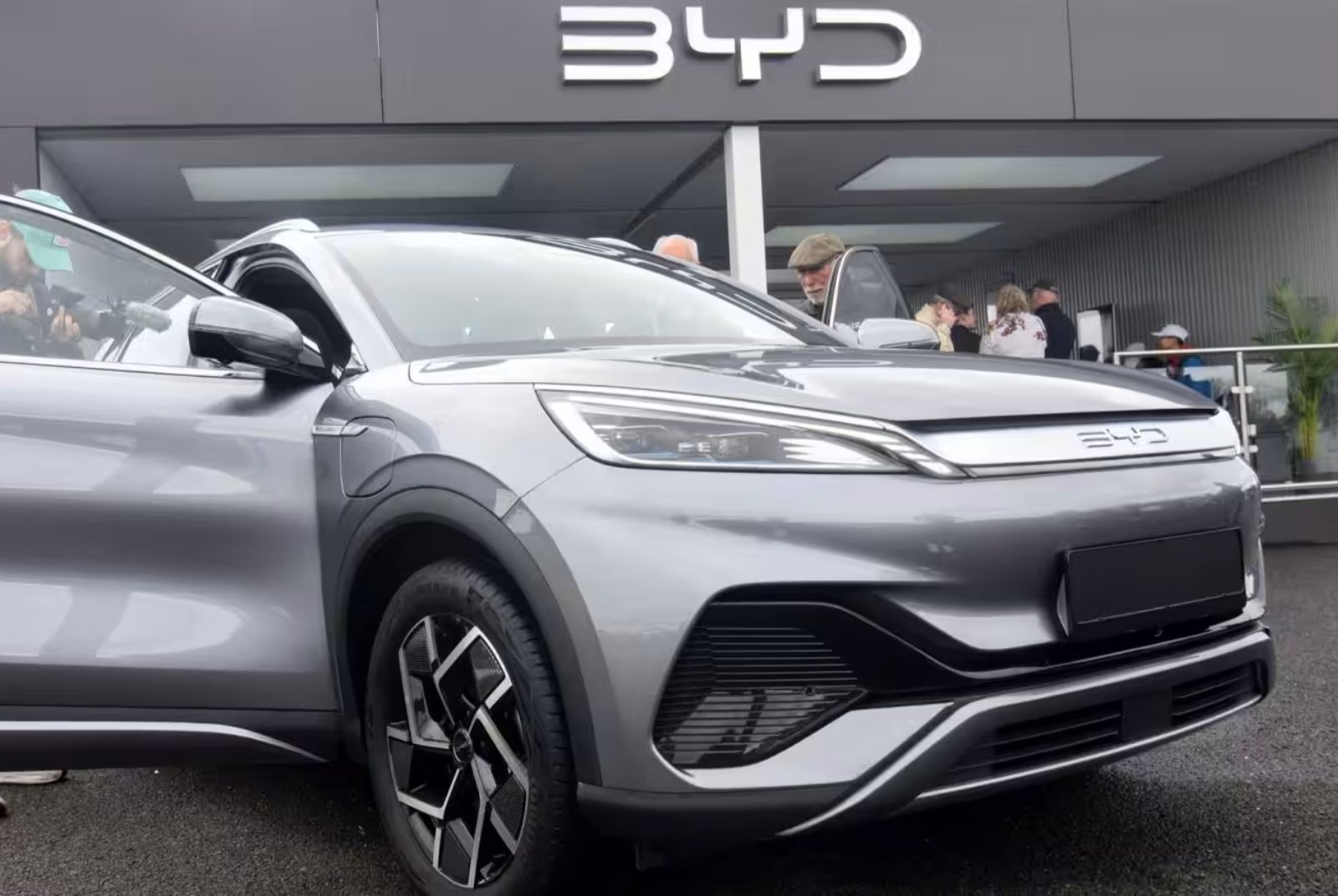
The Chinese automaker BYD has established itself as a dominant force in the global electric vehicle market, following a period of rapid expansion over the last few years. However, a closer examination of its financial practices reveals a precarious economic model.
Rather than relying on tech superiority or market competitiveness, BYD’s aggressive expansion is heavily dependent on massive state subsidies, complex financial engineering to hide debt, and the systematic financial strangulation of its supply chain and dealership networks.
Unprecedented government assistance creates favorable conditions for BYD to maintain a pricing advantage over its major rivals, including Tesla, which remains heavily reliant on its EV segment, even as brand image and Tesla stock performance are becoming increasingly tied to its AI narrative.
The Germany-based Kiel Institute for the World Economy conducted a detailed study in April 2024 and identified BYD as the primary recipient of Chinese state funding, documenting roughly $3.7 billion in direct subsidies from 2018 to 2022. In 2022 alone, these injections accounted for 3.5% of BYD’s total revenue.
The government provides substantial subsidies to support operational activities and battery manufacturing processes. This enables the company to underwrite extensive price competition, creating what the rest of the industry sees as an unfair market edge that conceals its fundamental operational weaknesses.
BYD also uses complex accounting strategies to manage its rapid growth while keeping significant liabilities off its primary financial statements. A report by the Hong Kong-based GMT Research highlighted these issues, accusing the automaker of an over-reliance on supply chain financing to mask its true debt profile.
While BYD presented a mid-2024 net debt figure of 27.7 billion yuan as manageable, GMT determined the actual liability to be substantially higher through their assessment of hidden liabilities and excessive supplier financial commitments.
The adjusted, true net debt reportedly skyrockets to approximately 323 billion yuan. BYD achieves this by inflating the “other payables” line item, which enables the company to fund its business activities through its partner companies instead of utilizing standard bank financing methods.
This massive concealed debt is a direct result of the extreme financial pressure BYD exerts on its suppliers. LSEG data indicates that BYD takes 127 days to settle accounts, more than doubling the Western industry standard of 45 to 60 days. Suppliers must either endure a 275-day wait for payment through the “Dilian” internal commercial paper system or face a 6% penalty for early cashing.
Leaked internal messages from late 2024 revealed that BYD requested all its suppliers to reduce their prices by 10% across the board for 2025, which would push the already weakened business ecosystem to a breaking point.
Furthermore, the company maintains its production output through “channel stuffing,” a practice that requires dealerships to take on excess inventory that they cannot sell. Investigations by the China Automotive Dealer Association (CADA) discovered that BYD dealers were holding more than three months of unsold stock, exceeding the Chinese industry standard by more than two times. Major distributor groups face deep financial problems that resulted in both cash flow failures and permanent business closures.
BYD’s apparent dominance and growing prominence among Chinese companies, as reflected on the stock screener, are heavily mortgaged against the financial health of its own ecosystem — a strategy that is fundamentally unsustainable in the long term. The industry is watching closely to see if the EV giant can pivot away from its predatory financial practices before its fragile ecosystem reaches a breaking point.