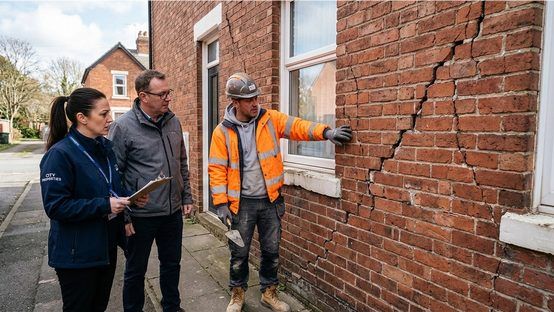
A practical guide to spotting cracks, loose mortar, façade movement, and early masonry warning signs before small issues become larger building concerns.
Montreal’s brick buildings give the city much of its character, but they also require careful maintenance. Freeze-thaw cycles, moisture, aging mortar, and building movement can gradually affect exterior masonry.
For property managers, condo boards, and building owners, masonry is not only an appearance issue. It is part of protecting asset value, reducing tenant disruption, and planning repairs before small concerns become harder to manage.
Start With Visible Warning Signs
Masonry issues often begin with small details: cracked bricks, loose mortar, open joints, staining, or small gaps around windows, lintels, balconies, and wall corners. These symptoms may look minor, but they can point to moisture entry, material movement, or deterioration behind the visible surface.
Property teams should document what they see during routine inspections. Photos, dates, weather conditions, and location notes can help determine whether the issue is stable or worsening. This is especially useful for multi-unit buildings, commercial properties, and older brick façades where changes may happen gradually.
For property managers comparing repair considerations, resources on maçonnerie Montréal can help clarify common façade issues, repair planning, and when a professional assessment may be appropriate.
The earlier a concern is reviewed, the easier it is to plan repairs around budgets, access, and tenant communication.
Moisture Is Often the Hidden Problem
Brick and mortar are durable, but they still need protection from uncontrolled water entry. When mortar joints fail, brick cracks, flashing deteriorates, or drainage details are blocked, moisture can move into places where it should not remain.
In Montreal, freeze-thaw cycles can make this worse. Water that enters small openings can freeze, expand, and contribute to larger cracks or surface damage over time. Property managers may notice spalling brick, efflorescence, rust stains, damp interior areas, or recurring deterioration in the same location.
The Régie du bâtiment du Québec provides guidance on façade maintenance and inspection, including visible signs such as cracks, rust stains, displacement of masonry units, and joint deterioration. These are useful reminders that exterior walls should be reviewed before damage spreads.
Loose Mortar Should Not Be Treated as Cosmetic Only
Mortar joints help protect the wall from water entry and help distribute stress across the masonry system. When mortar becomes soft, recessed, cracked, or missing, surrounding bricks become more exposed.
Repointing may be needed when mortar joints deteriorate, but timing and material compatibility matter. A rushed repair with mismatched mortar can affect both performance and appearance. Older buildings may also require careful attention to mortar strength, joint profile, and brick condition.
Property managers should avoid assuming every mortar issue is a quick patch. A proper review should consider the wall’s age, moisture exposure, previous repairs, and whether related elements such as lintels, sills, chimneys, or flashing are contributing to the problem.
Bulging Brick Requires Prompt Attention
A wall that appears to bow outward, ripple, or move should be taken seriously. In French, this condition is often called “ventre-de-bœuf.” It can appear as a rounded or swollen section of brickwork, uneven wall surface, displaced masonry, or separation around parts of the façade.
Bulging brick can have different causes, including moisture-related deterioration, weakened connections, aging wall ties, structural movement, or long-term stress within the wall assembly. The visible bulge is usually a sign that further assessment is needed before any cosmetic repair is planned.
Property teams should document the affected area, limit access if loose material is suspected, and arrange a qualified review. Acting early can help determine whether localized repair, stabilization, dismantling, or reconstruction is appropriate.
Repair Planning Should Account for Tenants and Access
Masonry work can affect sidewalks, entrances, parking areas, balconies, storefronts, and tenant access. Good planning helps reduce disruption and keeps expectations clear.
Before scheduling work, property teams should identify affected elevations, safety barriers, access equipment, tenant notices, weather windows, and any municipal or heritage considerations. Some exterior projects may require permits or review depending on location, building type, and scope.
The City of Montréal provides information on permits and authorizations, which can help property teams understand when municipal requirements may apply. Confirming these details before work begins can prevent delays and scheduling conflicts.
Prioritize the Building Envelope, Not Just the Surface
A visible crack or stain may be the symptom, not the full issue. Effective masonry planning should consider the building envelope as a whole, including brick condition, mortar joints, drainage, flashing, lintels, sills, chimneys, balconies, and previous repairs.
This broader view helps property managers prioritize repairs more effectively. Safety and water-entry concerns may need attention first, while less urgent appearance-related issues can be grouped into a longer-term maintenance plan.
A planned approach can also help with budgeting. Instead of reacting to emergencies, property teams can build masonry repair into seasonal maintenance schedules and capital planning.
Conclusion
Montreal masonry issues are easier to manage when property teams act before visible defects become larger building concerns. Cracks, loose mortar, water stains, bulging brick, and façade movement should be documented, monitored, and reviewed with the building’s long-term condition in mind.
Before scheduling masonry work, property teams should document visible damage, note moisture patterns, review access needs, and prioritize issues that may affect the building envelope.
Additional Resources
For French-language information about bulging brick wall concerns, readers can review réparation ventre-de-bœuf as part of broader masonry maintenance planning.