

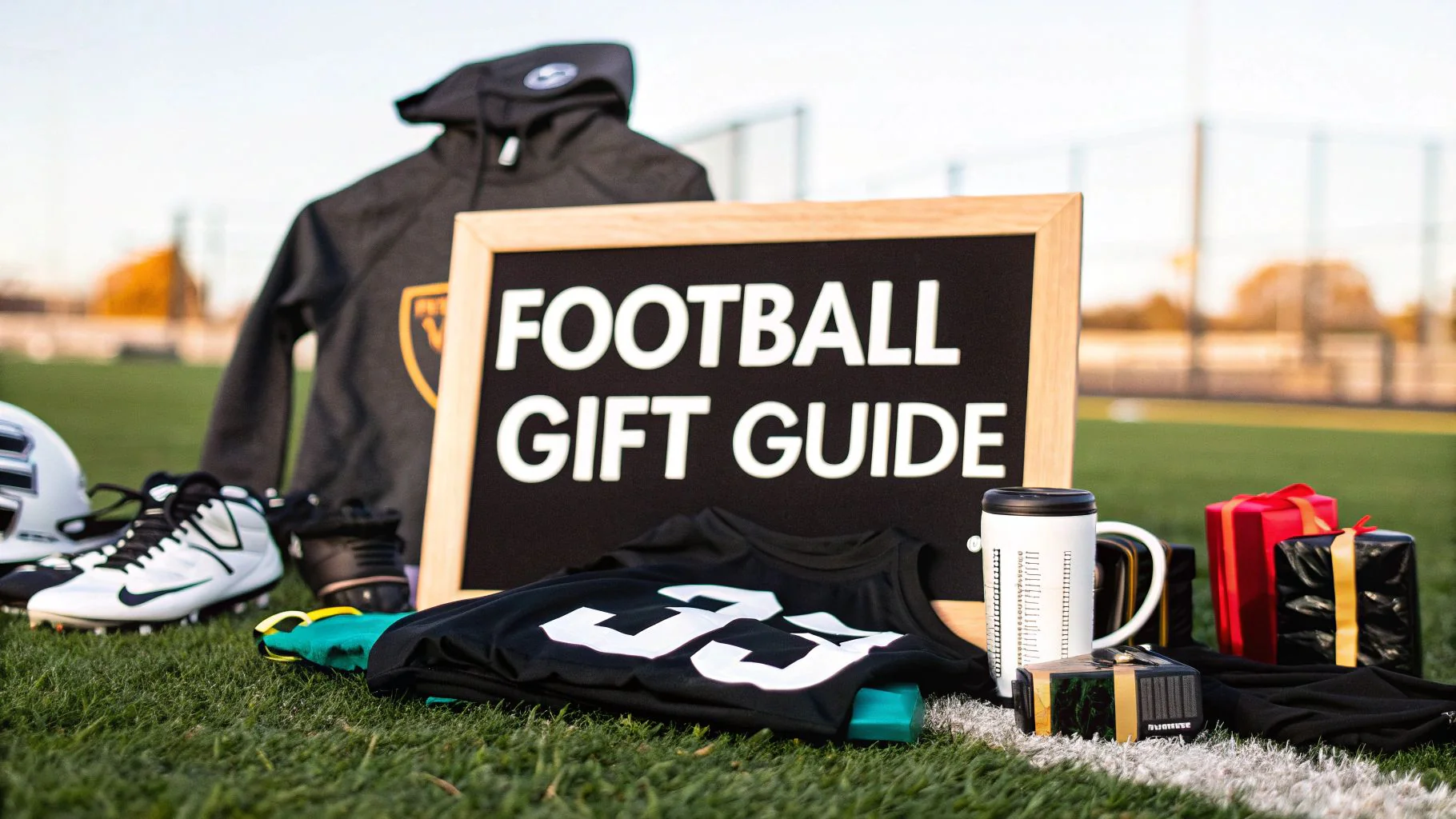
Football gifts are easy to buy and surprisingly easy to get wrong. A replica shirt, a match-day mug, a scarf in the right colours—none of these are “bad” gifts. They’re just… common. And sometimes that’s exactly what you want: a safe pick that signals “I know your team” without taking risks.
But when the moment matters—or when the person already owns every standard bit of club merch—generic starts to feel like background noise. The real question isn’t whether personalised gifts are better. It’s when they’re the smarter choice, and when a classic, off-the-shelf football present is more appropriate.
Below is a practical way to decide, based on the occasion, the recipient, and the kind of emotional “hit” you’re aiming for.
The Difference Isn’t the Item—It’s the Message
A generic football gift usually communicates one of two things:
- “I know you’re into football,” or
- “I know which club you support.”
A personalised football gift says something more specific: “I notice your football story.” That might be their five-a-side nickname, the year they started supporting the club, the memory of a first match with a parent, or the season they played their best football.
That difference is why personalised gifts feel more “kept” than “used.” A scarf gets worn. A custom keepsake often becomes part of a shelf, a desk, or a memory box.
Choose generic when the goal is utility
If you want the gift to be used heavily—worn to matches, taken to training, thrown into a kit bag—generic is often the practical move. It’s easier to replace, easy to size (in many cases), and you’re not worried about scuffs, rain, or wear.
Choose personalised when the goal is meaning
Personalisation shines when the purpose of the gift is emotional: recognition, celebration, nostalgia, pride. That’s why it’s so common in milestone moments—more on that in a second.
The “Occasion Test”: How High Are the Stakes?
Not every occasion needs a memorable centrepiece. Some moments are about the gesture. Others are about marking a chapter.
Personalised gifts are strongest for milestone moments
Think of occasions where the recipient is likely to remember the day itself:
- A big birthday (18, 21, 30, 40, 50)
- A first season ticket
- A cup final trip
- A retirement from playing
- An end-of-season awards night
- A coach’s thank-you gift from the team
In these cases, generic gifts can feel oddly disconnected—like you chose from the “football fan” aisle rather than reflecting what happened.
This is where personalised keepsakes really come into their own, especially if you can tie them to a specific match, season, or role. For example, custom prints and premium quality personalised football cards work well because they mirror the design language football fans already love (player profiles, stats, “hero” framing), while letting you build the details around the person—not just the club.
Generic gifts fit low-stakes, high-frequency moments
There’s also a category of gifting that’s more about steady support than symbolism:
- Stocking fillers
- “Good luck for the new season”
- Small thank-yous
- Secret Santa
- A token gift for someone you don’t know deeply yet (new colleague, partner’s relative)
Here, generic is often the safer, kinder choice. You’re unlikely to overstep, and you won’t get stuck trying to guess details you’re not sure about (like their preferred name, position, or in-jokes).
The Recipient Test: Superfan, Player, or Casual Supporter?
Different football people value different things. One fan’s dream gift is another fan’s clutter.
For superfans: personalise if they already own the basics
A long-term supporter probably already has scarves, shirts, and a rotating set of training tops. If you’re buying for someone like that, personalisation helps you avoid duplication.
Ask yourself: could they already have something similar? If yes, personalise—so even if you’re “in the same category,” the gift is still one-of-one.
For players: personalise around role and identity
Players are often more moved by recognition than objects. A personalised gift that includes:
- their position,
- their squad number,
- a season highlight,
- a team nickname,
can feel like an “I see the work you put in” moment.
Generic gifts for players are best when they’re purely functional: boots bags, water bottles, base layers. Great gifts, just a different intention.
For casual supporters: keep it simple
If someone follows football socially—watches big tournaments, knows the headlines, has a soft spot for a club—personalisation can be too heavy. In that case, a simple, well-made generic gift is usually more appropriate. The goal is to match their level of involvement, not exceed it.
A Quick Decision Framework (Use This Before You Buy)
If you only remember one thing, make it this: personalisation is worth it when specificity matters. Here’s a simple checklist you can run in 30 seconds:
- You’re marking a milestone, not just giving a token
- You know at least one true detail (number, nickname, season, a favourite player, a shared memory)
- The recipient is sentimental or likes displaying football memorabilia
- You want the gift to be kept, not used up
- You suspect they already own the generic version
If you can tick three or more, go personalised. If not, generic is probably the better call.
Timing, Budget, and the “Risk of Getting It Wrong”
Personalisation isn’t automatically “harder,” but it does introduce two real-world constraints: lead time and accuracy.
Lead time matters more than people expect
If you’re gifting close to an event (a leaving do, an awards night, a birthday you’ve left late), generic can be the difference between showing up with something thoughtful and showing up with an apology. Personalised items often need a few extra days for design, production, and delivery.
Accuracy is everything
If you personalise, be certain about spellings, preferred names, and details like squad numbers. Getting it 95% right doesn’t feel like 95%; it feels wrong. When in doubt, check with a friend or family member, or stick to safer personalisation (first name only, or a year).
Price isn’t the main factor—clarity is
People assume personalised means expensive. Sometimes it does, but often you’re just paying for attention to detail rather than raw materials. The smarter way to think about budget is this: would spending the same amount on a generic item buy you something noticeably better quality? If not, personalisation may deliver more perceived value.
The Best Gifts Do One Thing Well
A generic football gift is ideal when you want practicality, speed, and broad appeal. A personalised football gift is ideal when you want emotional impact, uniqueness, and a clear story.
So before you buy, ask yourself: what’s the job of this gift? To be worn every weekend? To commemorate a season? To say thank you to a coach who gave their time? To mark a first match with a parent?
Get that part right, and the choice between personalised and generic becomes obvious—because you’re no longer shopping for a football item. You’re choosing how you want the person to feel when they open it.
