

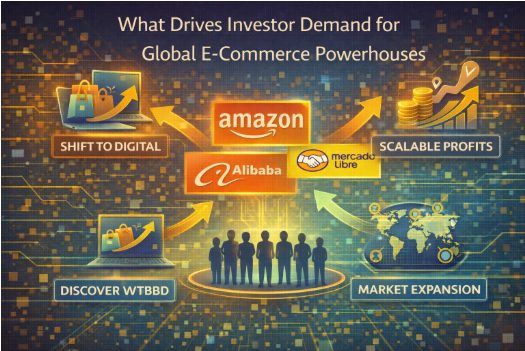
E-commerce leaders like Amazon dominate the retail landscape, with global online sales projected to exceed $8 trillion by 2027. Amazon’s market cap surpasses $2 trillion, reflecting its role in cloud computing (AWS) and logistics alongside retail. Investors flock to these powerhouses for consistent growth in a digital-first world. With consumer habits shifting permanently online, these companies offer exposure to secular trends. How to invest in Amazon stocks often starts with understanding their diversified revenue streams. This article explores the key drivers fueling demand for e-commerce giants among long-term investors.
Dominance in Retail and Digital Infrastructure
Amazon’s retail platform processes billions in transactions, with Prime memberships driving loyalty and recurring revenue. Its fulfillment network, spanning hundreds of warehouses, ensures fast delivery, creating a moat competitors struggle to match.
AWS adds diversification. Cloud services generate higher margins (30%+) than retail (3-5%), providing stability during slowdowns. AWS’s 31% market share leads Microsoft and Google, with demand from AI and data storage.
This blend attracts investors. Retail offers consumer exposure, AWS tech growth. In economic uncertainty, diversified revenue cushions volatility.
Innovation and Network Effects
E-commerce giants invest heavily in innovation. Amazon’s AI-driven recommendations and logistics automation boost efficiency, while Alexa and Ring expand smart home ecosystems.
Network effects strengthen positions. More sellers attract more buyers, lowering costs through scale. Prime’s 200 million+ members create lock-in, with higher spend per user.
Expansion into new areas—healthcare (Amazon Pharmacy), entertainment (Prime Video)—adds growth vectors. These moves keep revenue streams fresh.
Investors value this adaptability. In a market favoring multi-year trends, innovation sustains leadership.
Global Reach and Emerging Market Potential
E-commerce powerhouses operate worldwide. Amazon’s international segment, though less profitable, grows faster, tapping India and Southeast Asia’s rising middle classes.
Logistics investments enable penetration. Fulfillment centers in emerging markets cut delivery times, building loyalty.
Currency and regulatory risks exist, but scale mitigates them. Diversified geography reduces single-market dependence.
This global footprint appeals to growth investors. As internet penetration rises in developing regions, these companies capture new consumers.
| Driver | Impact | Example |
| Retail Scale | Loyalty, recurring revenue | Prime 200M+ members |
| Cloud Services | High margins, stability | AWS 31% share |
| Innovation | New revenue streams | AI, healthcare |
| Global Expansion | Emerging market growth | India fulfillment |
Risks for Long-Term Holders
Competition intensifies. Walmart, Alibaba, and Shopify challenge retail share. Regulatory scrutiny—antitrust probes or tax changes—poses threats.
Margin pressure from investments persists. Heavy spending on logistics or AI can compress profits short-term.
Economic sensitivity affects consumer spending. Recessions cut discretionary buys, impacting growth.
Yet, scale and diversification provide buffers. Leaders weather storms better than pure-plays.
Conclusion
Global e-commerce powerhouses attract investors through retail dominance, cloud diversification, innovation, and emerging market exposure in a $8 trillion+ sector. Their network effects and scale create moats, while risks from competition and regulation demand patience. Allocate 5-10% for growth, focusing on multi-year trends. In the digital shift, these giants offer resilient upside for long-term portfolios.
