

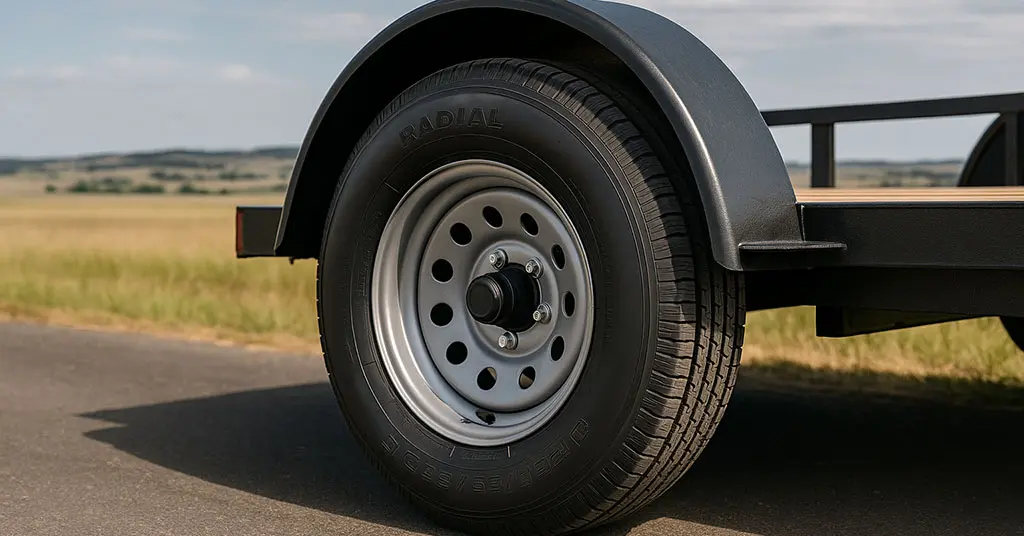
Choosing the correct wheels for your trailer is very important. The wheels carry the load, keep the trailer steady, and affect how safely and smoothly you can tow. If the wheels aren’t right, your trailer may be unstable or unsafe.
This guide will help you pick trailer wheels that match your trailer’s weight, your towing style, and the road conditions you face.
Understanding Trailer Wheels
Trailer wheels are not the same as car wheels. They must handle heavy loads, sometimes rough roads, and long trips. Key parts include:
- the rim (the metal part the tyre sits on)
- the hub (where the wheel connects to the axle)
- the studs or bolts (that hold the wheel to the hub)
- the tyre itself.
Good trailer wheels are built to support the trailer’s weight and the cargo you carry. They also need to have the correct size and pattern so they fit properly. If the wheel size is wrong or the bolt pattern doesn’t match, you risk problems like wobble, premature wear, or even failure.
Also, remember that tyres and wheels form a system. A strong wheel with a weak tyre won’t give you full safe performance, so you need both parts matched correctly.
Key Factors to Consider When Choosing Trailer Wheels
Before buying a trailer wheel, check out these key factors:
Wheel Size and Diameter
The diameter and width of the wheel must match the trailer’s specification. Too big or too small can cause clearance issues, rubbing, bad handling or unsafe loads. For example, fitting very large wheels may raise the trailer’s height and change its centre of gravity.
Always check the trailer’s data plate or manual. If unsure, match the size of the wheel that was originally on the trailer. Better to use a wheel that fits and is correct for your axle, hub and tyre than to try a size just because it looks good.
Load Rating
The load rating is one of the most important safety numbers. It shows how much weight a wheel and tyre combination can carry safely at a given pressure. If you overload the wheel, you risk blowouts or failure.
You need to calculate the total weight your trailer will carry: the trailer’s empty weight plus cargo, plus any gear. Then divide by the number of wheels to see what each wheel must handle. Choose wheels with ratings that meet or exceed that number.
Bolt Pattern (PCD – Pitch Circle Diameter)
The bolt pattern is how many bolts there are and how far apart they are around the hub. If the bolt pattern doesn’t match the hub, the wheel won’t fit properly. This can cause vibration or the wheel coming loose.
For example, a 5-stud wheel on a hub made for a 6-stud wheel won’t work. Measure the stud count and the diameter of the bolt circle if you’re unsure.
Wheel Material
Wheels are most often made of steel or alloy (lightweight metals). Steel wheels are tough and cheaper. They are good for heavy loads and rough use. Alloy wheels look nicer, weigh less (which can reduce the load and help towing), and resist rust more.
But if you use alloy in rough conditions without proper care, it might get damaged more easily than steel. Choose the material that matches how you use your trailer and how much maintenance you are willing to do.
Tyre Compatibility
Wheels must match the tyres you choose. The tyre size must be correct for the rim. Also, trailer tyres (often stamped ST for “Special Trailer” use) are different from car tyres. They are built to go straight and carry heavy loads rather than handle turns like a car.
Using car tyres on a trailer is often a bad idea because they are not made for the job. Tyre size, load range, and construction must match the trailer use and wheel size.
Braked vs. Unbraked Trailers
If your trailer has brakes, then the wheels must allow for those brake components. Some wheels suit disc brakes or drum brakes. Unbraked trailers have different needs, and usually lighter wheels may work. Make sure the wheel you pick works with your whole braking system.
When to Replace Your Trailer Wheels
Even strong trailer wheels don’t last forever. Over time, wear, rust, or damage can make them unsafe. Knowing when to replace your wheels helps you avoid problems on the road.
Look for cracks or rust.
Check the rims carefully every few months. Small cracks or deep rust marks can weaken the metal. If you see them, it’s time to replace the wheel before it fails.
Watch for bends or dents.
If a wheel hits a curb, pothole, or large rock, it can bend slightly. Even a small bend can cause vibration or uneven tyre wear. Bent rims should be replaced right away.
Uneven tyre wear is a warning sign.
If your tyres wear faster on one side, the wheel could be out of shape, misaligned, or the bearings might be failing. Replacing or repairing the wheel early can stop further damage.
Check for loose or damaged studs.
Wheel nuts and studs hold the wheel tight to the hub. If they strip, stretch, or break, the wheel can loosen. Replace damaged hardware and check that the wheel still fits correctly.
Age matters too.
Even if the wheels look fine, old metal can weaken over time. If your trailer wheels are over ten years old, get them inspected by a mechanic. It’s often safer to replace them before problems start.
Don’t forget the spare.
Many people overlook the spare trailer wheel. Make sure it’s in good shape, inflated, and ready to use. You never know when you’ll need it.
Replacing worn or damaged trailer wheels may seem like an extra cost, but it’s cheaper than dealing with an accident or breakdown. A safe, sturdy set of wheels keeps your trailer steady and your trips stress-free.
Maintenance Tips for Trailer Wheels
Regular care will extend your wheels’ life and keep your trailer safe.
- Clean wheels and tyres after use, especially if you used the trailer in salty or muddy conditions. Corrosion or grit can damage wheels over time.
- Check tyre pressure before trips. Under-inflation and over-inflation both harm load capacity and tyre life.
- Inspect tyres for bulges, cracks, cuts and tread wear. Worn or damaged tyres reduce safety.
- Grease the axle bearings and check the hub seals. If the hub or bearings overheat, your wheel may fail.
- Keep a spare wheel and tyre that is the same size and load rating. In an emergency, it will save you from being stranded.
- Replace wheels or tyres when they reach age or wear limit, even if they look okay. Older metal may fatigue.
Conclusion
The right trailer wheels matter a lot for both safety and how well your trailer performs. Make sure you pick wheels that match size, load rating, bolt pattern, material and tyre compatibility. Do your checks and maintenance. If you do those things, your trailer will tow better, last longer, and you will feel more confident on the road.
When in doubt, ask a trusted trailer parts specialist. Get the correct wheels for your trailer’s use, your load and your terrain.
