

You’ve probably felt that tug of resistance whenever someone talks about “going back to the office.” It’s not that people hate working together. It’s that they’re over the old setup. Cubicles. Fluorescent lights. That weird smell of stale coffee and printer ink. Startups, especially, are tired of trying to fit into a mold that was built for a different era. They’re not just choosing cheaper spaces or ditching leases; they’re reimagining what a workspace should be. One with flow. Energy. Flexibility. Somewhere you want to be. Somewhere that makes sense.
That’s why more founders are leaning into smarter environments, like a coworking space in FIDI, not because it’s trendy, but because it works for the way they work.
The Old Office Didn’t Break—It Just Expired
The traditional office wasn’t built for the kind of businesses people are running today.
You had fixed desks, fixed hours, fixed everything. It was built for predictability, hierarchy, and routines. But startups? They thrive on flexibility. You move fast. You pivot. One week you’re a three-person team, the next you’re hiring five more. The old office model wasn’t designed for that kind of growth—or chaos.
Then came remote work, and for a moment, it looked like offices might disappear entirely. They didn’t. What happened instead is that people started asking better questions. Do we need all this space? What kind of environment helps us think better, collaborate more, and waste less time? The answers didn’t point back to traditional offices. They pointed forward to something more intentional.
What You Really Want (Even If You Haven’t Said It Out Loud Yet)
As a startup, you’re not just looking for places to sit and type. You’re looking for somewhere that works as hard as you do. A place that doesn’t trap you in 5-year lease terms or force you into dull, lifeless rooms. You want somewhere that feels flexible but not flaky. Somewhere with structure—but on your terms.
You want space that scales, right? Something that grows when you do, and shrinks when you need to reset. You care about the vibe, too. If it feels like a sad dentist’s office, you won’t want to show up. Neither will your team. And why should they? Space should reflect culture. Period.
And location? It still matters. Being somewhere central, close to transit, in the middle of things—that’s not just convenience. That’s a signal. It says you’re serious, without needing to say it out loud.
Design Is Doing More Than You Think
This part doesn’t get talked about enough: design isn’t just decoration. It’s a strategy.
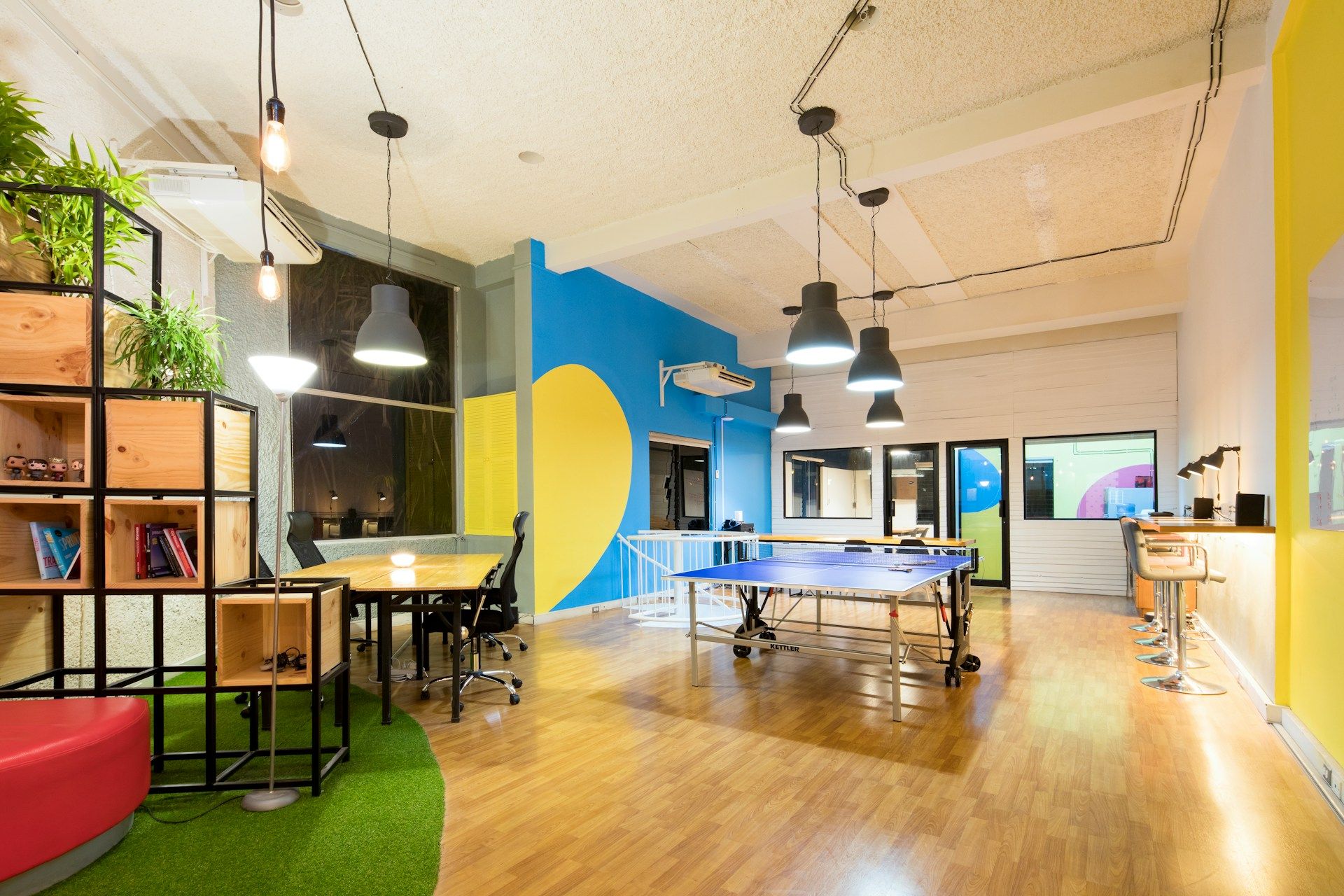
People walk into a space and instantly feel things—welcome, excitement, tension, or dread. It’s all invisible, but it’s powerful. A well-designed workspace doesn’t just look good on Instagram—it changes how people interact, how they focus, and how they work.
Startups are picking up on that. You’re choosing spaces with natural light, with furniture that’s comfortable, with colors that make sense for the brand, not just what was on sale at the office supply store. And you’re doing it because it matters. It affects mood. Collaboration. Retention. It tells your team: we care about how you work, not just what you produce.
Design-forward doesn’t have to mean over-the-top or expensive. It just has to mean intentional. You’re building a product. A culture. A team. So why wouldn’t your space reflect that?
The Energy Between the Meetings
You can’t plan for every breakthrough moment. But you can create the conditions where they’re more likely to happen.
Here’s the thing: work doesn’t only happen at the desk. It happens in the hallway. The kitchen. That casual chat over coffee, where a small idea turns into your next big thing.
That’s why more startups are choosing spaces where those in-between moments aren’t treated like distractions—they’re built into the layout. Lounges that don’t feel forced. Kitchens are where people hang out. Quiet corners where someone can clear their head.
And let’s not forget the other humans. Working around other ambitious people, even if you’re not on the same team, brings a kind of creative charge you can’t fake. You’re surrounded by motion. That matters.
Conclusion
You don’t need to rebuild an office from scratch with drywall and door handles. You need a setup that evolves with you. That might mean a few days at home, a few days in a focused workspace, a few days wherever your brain works best. The goal isn’t to force anyone back into anything. It’s to create environments where great work happens, where people want to show up because the space gives them something—focus, momentum, community.
