

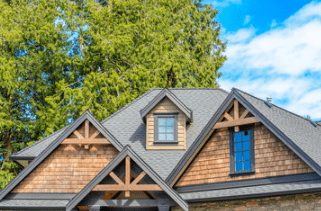
When choosing the ideal roofing material, homeowners often consider aesthetics, durability, maintenance requirements, and cost. However, you’d be astonished to learn that most ignore regular roof care and maintenance, such as applying shingles for extra protection.
The roof protects your property from extreme weather, provides enough insulation, maintains a consistent inside temperature, and is a key selling aspect that can boost or decrease the value of your home.
If you notice any significant problems with your roof, you must solve them right away. And should your roof remain in place and last longer, upgrading your shingle roofing can help make it more resistant to water, wind, and environmental damage.
That being said, the following is a detailed overview of the different forms, pricing, and benefits of shingle roofing.
What Are Roof Shingles?
Roof shingles are just one component of a residential roofing system that functions as a roof covering. Asphalt, fiberglass mat, and ceramic-coated grains are common materials used in shingle manufacturing. They are often put in overlapping layers or courses. When placed as part of a comprehensive roofing system, shingles serve to protect your property against water penetration.
Shingles are typically rectangular in shape for a uniform appearance, while some are more uneven to appear homemade. Roofing shingles are the principal water-shedding material and can be produced from a variety of materials such as asphalt, metal, wood, clay, concrete, and slate.
Let’s discuss some of the popular types:
1. Architectural Shingles
Dimensional shingles, often known as architectural shingles, are an attractive and long-lasting solution. These shingles are composed of two layers of asphalt and fiberglass, resulting in a thicker, more durable product than regular three-tab shingles.
Benefits of architectural shingles include:
- A multidimensional appearance that can simulate the look of natural slate or wood shake, providing an attractive touch to your home.
- Improved durability and resistance to wind, hail, and other weather conditions.
- Extended longevity compared to regular shingles.
- Better insulating properties lead to higher energy efficiency.
Consider architectural shingles as a high-quality, visually pleasing roofing alternative. Moreover, architectural shingles’ exceptional weather resistance and visual appeal make them an enticing alternative for homeowners looking for a long-lasting roofing solution. Bear in mind, however, that they are more expensive than three-tab shingles.
2. Traditional Shingles
Traditional shingles are sometimes known as three-tab or strip shingles. They are the oldest type of asphalt shingle still available today; however, they have undergone numerous changes over the years, including the addition of a fiberglass mat instead of a cellulose core.
Traditionally, shingles were significantly smaller than they are today. They also had to be sealed manually. In the 1940s, shingle makers created self-sealing shingles that could be easily nailed to the roof and subsequently sealed by the sun’s heat, provided the roofing professional placed them appropriately.
Later, many manufacturers began producing metric 3-tab shingles, which are larger and easier to apply than individual shingle pieces. In essence, modern 3-tab roofing shingles are easy for expert roofers to install due to their increased size and self-sealing features. Roofers charge homeowners less because they save a significant amount of time and money.
Furthermore, traditional shingles used to be monochromatic. Monotone indicates that each style is made up of only one shade of brown if the shingles are brown, or only one shade of black if the shingles are black. Technology has advanced to the point that you can now purchase 3-tab shingles in a variety of colors. Some people also believe this is a more aesthetically pleasing effect because it hides any differences in a solid color.
3. Hip and Ridge Cap Shingles
Hip and ridge cap shingles are constructed from the same materials as ordinary shingles and have a similar appearance. However, they vary in that they are specifically designed to cover and protect the roof hips and ridges, both of which are extremely high-stress locations that require additional protection.
Indeed, you could argue that normal shingles can be chopped to size and used in the same way. But the problem is that normal shingles are often thin and can shatter over time. Hip and ridge caps are thicker and will not be as affected by time-related wear.
4. Wood Shingles
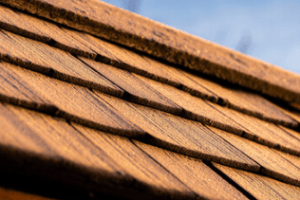
Shingles can also be manufactured of wood, with cedar and teak being the most popular options. In most circumstances, wood shingles provide superior insulation and wind resistance.
Wood shingles, on the other hand, might be inconvenient for some residents as they are prone to decay unless they are meticulously and regularly maintained. They also provide a more favorable breeding environment for mold and mildew.
5. Rubber Shingles
Rubber shingles are generally lighter than other materials, making installation easier. Moreover, they’re also durable, naturally fire-resistant, and reasonably priced. The only disadvantage of rubber shingles is that they can be a bit unappealing at first sight.
Most people do not want a roof that appears like it was built from discarded car tires, and rubber shingles have limited color and style options.
6. Solar Shingles
Solar shingles include solar cells on your home’s roof, converting sunlight into energy that can be used to offset utility expenses. It’s a very sound concept—if only solar shingles weren’t so expensive to purchase.
Solar shingles are still out of reach for most purchasers, with upfront costs that are more than 20 times higher than 3-tab asphalt shingles.
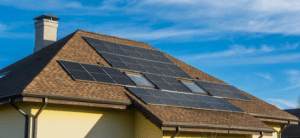
That said, they may eventually be the finest roofing option, but for the time being, the amount of money they save you just does not justify their cost in most circumstances. That doesn’t even account for the money you’ll lose if your solar shingles are destroyed by wind, hail, or any of the other extreme weather events experienced in harsher regions.
When Should Shingle Roofs Be Replaced?
Most shingle roofs need to be replaced or inspected once every 20 years. However, they could need to be replaced sooner if the shingles have:
- Missing granules (commonly seen as bright or dark areas on the shingles)
- Curls on the roof
- Significant levels of mold, mildew, or moss
- Dents or breaks
It is often a smart idea to replace 3-tab asphalt shingles with architectural shingles, meant to endure longer and withstand harsh circumstances.
Final Thoughts
When it comes to maintaining your roof and adding an extra layer of protection, shingle roofing is a cost-effective and sensible choice. Its adaptability to many architectural forms, as well as its environmental benefits, provides exceptional value.
The best approach to choose from a diverse range of shingles is to work with a roofing contractor that has industry expertise and years of experience to ensure you get a roof you’ll be happy with for years.
