

A Dream by the Shore
When my family and I bought a small house on the bay in Seattle, it felt like a long-held dream coming true. Calm waters, fresh air, the occasional cry of a seagull in the morning, and complete peace by night. This was the place to live, breathe, and think. I imagined fishing with my kids off a wooden dock, setting up picnics right by the water, and watching sunsets in a rocking chair with a cup of tea.
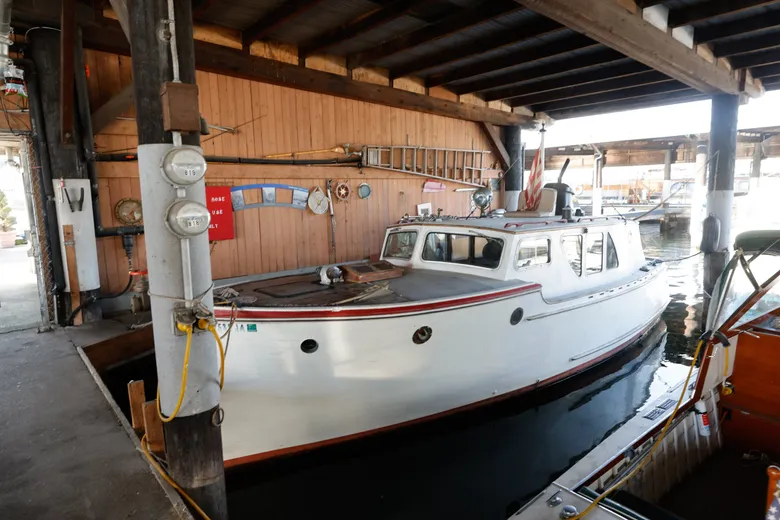
But there was one detail I had underestimated. On the shore, like a forgotten artifact from another era, sat an old boat. Its hull was half-sunk into the ground, paint peeling, bottom cracked. It looked completely out of place in this peaceful scene – but I thought, “Whatever, I’ll deal with it later.”
A Splinter in the Landscape
I kept trying to ignore it. Told myself I’d handle it eventually. But every time I walked down to the shore, my eyes were drawn to that chunk of rust and decay. The boat silently mocked me – a constant reminder of inaction.
At some point, I realized I was simply tired of that lingering sense of incompleteness. It may seem trivial – an old boat on a beach – but each day it became more of an eyesore, a symbol that something in my new life wasn’t right. I felt like I was living next to my dream, but not in it. And that feeling grew.
A Simple Request Becomes a Project
I couldn’t ignore it any longer. One evening, sitting on the porch, I caught myself thinking the boat wasn’t just ruining the view – it was stealing my peace of mind. I sighed, went inside, opened my laptop, and started searching for ways to get rid of it. It seemed like a straightforward task. But the deeper I dug, the clearer it became: this was anything but simple.
Companies gave wildly different terms. Some flat-out refused. Others needed extra equipment. Some didn’t respond for weeks. One contractor told me, “You’re not the first to look for boat removal services in Seattle, WA, but it’s a wild market – everyone does it their own way.”
That’s when it hit me: this was a textbook example of an unstructured niche. Demand was real, customer pain was obvious, but offerings were all over the place. So I decided to approach it like a business challenge.
Treating It Like a Project
I started researching disposal regulations, comparing offers, and mapping out logistics. Turns out, even something as simple as removing a boat requires serious attention to detail – from state laws to transport rules to environmental codes. At one point, I found myself deep in spreadsheets, comparing vendors, calculating time and cost.
That’s when I had a realization: any task – even a household one – can become a business case. It’s all about the mindset. I began documenting decisions, reflecting on outcomes, and analyzing how I approached the problem. It became a surprisingly useful mental exercise. It was like I took corporate tools and dropped them into personal life – and they worked, cleanly and effectively.
Real Pros
Eventually, I found U.S. Boat Removal – a team that didn’t just haul away old boats, but did it with professionalism you could respect. They dismantled the boat, handled all paperwork, and cleared everything out in just a few hours. That’s when I saw what a solid boat removal company in Seattle looks like: quiet, efficient, and hassle-free.
What impressed me most was their customer focus. No flashy advertising, no gimmicks – just a clear understanding of the task. We often think high-end service comes from big brands, but this experience proved the opposite. It’s often the smaller, specialized teams with deep expertise and a genuine problem-solving attitude that deliver the best results.
Unexpected Lessons
It’s fascinating how our brains respond to what initially seem like small tasks. We often postpone them, not realizing they can sharpen our strategic thinking. This experience taught me the value of adaptability – the ability to quickly adjust when Plan A doesn’t work. That’s arguably one of the most essential skills for today’s entrepreneur. Being able to pivot on the fly makes you less vulnerable to external shocks and unexpected roadblocks. And you can’t build that skill overnight – it’s forged in situations exactly like this.
Honestly, I didn’t expect to learn anything from this. But as I observed each step, I saw how much it mirrored business. Customer pain points, unpredictable costs, lack of competition, low service standards – all signals of an opportunity. Even this “simple” task turned into a lesson in project management. Sometimes hands-on experience teaches more than a premium masterclass.
I realized that the habit of “getting to the core,” asking the right questions, and building a clear action plan isn’t just a professional skill. It’s a universal tool that helps you make better decisions – faster and with fewer losses – whether you’re in a boardroom or standing at the edge of a lake.
The Boats in Business
I started seeing other things differently. The stalled tasks we ignore in our companies? Those are the boats – taking up space and holding us back. They’re not just in the way. They tether us to the past. We need to move them out and make space for something new, useful, and alive. Sometimes not for the result, but just to feel in control again.
In a way, clearing out “junk” is a core business skill. Cleaning up processes, letting go of toxic employees, shutting down outdated projects – it’s all the same principle. The faster you get comfortable doing it, the healthier your business becomes.
Final Thought
If you’re a business owner – or simply someone with an old boat lying around – don’t wait. It’s not just ruining the view. It’s a symbol of something unresolved. And trust me, hiring a boat removal service might be the first step not just toward a cleaner shore, but toward a clearer mindset.
Sometimes the path to strategic thinking begins with the most mundane task. The key is learning to see the system behind it. Then act.
