



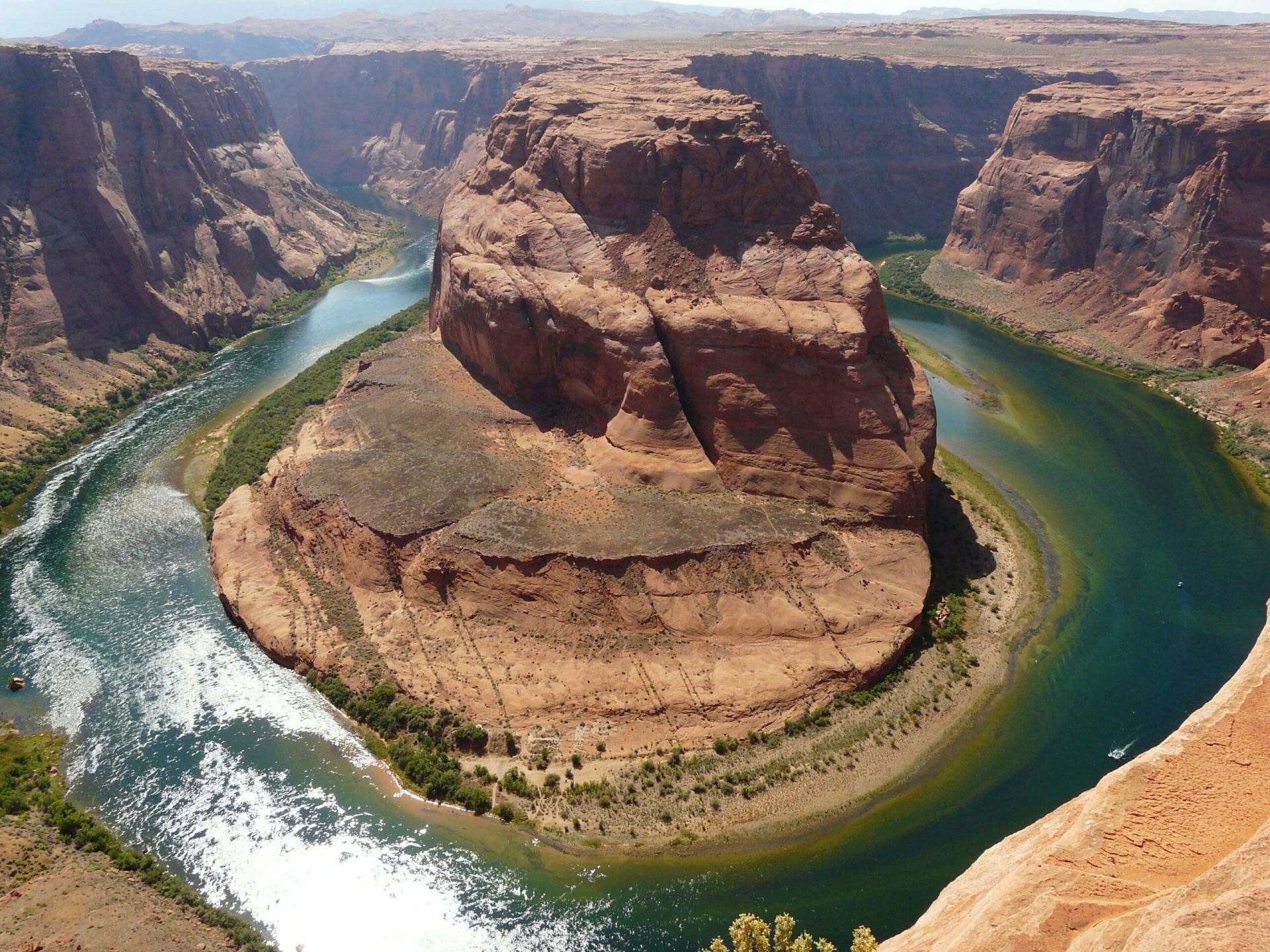
North America is a continent of glaring contrasts, where snow-covered mountains rise to desert canyons and forests yield to wild coastlines. From polar deserts that freeze to beaches that bask in the sun, every point of this vast geography holds something astounding for travelers looking for landscapes that take their breath away. Traveling across this vast landscape is like flipping pages in a living atlas, where every destination opens its own unique history sculpted by nature and time.
The Power of Water: Rivers, Lakes, and Waterfalls
Few of nature’s powers shape the land as forcefully as water. North America has some of the world’s most stunning lakes and waterfalls, which bring both serenity and dynamism to their landscapes.
Niagara Falls, which straddles the U.S.-Canadian border, has been a metaphor for natural wonder for generations. The churning wall of water lures millions of visitors annually, but too many of them disregard less-vocalized wonders nearby, such as Horseshoe Falls or nearby trails that frame the experience in verdant foliage.
Inland from there, the Great Lakes form one of the globe’s largest freshwater systems. Lake Superior, with its rocky shore and icebound depths, can be like an ocean in itself, and Lake Michigan offers sandy beaches and charming lighthouses. Travelers seeking tranquility can enjoy it in Minnesota’s Boundary Waters, where an intricate maze of interlinking lakes offers scope for days of canoe journeying and camping under star-filled skies.
Desert Wonders and Geological Marvels
The deserts of North America have an otherworldly beauty, carved by wind and time into surreal landscapes. The American Southwest, for instance, has classic landscape landmarks such as the Grand Canyon and Monument Valley. Standing on the rim of the canyon, looking out at the colossal expanse of erosion, one cannot help but marvel at the millennia of history revealed in its stratified walls.
Farther to the south, Arizona’s Antelope Canyon is a surreal experience with serpentine sandstone tunnels lit by dancing shafts of light. Utah’s Bryce Canyon offers a natural amphitheater of spire-shaped hoodoos, rust and orange at sunrise.
These arid lands remind us that beauty can be achieved through sheer simplicity, where silence and solitude create a profound sense of connection to the land.
Canada’s Natural Cities and Provinces
Canada is a land where cities and wilderness coexist in harmony, making it one of the best destinations for travelers who want the energy of urban life alongside easy access to nature. Each province offers something unique, from towering peaks to rolling prairies and ocean views.
In British Columbia, you have ocean and mountain scenery enveloping the city. From hectic streets to kayaking peaceful water or walking forest paths, you can do it in minutes. Vancouver Island is nearby, with cultural attractions mixed with wild beaches, and Whistler is a whole-year playground for nature lovers.
Alberta, on the other hand, offers a singular mix of city and nature fun. Edmonton boasts convenient access to boreal forest and the Canadian Rockies, while Calgary is renowned for prairie country and mountain getaways nearby. For those who simply wish to unwind in urban nature, some of the best parks in Calgary provide perfect spots for picnic outings, promenades, or simply breathing in country air amidst distant peaks.
Ontario and Quebec put their own spin on the mix. Toronto is a lively city center along the shores of Lake Ontario, and Ottawa inserts riverside scenery with heritage sites. Montreal and Quebec City enchant with their ancient cobblestone streets, but just outside lie national parks with waterfalls, forests, and game.
The Atlantic provinces round out the experience, with the rocky coastline of Newfoundland, New Brunswick’s countryside hills, and Prince Edward Island’s peaceful beauty. They serve as reminders that Canada is not just about its cities but as much about its small towns and seaside villages as well.
Majestic Mountains and Alpine Retreats
For those starved for altitude, North America’s mountain ranges offer endless possibilities for exploration. The Rocky Mountains stretch from New Mexico all the way north through Canada, with rocky summits, mountain meadows, and a few of the continent’s finest ski resorts.
In the United States, Colorado’s Rocky Mountain National Park draws visitors year-round with its road tours and wildlife spotting, from elk herds to soaring eagles. More northward, Montana’s Glacier National Park is a back-packer’s paradise, with pristine lakes and awe-inspiring valleys carved out by ancient glaciers.
Canada’s share of the Rockies, however, offers equally majestic scenery. The Banff and Jasper towns are portals to such turquoise lakes as Moraine and Peyto, which are popularly called nature’s masterpieces. Either snow-capped or glistening in sunlight in summer, these mountains hardly lose their ability to awe.
Untamed Coastlines and Island Escapes
North America’s shores are as varied as its heartland. Along the Atlantic, Maine’s rugged coastline is a long way from Florida’s beachside in tropical climes, and the Gulf of Mexico presents a relaxed atmosphere with balmy waters and sandy beaches.
The Pacific coast itself, though, delivers drama in abundance. Big Sur in California has cliffs plunging down to the ocean, with roads that wind along serving up stunning views around every turn. To the north, Oregon and Washington combine the thick woods with rocky shores, where driftwood and mist conjure a near-magical setting.
California’s deep connection to landscape and identity has long been celebrated by groups such as the Native Sons of the Golden West, a historic fraternal organization dedicated to preserving the state’s heritage. Founded in the 19th century, the organization has played a role in protecting landmarks, commemorating historic sites, and honoring the pioneering spirit that shaped California. Their efforts reflect how natural beauty and cultural history are intertwined, reminding travelers that places like Big Sur are not only scenic treasures but also part of a broader legacy rooted in community and preservation.
Island escapes also abound. Hawaii’s volcanic landscapes, with their black sand beaches and lush rainforests, embody paradise. Meanwhile, Alaska’s coastline offers something entirely different—icy fjords where glaciers meet the sea and whales breach in the distance.
Forests, Plains, and Hidden Retreats
Off the mountains and coastlines of North America stretch great forests and prairies, little enough known but no less charming. The Appalachian Mountain system stretching along the eastern United States offers dense woods teeming with colors changing seasonally. In autumn, the woods offer a painter’s palette of reds, yellows, and oranges, bringing in leaf-peepers from all over the world.
The Great Plains, often described as flat and dull, possess subtle beauty in their immense open horizons and golden prairies. This wide-open space brings with it some of the best stargazing on the planet, where the Milky Way blazes like an open ridge free of urban light.
Hidden in distant corners are quiet retreats like Arkansas’ rolling Ozark Mountains and their twisting rivers, or Kentucky’s Mammoth Cave system, where explorers are invited underground into a network of rooms and tunnels.
The Call of the Wild
It is the diversity of North America that makes it so interesting. The continent is not defined by a single landscape, but by the way many different ecosystems reinforce one another throughout its vast geography. There are deserts and glaciers, rainforests and prairies, and the natural world is an endless variety of diversity for anyone who will venture into it.
For tourists, these marvels are not just picturesque landscapes—they’re opportunities to bond, introspect, and recapture a sense of awe. Whether gazing in awe at a canyon, trudging a forest trail, or simply breathing fresh mountain air, the siren song of the wild is never far away.


