



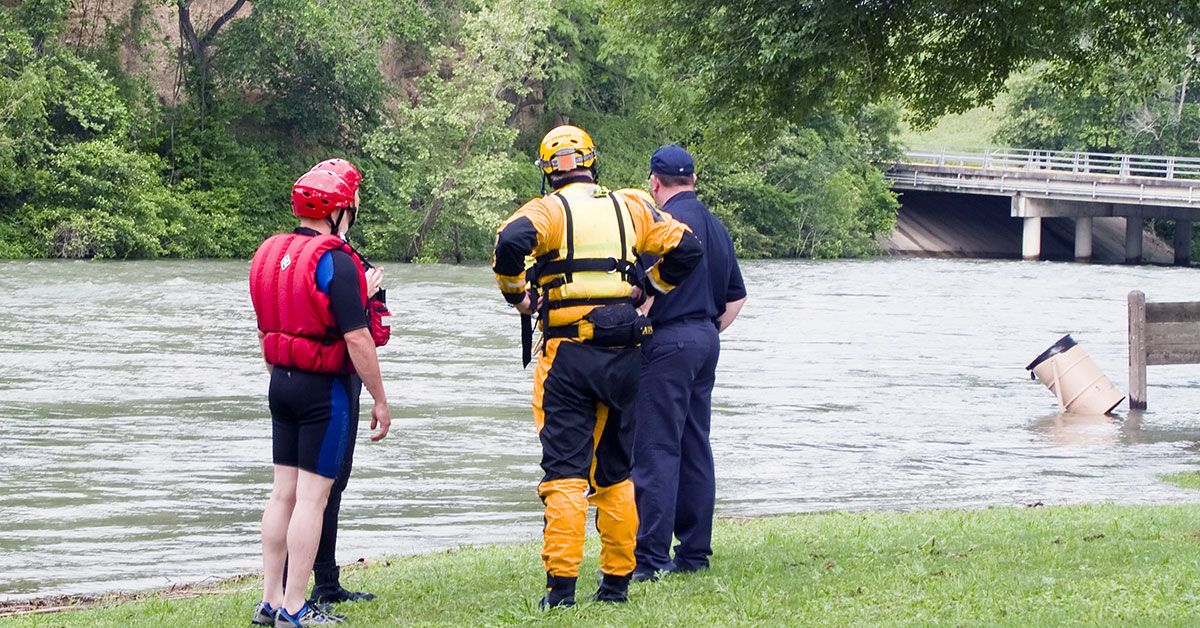
When a medical emergency occurs, response time and the level of care available at the point of contact are crucial. For people who live, work, and businesses that operate in locations where public emergency medical services are stretched thin, minimising the gap between when an emergency happens and when appropriate medical care arrives can be the difference.
Understanding emergency management services in remote and local contexts means understanding how that gap is closed. Here, we focus on the infrastructure that needs to be in place before an incident occurs, on the protocols that determine how a patient is stabilised and transferred, and on the difference between a generic emergency response and one designed for the environment in which it operates.
Medical emergency preparedness on solar and wind farms
Solar and wind farms are typically far from the nearest hospital, trauma unit, or public ambulance service. That creates significant medical emergency preparedness challenges for site operators and project managers. Workers on these sites face a distinct set of risks, including electrical burns and electrocution, height-related trauma from wind turbine maintenance, heat exhaustion on open solar farms, and crush injuries during heavy equipment operations.
Effective medical emergency preparedness requires a coordinated approach that accounts for the distance between the site and the nearest appropriate medical facility.
Client-specific response agreements
Client-specific response agreements allow site operators to work directly with an emergency medical services provider to develop a response framework tailored to your site’s layout, workforce size, risk profile, and distance from the nearest medical facility.
Rather than relying on a model that was never designed for a remote solar or wind farm, these agreements ensure that Basic Life Support through to Advanced Life Support is in place from the moment workers arrive on site.
Client-specific response agreements
Automated Rapid Deploy systems ensure that, when an incident occurs on a renewable site, the right response moves as quickly as possible. It’s a foundational mechanism that enables proactive emergency medical preparedness.
Emergency response challenges for Mining sites
Mining operations pose some of the most complex emergency response challenges in South Africa. Underground incidents such as rockfalls, crush injuries, gas exposure, and entrapment require emergency responders who are medically qualified at an Advanced Life Support level. Additionally, they must be trained to operate in hazardous, low-visibility environments where standard ambulance protocols do not apply.
Furthermore, above-ground, processing plants and surface operations carry their own risks. Those can range from chemical exposure and burn injuries to vehicle accidents involving heavy haulage equipment.
The role of tactical medical for mining sites
Tactical Emergency Medical Support is specifically designed for high-risk, high-complexity incidents in which responders must operate in hazardous environments while delivering advanced medical care. In a mining context, that means a TACMED unit can be deployed underground to reach and assess multiple patients.
The most common construction emergencies
Construction sites are among the highest-risk work environments in South Africa. Workers are exposed daily to conditions that can result in injury. Falls from height remain the leading cause of fatal accidents on construction sites, whether from scaffolding, roof structures, or elevated platforms. These injuries frequently result in severe trauma requiring immediate Advanced Life Support intervention.
What makes construction emergencies particularly challenging from an emergency management perspective is the scale and layout of active sites. These sites typically have large footprints, multiple contractors, shifting work zones, and limited permanent infrastructure. All these issues can affect how quickly and effectively emergency medical responders can reach and stabilise a patient.
Emergency medical care for pipeline and drilling operations
Oil and gas operations are frequently located in remote areas, spanning vast tracts of bushveld and semi-arid terrain. The nature of the work itself generates high-pressure pipeline failures that can result in catastrophic blast injuries and severe burns, while drilling operations expose workers to crush injuries from heavy rotary equipment, chemical and gas exposure, and the ever-present risk of fire and explosion.
Effective emergency medical care for pipeline and drilling operations, therefore, requires a purpose-built response framework. Emergency control centre integration and pre-planned aeromedical and ground-based transfer protocols are vital. These ensure that critically injured patients can move to the appropriate level of care without delay.
The role of localised emergency response in South African communities
In South Africa, the role of local emergency response has never been more critical. The country’s public emergency medical services, while staffed by dedicated professionals, are operating under sustained pressure. Often, teams are understaffed and stretched across vast service areas, making consistent response times difficult to achieve. This is particularly notable in semi-urban and township communities where the demand for emergency medical care is highest.
Individual and family Emergency response
For people who need an additional layer of personal security, 24/7 response and panic buttons extend emergency response into everyday life. These systems connect the user directly to emergency dispatch the moment they need it.
How Planned Patient Transfers work
When a medical emergency occurs on an industrial site, the immediate response is only part of the process. The next critical challenge is getting them to the appropriate level of care. In many cases, that means a planned patient transfer that covers a significant distance under controlled medical supervision.
Being able to commit to escalation up to ICU-level patient transport means patients can receive appropriate care without any reduction in care in transit.
Conclusion
Emergency management services are not a one-size-fits-all solution. Whether the need arises on a remote solar farm in the Northern Cape or in a local suburb, the quality and speed of emergency medical response depend entirely on the provider.


