



Introduction: The Age of Rapid Prototyping
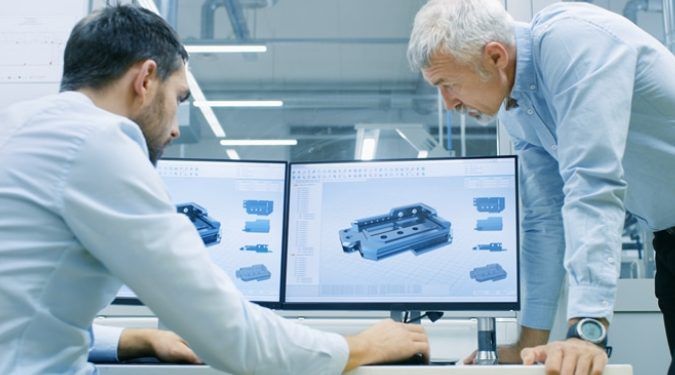
Imagine having a breakthrough idea for a new product, designing it in CAD software, and holding a functional prototype in your hands just a few days later. Not only that, but you can test it, refine it, and iterate multiple times before ever committing to full-scale production.
This is no longer a fantasy. Thanks to rapid prototyping, companies across industries—from aerospace and medical to consumer electronics and automotive—are revolutionizing the way they bring products to market.
At RapidMade, we specialize in 3D printing, CNC machining, Freeform Injection Molding (FIM), and quick-turn thermoforming to help businesses accelerate innovation, reduce costs, and improve product designs faster than ever before.
Let’s take a deep dive into how rapid prototyping works, why it’s changing manufacturing, and how companies can leverage it for maximum competitive advantage.
What is Rapid Prototyping?
Rapid prototyping is the process of quickly creating a physical model of a design using advanced manufacturing technologies like 3D printing, CNC machining, injection molding, and thermoforming.
The goal is to allow designers, engineers, and businesses to test, refine, and improve their products before committing to large-scale production.
The Key Benefits of Rapid Prototyping
✅ Faster Time-to-Market – Skip long lead times for traditional manufacturing. Prototypes can be ready in days, not weeks or months.
✅ Lower Costs – Save money by avoiding expensive tooling until your design is finalized.
✅ More Design Iterations – Quickly test multiple versions of a product to optimize performance.
✅ Better Risk Management – Identify and fix design flaws early, before investing in full production.
✅ Real-World Material Testing – Test actual production materials before mass manufacturing.
Whether you’re developing medical devices, aerospace components, or consumer products, rapid prototyping helps you fail fast, improve quickly, and succeed faster.
The Technologies Powering Rapid Prototyping
Different manufacturing methods are used depending on the materials, precision, and functionality required. Let’s explore the four major technologies used in rapid prototyping.
1. 3D Printing: The Foundation of Modern Prototyping
3D printing has transformed product development, allowing for low-cost, high-speed prototyping. It takes a digital file (CAD model) and creates a physical object layer by layer—without the need for tooling.
There are several types of 3D printing technologies, each suited for different applications:
Stereolithography (SLA) – High-Detail, Smooth Surface Prototypes
Best for:
✔ Aesthetic models
✔ Medical and dental applications
✔ Complex, high-resolution parts
SLA printing uses ultraviolet light to cure liquid resin, producing parts with exceptional surface finish and fine details. It’s a go-to method for prototypes that require precision, such as medical devices, dental models, and high-end consumer products.
Multi Jet Fusion (MJF) – Industrial-Grade Functional Prototypes
Best for:
✔ Durable, functional parts
✔ Mechanical testing
✔ Short-run production
MJF produces robust, isotropic parts that mimic injection-molded plastics. It’s perfect for engineering prototypes that need real-world performance testing.
Fused Deposition Modeling (FDM) – Large, Strong, and Cost-Effective Prototypes
Best for:
✔ Aerospace and automotive applications
✔ Manufacturing tools and fixtures
✔ Prototyping with thermoplastics like ABS, PC, and Ultem
FDM prints strong and durable parts using real thermoplastics. While layer resolution is lower than SLA or MJF, it’s cost-effective and great for large parts.
2. CNC Machining: When Precision Matters
While 3D printing is great for speed and complexity, CNC machining remains the gold standard for high-precision parts.
How it works:
A computer-controlled cutting tool removes material from a solid block (metal or plastic) to achieve tight tolerances and smooth surface finishes.
Why CNC Machining for Prototyping?
✔ Unmatched precision – Capable of ±0.001” tolerances.
✔ Wide material selection – Works with metals (aluminum, titanium, steel) and high-performance plastics (PEEK, polycarbonate, ABS).
✔ Production-grade quality – Prototypes look and function like final products.
Best for:
- Aerospace and automotive parts
- Medical devices requiring high accuracy
- Functional prototypes needing metal strength
For high-performance prototypes, CNC machining is often used alongside 3D printing—with 3D-printed parts tested first and final refinements done via CNC machining.
3. Freeform Injection Molding (FIM): Small-Batch Injection Molding Without the Cost
Injection molding is great for mass production, but traditional steel molds cost tens of thousands of dollars and take weeks to manufacture.
That’s where Freeform Injection Molding (FIM) comes in.
Instead of steel molds, FIM uses 3D-printed molds—allowing companies to:
✔ Test real materials before committing to full-scale production
✔ Produce short runs without high tooling costs
✔ Iterate designs rapidly without expensive mold rework
Best for:
- Medical device prototyping
- Consumer electronics enclosures
- Short-run production before committing to expensive molds
4. Quick-Turn Thermoforming: Fast, Affordable Thin-Walled Parts
Thermoforming is a widely used process for making thin plastic parts like packaging, trays, and enclosures.
Traditionally, thermoforming requires expensive aluminum tooling—but rapid prototyping allows for 3D-printed or CNC-machined molds, cutting lead times and costs.
3D-Printed Thermoforming Molds
✔ Perfect for prototyping and low-volume production
✔ Produced in days instead of weeks
✔ Supports complex geometries and undercuts
CNC-Machined Thermoforming Molds
✔ More durable for high-volume runs
✔ Higher dimensional accuracy
✔ Ideal for bridge production before committing to full-scale tooling
Best for:
- Medical device packaging
- Automotive interior panels
- Custom product enclosures
How to Choose the Right Prototyping Method
| Technology | Best For | Advantages | Limitations |
| SLA (Stereolithography) | High-detail prototypes | Smooth surface finish, fine details | Limited material strength |
| MJF (Multi Jet Fusion) | Functional testing, small production | Durable, isotropic properties | Requires post-processing |
| FDM (Fused Deposition Modeling) | Large, strong parts | Cost-effective, real thermoplastics | Coarser surface finish |
| CNC Machining | Precision prototypes, metals | Tight tolerances, superior finish | Higher cost, longer lead times |
| FIM (Freeform Injection Molding) | Small-batch injection molding | Fast mold iteration, low cost | Limited mold lifespan |
| Thermoforming (3D-Printed & Machined Molds) | Thin-walled plastic parts | Affordable, fast mold production | Limited material durability for printed molds |
Get Your Next Prototype in Days—Not Weeks
At RapidMade, we provide cutting-edge rapid prototyping solutions to help businesses innovate faster.
✔ 3D printing, CNC machining, and injection molding—all in one place.
✔ Prototypes in as little as 24 hours.
✔ Expert guidance on the best method for your project.
Let’s turn your ideas into reality. Contact us at RapidMade.com or email info@rapidmade.com to get started!


