



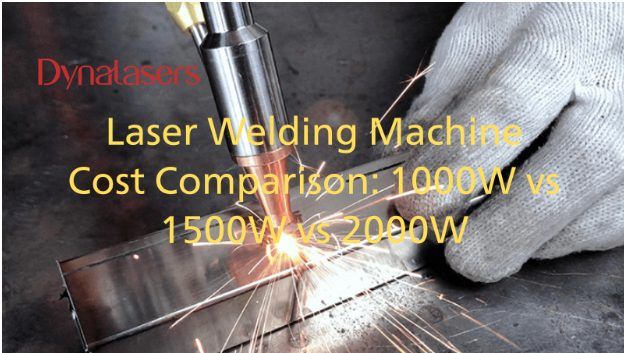
Fiber laser welding machine costs can vary depending on power level and configuration. Understanding how different power ranges affect welding performance can help buyers balance budget and production needs. This article compares the price trends and value of 1000W, 1500W, and 2000W laser welding machines to help manufacturers choose the right equipment for their applications.
How Laser Welding Machine Power Affects the Welding Process
Compared with arc or TIG welding, laser welding produces less thermal distortion, smoother weld seams, and stronger joints. In general, higher power allows faster welding speeds and enables processing of thicker metals.
| Power Level | Typical Material Thickness | Main Application |
| 1000W | Thin metals ≤2 mm | Portable use, repair work, light fabrication |
| 1500W | 3–4 mm metals | Balanced power and speed, suitable for small to medium manufacturing |
| 2000W | ≥5 mm metals | Higher performance, used in industrial production and heavy duty environments |
In short, performance drives value. The differences in configuration and capability are what ultimately shape the price and overall value of each model.
Laser Welder Price Range and Industry Applications
Laser welding machines vary in price depending on their intended applications. Understanding how each price range fits different uses helps buyers make more practical decisions.
1000W Laser Welder
Typical price ranges from $3,000 – $4,500. It is commonly used for thin stainless steel welding and small repair tasks, making it suitable for hobbyists and small workshops.
1500W Laser Welder
Typical price ranges from $4,000 – $6,000. It is designed for medium thickness metals and general manufacturing, often used in fabrication shops and repair centers.
2000W Laser Welder
Typical price ranges from $6,000 – $9,000. It is suitable for thick materials and continuous operation, commonly used in industrial and automotive production environments.
No matter the price, the right machine should match your production needs. With proper power and cooling design, a quality fiber laser welder can run for years with low operating costs.
How to Choose the Right Dynalasers Laser Welder for Your Business
Selecting the right laser welder depends on the material, working environment, and production frequency. Power should match real production needs, not just the initial price. Dynalasers fiber laser welders supplier offer several advantages:
- Self-developed fiber laser source that provides stable beam quality and long-term reliability.
- Efficient air-cooling technology that eliminates the need for external chillers and reduces maintenance costs.
- Integrated multifunction systems that support welding, cutting, cleaning, and wire feeding in one machine.
- Wide operating temperature range from –15°C to 40°C, allowing stable performance in different workshop environments.
- Lightweight and portable designs (approximately 8–22 kg) suitable for both factory production and on-site work.
- CE-certified safety standards with reliable global technical support.
- Energy-efficient design that helps reduce long-term operating costs.
General power selection guidelines:
- For mobility → choose 1000W air-cooled models for repair work and light fabrication.
- For versatility → 1500W 4-in-1 multifunction systems for most fabrication tasks.
- For industrial production → 2000W water-cooled systems for thicker materials and continuous operation.
When choosing a supplier, it is important to focus on long-term reliability and total production value. A well-designed fiber laser welder can deliver stable performance for many years while maintaining low operating costs.

What Determines the Cost of a Fiber Laser Welding Machine
Laser welder cost depends on factors such as power level, system design, and cooling method. Below is a general market comparison for 2025 based on average global pricing and user data.
Laser Source Module
The laser source usually accounts for about 40–60% of the total machine price. Higher power levels generally increase the overall cost.
Cooling System
Water cooled systems typically cost about 25–30% more than air cooled designs because of additional components and maintenance requirements.
Functional Integration
Machines with integrated functions such as welding, cutting, cleaning, and wire feeding usually increase the total price by about 15–25%.
Brand and Certification
Models with certifications such as CE, FDA, or ISO often cost more. Imported brands can sometimes be two to three times more expensive than standard models.
For most users, a 1500W laser welder offers the best balance of price and performance. The Dynalasers M70 and D70 machines deliver up to 1800W with stable air cooling and self developed laser sources for reliable industrial welding.
Laser Welding Machine ROI Analysis
When purchasing a laser welding machine, it is important to consider not only the upfront cost but also the long term return on investment. Below is an overview of ROI at different power levels.
1000W Laser Welding Machine
Requires a lower initial investment but offers limited welding depth. It is mainly suitable for small repair tasks and light fabrication.
1500W Laser Welding Machine
Provides the best balance between cost and performance. In many applications, the return on investment can typically be achieved within 12 to 18 months.
2000W Laser Welding Machine
Requires a higher upfront investment but supports faster production and deeper penetration. The ROI period is often around 8 to 12 months in industrial environments.
Example: Replacing traditional TIG welding with a 2000W fiber laser system can reduce labor costs by about 25 percent while increasing production efficiency.
FAQs
1. Is a 2000W laser welder worth the higher investment?
Yes. If you often weld thicker metals or operate in high load environments, a 2000W laser welder is more suitable. It provides deeper penetration and faster welding speeds, improving both productivity and weld quality.
2. Which cooling system is better, air cooling or water cooling?
For most handheld or portable laser welders, air cooling is simpler and more cost effective, and it meets typical daily operating needs. Water cooling is better suited for continuous heavy duty production but requires higher maintenance.
3. What are the annual operating costs of a laser welding machine?
Annual operating costs typically range from $150 to $400, covering electricity, protective lenses, and shielding gas. Air-cooled machines have lower costs since they do not require coolant or filter maintenance.
4. Are handheld laser welders suitable for beginners?
Yes. With proper safety gear and basic training, handheld systems such as the Dynalasers S series are easy to operate and safer than traditional arc welding equipment.
Conclusion
This article outlines the cost differences between laser welding machines at various power levels. From 1000W portable units to 2000W industrial systems, each serves a distinct role in modern manufacturing. Explore Dynalasers laser welding devices to improve your welding efficiency and performance.


