



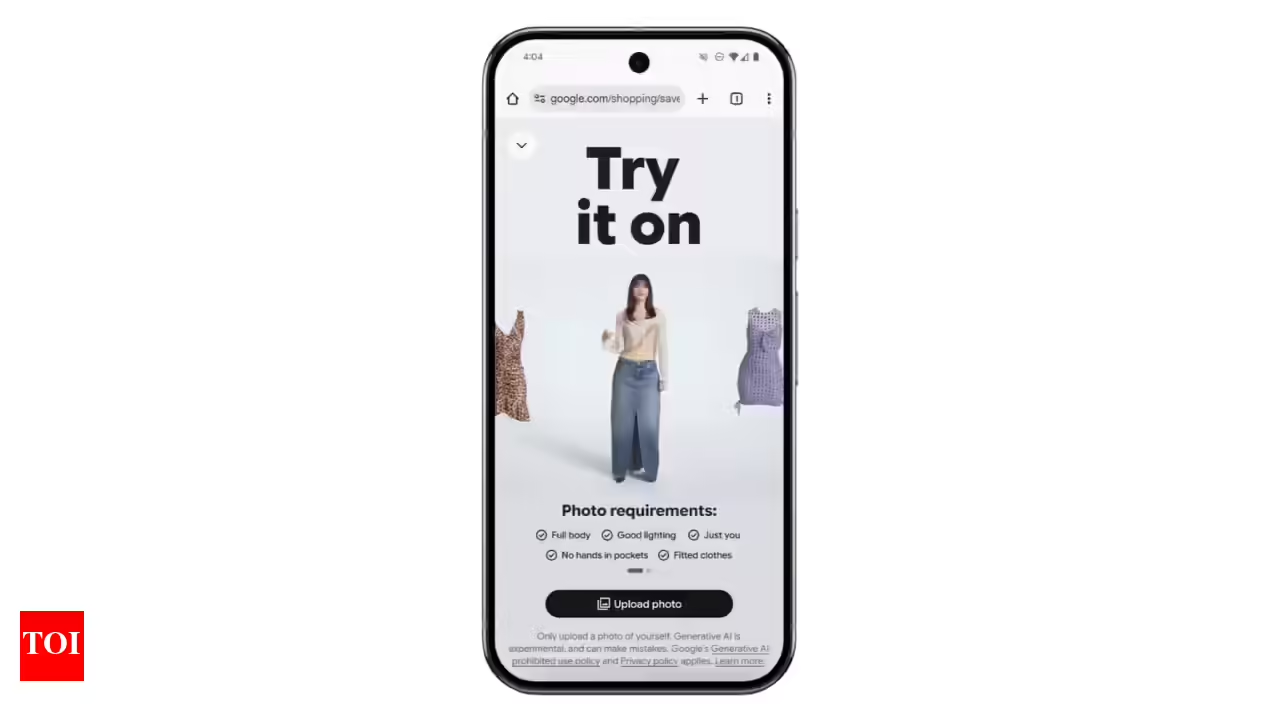
As online shopping continues to grow in popularity, consumers are increasingly looking for ways to make their shopping experience easier, more efficient, and more satisfying. One of the latest innovations in this realm is the AI clothes changer, a tool that allows users to virtually try on clothes before making a purchase. For fashion retailers and online shoppers alike, this technology can be a game-changer. Here’s how you can make the most of AI clothes changers to test outfits before buying them.
Step-by-Step Guide
Using an AI clothes changer is straightforward, especially if you follow these simple steps:
- Find the Right Platform
Look for an online fashion retailer or an app that integrates AI clothes changers. Many fashion websites, apps, and marketplaces now offer this feature to help customers visualize how items will look on them without needing to physically try them on. - Upload Your Photo
Typically, you’ll need to upload a clear, full-body photo of yourself. Make sure the image is well-lit and taken from the front for the best results. Some apps might also allow you to use 3D models or avatars, but using your own photo tends to provide a more accurate result. - Select the Clothing Item
Browse the catalog and choose the outfit you want to test. Most AI clothes changers will have an option to select a specific item (like a shirt, dress, or jacket) to try on in the app. - AI Processes the Photo
Once you’ve selected the clothing item, the AI will process your uploaded photo and superimpose the outfit on your image, adjusting for your body shape, size, and posture. - Review the Result
After processing, you’ll be able to see how the clothing looks on you. Some AI tools even allow for adjustments to ensure the fit looks as close as possible to reality. You can tweak the fit and style to get a more accurate preview. - Make Your Purchase Decision
Once you’re satisfied with how the outfit looks, you can go ahead and make your purchase, confident that you’ve seen how it would fit on your body before committing.
Best Angles and Lighting for Photos
To get the most accurate and helpful results from an AI clothes changer, ensure your photo is well-composed. Here are some tips on the best angles and lighting:
- Full-Body Photo: A full-body image helps the AI accurately model the clothing on your body. Take the photo standing up, facing directly toward the camera.
- Neutral Pose: Keep your body posture neutral—avoid slouching or striking a pose. You want to replicate a natural stance so the AI can adjust the fit accordingly.
- Good Lighting: Natural lighting works best. Avoid harsh artificial lights or shadows that can obscure details of your body. Ideally, take the photo in a well-lit room with soft, diffused lighting to capture clear details.
- No Obstructions: Make sure your clothes are fitted and free from anything that could distort the AI’s calculations, such as bulky outerwear or accessories that might obscure your figure.
- Head-On Angle: The best angle is usually a straight-on, head-and-shoulders shot. If the app requires multiple angles (such as side or rear), ensure consistency in your posture and lighting.
Avoiding Unrealistic Expectations
While AI clothes changers are incredibly useful, it’s important to keep in mind that they may not always deliver perfect results. Here’s how to avoid unrealistic expectations:
- Understand the Limitations: AI Image Generator relies on algorithms that analyze images to predict how clothes will fit on your body. However, these algorithms may not fully account for variables like fabric texture, stretch, or movement. The virtual fit may look slightly different when worn in real life, especially for more complex materials.
- Remember Size Variations: While the AI can simulate fit based on your body measurements, sizing across brands can vary. Always check the brand’s size chart and, if possible, read customer reviews for insights into how a piece of clothing actually fits in real life.
- Fabric Simulation Is Not Perfect: AI clothes changers can give you a general sense of how an item fits, but the way a garment behaves with movement, stretch, or wear may not always be accurately portrayed. It’s important to consider how the material feels when worn, which is something AI can’t fully replicate.
- Don’t Rely Only on the Virtual Try-On: If you’re unsure about a piece of clothing, it’s still a good idea to check for return policies or user feedback, which can help you make a more informed decision.
Ethical Usage
While AI clothes changers can be a great tool, it’s essential to use them ethically. Here’s how you can ensure responsible usage:
- Respect Privacy: Avoid uploading photos or using AI tools that could potentially infringe on others’ privacy. Use only your own images or the ones provided by the app or website. Never upload images of others without their consent.
- Avoid Deepfake Technology: Some AI tools could be misused for creating “deepfakes,” where someone’s image is manipulated to show them wearing something they never actually wore. While this may not be a concern in most clothing apps, be cautious about platforms that encourage you to alter your appearance in ways that could deceive others.
- Transparency in Virtual Try-Ons: If you are an online retailer, ensure that the AI clothes changer is used transparently. Let customers know when they’re using a virtual try-on feature, and make it clear that the AI-generated image might not be a 100% accurate reflection of how the clothes will fit in real life.
- Fair Representation: When using an AI clothes changer for testing outfits, ensure that the platform represents a range of body types, sizes, and skin tones. This inclusivity ensures that all shoppers can find an accurate representation of how clothes will look on them.
Conclusion
AI clothes changers are a powerful tool for online shoppers and fashion retailers, enabling users to visualize how clothes will fit before making a purchase.


