



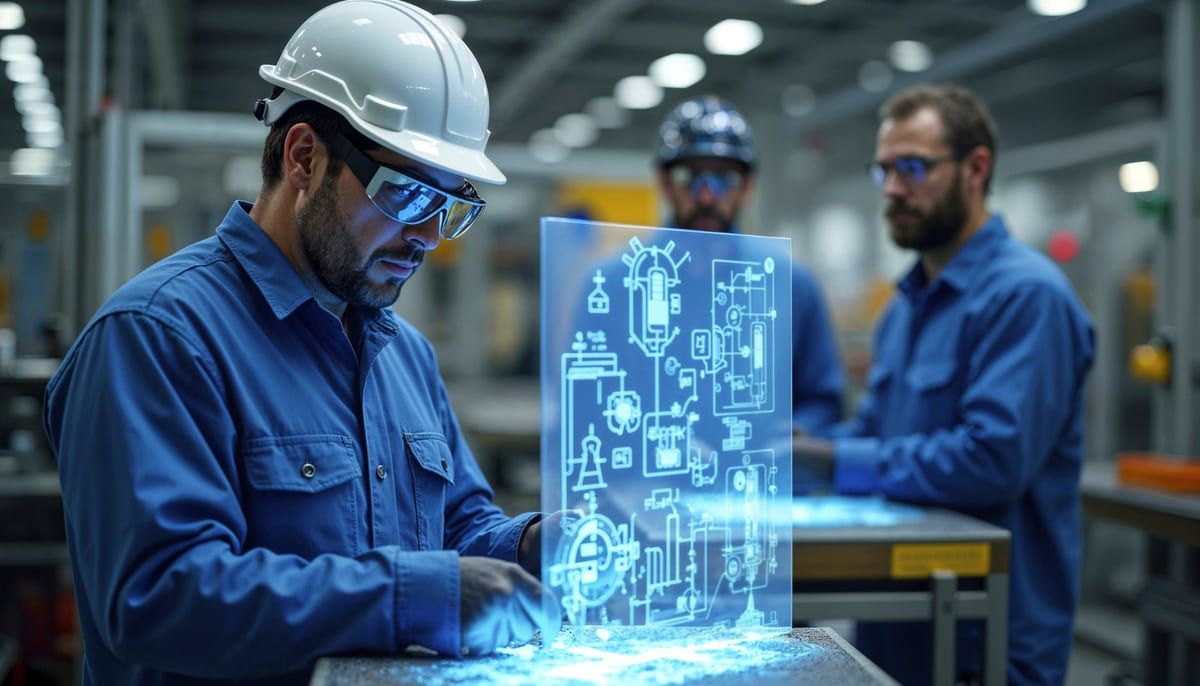
The construction industry has traditionally been slow to adopt new technology, but artificial intelligence is finally making its way onto job sites and into project offices across the country.
From reducing waste to improving safety and cutting project timelines, these AI tools are transforming one of America’s oldest industries. Here’s how smart software is reshaping construction from the ground up.
1. Predictive Project Planning Platforms
Gone are the days of purely gut-feeling estimates. AI-powered project planning tools now analyze thousands of past projects to predict realistic timelines and budgets. These platforms can identify potential bottlenecks before they happen by recognizing patterns that even experienced project managers might miss. The result? Fewer surprise delays and more accurate bids that protect both contractors and clients from budget overruns.
2. Computer Vision for Safety Monitoring
Safety has always been paramount on construction sites, but AI is taking it to the next level. Camera systems equipped with computer vision can now identify when workers aren’t wearing proper PPE, when they’re entering dangerous zones, or when unsafe conditions are developing. These systems work 24/7 without fatigue, sending real-time alerts to supervisors so they can address issues before accidents happen. Some systems even track near-misses to help companies identify and fix systemic safety problems.
3. Intelligent Construction Bidding Software
The bidding process has historically been one of the most time-consuming aspects of construction work. AI is streamlining this with bidding software like Downtobid that help contractors quickly analyze project requirements, estimate costs, and generate competitive bids. By automating much of the preconstruction workflow, these tools free up estimators to focus on strategy rather than spreadsheet management, while also reducing the errors that come from manual data entry.
Of course, winning more bids is just one piece of the puzzle—successful construction firms need a comprehensive approach that includes marketing solutions every construction firm should know to build their reputation and attract quality projects in an increasingly competitive market.
4. Autonomous Equipment and Robotics
Self-driving excavators and autonomous bulldozers aren’t science fiction anymore. AI-guided construction equipment can now perform repetitive tasks like grading, digging, and material transport with minimal human oversight. These machines use GPS, LIDAR, and machine learning to navigate job sites safely and efficiently. Beyond the cool factor, autonomous equipment addresses the industry’s persistent labor shortage while improving precision and reducing fuel consumption through optimized movement patterns. Check out construction equipment rental to make thighs convenient and affordable for your project.
Given the importance of surveys in construction projects for everything from initial planning to ongoing progress tracking, this AI-enhanced surveying capability is revolutionizing how accurately and quickly teams can understand their work environments.
5. Material Waste Reduction Systems
Construction waste is a massive problem, with an estimated 600 million tons generated annually in the US alone. AI-powered systems are tackling this by optimizing material orders and cuts. These platforms analyze architectural plans and calculate exactly how much material is needed, where each piece should be cut, and how to minimize offcuts. Some systems even track inventory in real-time using image recognition, preventing over-ordering and ensuring materials don’t sit unused on job sites.
6. Predictive Maintenance for Equipment
Heavy equipment breakdowns can halt entire projects and cost tens of thousands per day in delays. AI is helping construction companies avoid these disasters through predictive maintenance systems that monitor equipment health in real-time. By analyzing data from sensors on vehicles and machinery, these tools can predict when a part is likely to fail and schedule maintenance during planned downtime. It’s like having a mechanic who can see into the future.
7. Generative Design for Optimization
Perhaps the most futuristic application, generative design uses AI to explore thousands of possible design variations based on specific parameters like budget, materials, building codes, and environmental factors. Architects and engineers input their requirements, and the AI generates optimized solutions that humans might never have considered. These tools are particularly valuable for complex projects like bridges, stadiums, or high-rises where small optimizations can save millions.
8. AI-Driven Quality Control Inspection
Quality control has always been a challenge in construction, where defects caught late in the process can be exponentially more expensive to fix. AI inspection systems are changing this by using drones and cameras to scan work in progress, comparing it against blueprints and specifications in real-time. These systems can spot issues like improper concrete pours, misaligned structural elements, or inadequate insulation before they’re covered up by subsequent work.
The technology essentially provides continuous oversight that would be impossible with human inspectors alone. This level of quality assurance is particularly valuable for residential construction, where homebuyers want confidence in their investment—understanding things to consider before buying a new construction home becomes much easier when builders can demonstrate they’re using cutting-edge inspection technology.
For contractors looking to implement comprehensive quality control measures beyond just AI tools, ensuring quality control in construction projects requires a multi-faceted approach that combines technology with proven management practices.
The Bottom Line
While construction might not be the first industry that comes to mind when thinking about cutting-edge technology, AI is proving that even hard hats and steel beams can benefit from smart software. These tools aren’t replacing skilled tradespeople; they’re amplifying their capabilities and eliminating the tedious tasks that slow projects down. As these technologies become more accessible and affordable, even small contractors are finding ways to compete more effectively and deliver better results for their clients.
The construction site of tomorrow won’t look radically different from the outside, but the intelligence powering it will be unlike anything the industry has seen before.


