



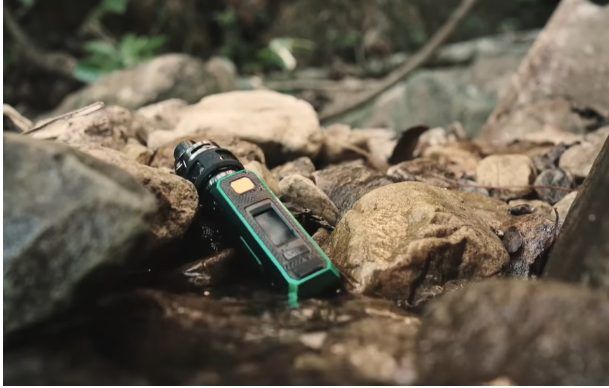
It happens in a heartbeat: your device slips from your hand and lands right in a puddle, a sink, or worse.
While that sinking feeling in your chest is immediate, a waterlogged vape doesn’t always mean a permanent trip to the trash can. Acting quickly and following the right recovery steps can often save your battery and your coils. This guide walks you through the essential safety precautions and proven drying methods to revive your device without risking a short circuit.
What Happens When a Vape Gets Wet?
When a vape comes into contact with water, several components can be affected. Battery contacts may corrode, preventing proper electrical connections and reducing performance.
Internal circuitry is especially vulnerable, as water can short-circuit delicate electronic components.
Sensors and airflow components may also malfunction, impacting puff detection and vapor production.
The type of water matters as well, freshwater is generally less damaging, while saltwater can accelerate corrosion and cause more serious long-term damage to your device.
Immediate Steps After Dropping a Vape in Water
Power Off and Disconnect Everything
The first step is to turn the device off immediately. Avoid attempting to power it on, as this can cause short circuits. Remove any removable parts like the pod or tank to minimize water exposure.
Dry the Exterior Properly
Gently wipe the exterior with a lint-free cloth or paper towel. Pay special attention to ports, seams, and airflow holes, where water can easily accumulate.
What NOT to Do
Do not charge the device while it’s wet. Avoid using heat sources like hair dryers, microwaves, or heat guns, which can damage internal components. Do not shake the vape violently, as this can push water further into sensitive areas.
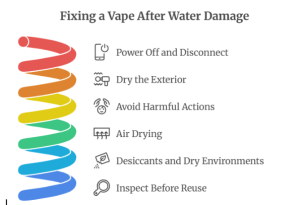

How to Fix a Vape that Fell in Water
Air Drying: The Safest Method
The safest way to dry a wet vape is to leave it in a dry, well-ventilated area. Allow at least 24 to 48 hours for moisture to evaporate completely before attempting to use it again. Patience during this stage is crucial to prevent permanent damage.
Desiccants and Dry Environments
Placing the device with silica gel packs can help absorb remaining moisture more efficiently. While some suggest using rice, it is less effective and may leave dust or starch particles inside the device, so silica gel remains the preferred choice.
Inspecting Before Reuse
Before powering the vape back on, carefully check for any remaining moisture. Perform a smell test, any burnt or metallic odors indicate internal damage, and the device should not be used. Conduct a visual inspection for corrosion or residue on battery contacts and internal components.
When a Dropped Vape Cannot Be Fixed
Unfortunately, not every vape in water can be resurrected. Recognizing when a device is a total loss is crucial for your personal safety.
Warning Signs of Permanent Damage
If you notice any of the following after your vape in water has dried, it is time to recycle the device:
- The device fails to turn on or the screen remains glitchy and distorted.
- The battery heats up unusually fast or feels hot to the touch while idle.
- You experience auto-firing, where the device activates without you pressing the button or inhaling.
- The screen displays Check Atomizer or Low Resistance errors that won’t go away.
Safety Comes First
It is never worth the risk to continue using a damaged vape in water.
Lithium-ion batteries are extremely sensitive to internal shorts; a compromised battery can lead to thermal runaway, resulting in leaks, fires, or small explosions. If your device exhibits erratic behavior after being submerged, the internal safety chips may be compromised. Always prioritize your safety and replace the device if the recovery steps fail to restore it to 100% functionality.
How to Prevent Future Water Damage
While knowing how to rescue a vape in water is a vital skill, the best strategy is to prevent submersion in the first place.
Everyday Prevention Tips
Avoid placing your vape near sinks, cups, or any open liquids. Using protective cases or sleeves adds an extra layer of safety, keeping your device shielded from accidental spills.
Choosing More Durable Devices
The best way to stop worrying about a vape in water is to switch to a water-proof device.
We highly recommend the ARMOUR ULTRA. This device is specifically engineered to handle the elements that typically kill standard vapes. It features:
- IP68 & IP69K Ratings: IP68 certified for immersion in up to 1 meter of water for 30+ minutes, and IP69K certified to resist high-temperature water up to 80°C.
- MIL-STD-810H Certification: This military-grade drop resistance ensures the internal circuitry stays safe even after a 1.2-meter fall.
- Ultra-Durable Build: With a reinforced 510 thread, a metal cage-like frame, and a protective USB port cover, it is built to survive environments where other vapes would fail.
For more details and options, visit the VAPORESSO website and explore their full range of reliable, innovative vapes!


