



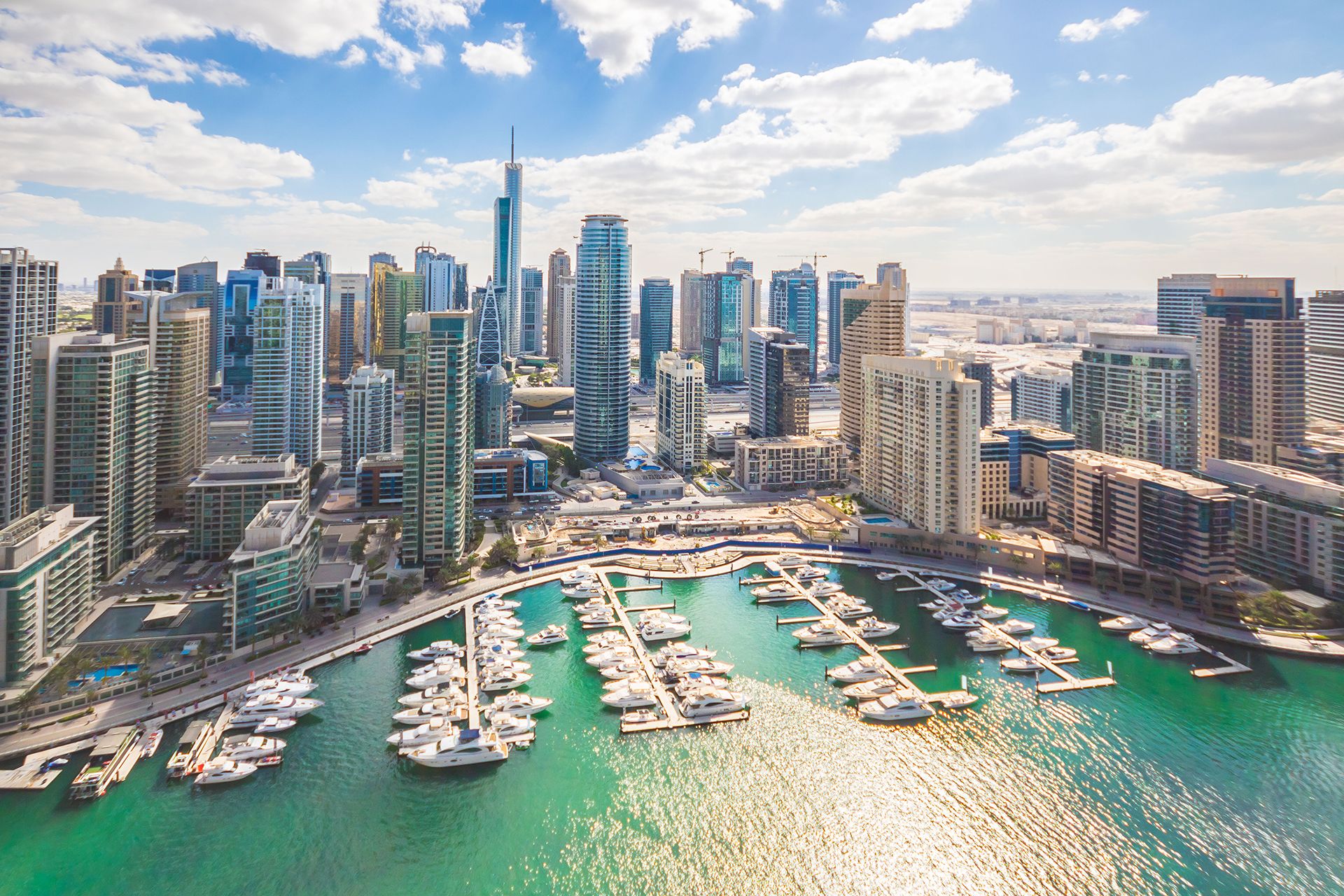
For global entrepreneurs building businesses across borders, Dubai real estate offers more than property ownership. It provides a strategic platform that combines residency access, operational advantages, and long-term wealth preservation. In 2025, as Dubai continues attracting a growing wave of international business founders and innovators, the synergy between property investment and entrepreneurial success has never been clearer.
This guide explores why Dubai real estate has become an essential component of global business strategy for founders looking to invest in Dubai real estate as part of their long-term expansion plan.
1. The Entrepreneurial Advantage: Real Estate as Business Infrastructure
Dubai has transformed property investment from a passive wealth strategy into an active business tool. For entrepreneurs, real estate in Dubai serves multiple strategic functions simultaneously.
Residency Through Investment
Property investment provides direct access to long-term residency options that eliminate traditional visa dependencies. The Golden Visa program allows entrepreneurs who invest AED 2 million or more in property to secure 10-year renewable residency. This visa requires entry into the UAE only once every two years to maintain validity, offering flexibility for globally mobile business owners.
For entrepreneurs investing AED 750,000 or more in property, a two-year renewable investor visa is available, provided at least 50% equity is maintained if the property is mortgaged. Spouses investing jointly must meet a combined AED 1 million threshold (AED 750,000 per person). These residency pathways allow entrepreneurs to sponsor family members and establish a stable base while scaling operations internationally.
Strategic Location and Global Connectivity
Dubai sits at the crossroads of Asia, Europe, and Africa, providing unparalleled access to over 2 billion people within a four-hour flight and nearly 5 billion within eight hours. Dubai International Airport became the world’s busiest airport for international passengers in 2025, surpassing Atlanta with 5.29 million available seats in November 2025 alone, despite operating no domestic flights.
For entrepreneurs managing international operations, this connectivity translates into operational efficiency. Property ownership in Dubai establishes a permanent presence in a city that serves as a natural bridge between Eastern and Western markets, enabling faster expansion into the Middle East, Africa, and South Asia regions.
Business Setup Synergies
Real estate investment in Dubai integrates seamlessly with business formation. Entrepreneurs can establish companies in Dubai’s free zones or mainland with 100% foreign ownership, benefiting from streamlined processes that can complete company registration in under one hour in certain zones.
Free zone companies that meet Qualifying Free Zone Person (QFZP) criteria can access 0% corporate tax on qualifying income, while all businesses benefit from zero personal income tax. Business setup costs typically range from AED 12,000 to AED 50,000 depending on the zone, license type, and visa requirements. Property ownership adds credibility when opening corporate bank accounts, negotiating with partners, and accessing local business networks.
2. Financial Architecture: Tax Optimization and Wealth Preservation
Dubai’s tax structure creates compelling advantages for entrepreneurs who combine business operations with real estate investment.
Zero Personal Tax Environment
Dubai imposes no personal income tax on salaries, dividends, or capital gains. For entrepreneurs drawing income from multiple sources, this structure maximizes retained earnings and accelerates wealth accumulation. Property rental income remains entirely tax-free for individuals, allowing entrepreneurs to generate passive income streams without tax erosion.
Additionally, there is no inheritance tax on property passed to heirs, and no annual property taxes on residential real estate. The only significant transfer cost is the one-time 4% Dubai Land Department fee paid upon property purchase.
Corporate Tax Considerations
While the UAE introduced a 9% corporate tax in 2023, companies operating in qualified free zones can still access 0% tax rates on qualifying income if they maintain adequate substance, earn primarily qualifying income (with non-qualifying revenue below 5% or AED 5 million, whichever is lower), and prepare audited financial statements.
For entrepreneurs operating free zone companies, this structure allows business profits to compound tax-free while maintaining full profit repatriation rights. Combined with property ownership that generates tax-free rental income, entrepreneurs can build integrated wealth strategies that optimize both business and investment returns.
Asset Protection and Privacy
Entrepreneurs can structure property ownership through UAE holding companies or Special Purpose Vehicles (SPVs), providing asset protection and privacy benefits. These structures, particularly when combined with offshore components, offer legitimate wealth preservation tools for internationally mobile business owners managing assets across multiple jurisdictions.
3. Market Fundamentals: Growth, Demand, and Opportunity
Dubai’s real estate market continues to demonstrate strong fundamentals that align with entrepreneurial timing and growth trajectories.
Robust Market Performance
In the first half of 2025, Dubai recorded 94,000 residential sales transactions, representing a 23% year-over-year increase. The total value of property transactions in 2024 reached AED 761 billion. This sustained growth reflects confidence in Dubai’s economic trajectory and the Dubai Economic Agenda D33, which aims to double the city’s economy by 2033.
High-net-worth individuals are driving significant demand. According to Henley & Partners, 9,800 high-net-worth individuals are expected to relocate to the UAE in 2025. Dubai houses 81,200 millionaires, a 12% year-over-year increase. This influx of wealthy residents creates sustained demand for premium property, particularly in established freehold zones with proven track records.
Strong Rental Yields
Prime freehold areas deliver rental yields between 5% and 8% for apartments and villas, among the highest globally for major metropolitan markets. For entrepreneurs generating business income elsewhere, rental properties provide stable passive income that requires minimal active management.
Short-term rental opportunities in Downtown Dubai, Dubai Marina, and Palm Jumeirah offer particularly strong returns due to consistent tourist demand, with Dubai expecting over 20 million visitors annually. Entrepreneurs with property in these locations can generate premium rental income while maintaining personal access when needed.
Emerging Growth Areas
While established locations like Downtown Dubai, Dubai Marina, and Palm Jumeirah remain consistently popular, newly designated freehold zones offer compelling opportunities. In January 2025, parts of Sheikh Zayed Road (from Trade Centre Roundabout to Water Canal) and Al Jaddaf transitioned to freehold status, with 457 plots becoming eligible for conversion: 128 along Sheikh Zayed Road and 329 in Al Jaddaf.
Existing leasehold owners can convert to freehold by submitting applications to Dubai Land Department and paying a 30% conversion fee based on property valuation. These transitioning areas present opportunities for entrepreneurs seeking value appreciation potential in well-connected, infrastructure-rich locations.
4. Operational Integration: Real Estate Supporting Business Growth
For entrepreneurs, Dubai property serves as operational infrastructure that directly supports business activities.
Flexible Living and Working Arrangements
Dubai offers diverse property types that accommodate evolving business needs. Entrepreneurs can maintain residential properties near business districts like DIFC (Dubai International Financial Centre), which hosts over 600 financial services companies, or Dubai Internet City, home to more than 1,600 technology companies including Microsoft, Oracle, and Google.
Proximity to business hubs reduces commute time, facilitates networking, and allows entrepreneurs to respond quickly to opportunities. Properties in mixed-use developments provide residential, retail, and commercial spaces within single complexes, creating live-work environments ideal for startup founders and small business owners.
Property as Collateral and Credit Tool
Property ownership in Dubai establishes local credit history and provides collateral for business financing. Banks operating in Dubai are more willing to extend business credit to entrepreneurs with substantial local property holdings, viewing real estate as evidence of long-term commitment and financial stability.
This collateral value becomes particularly relevant when scaling operations, acquiring inventory, or pursuing growth opportunities that require capital. Property-backed financing typically offers more favorable terms than unsecured business loans.
Hosting and Meeting Infrastructure
Quality property in prime locations provides venues for client meetings, investor presentations, and business development activities. For entrepreneurs building relationships in Middle Eastern and Asian markets, the ability to host meetings in a well-appointed Dubai residence or property signals credibility and commitment.
This becomes particularly valuable in cultures where personal relationships precede business relationships. Property ownership demonstrates genuine investment in the region rather than transient interest.
5. The Free Zone Ecosystem: Business and Property Synergies
Dubai’s free zones create unique environments where business operations and property investment converge strategically.
Integrated Business Communities
Free zones like DMCC (Dubai Multi Commodities Centre), DIFC, and Dubai Silicon Oasis combine business licensing with commercial real estate, creating concentrated professional communities. DMCC alone supports over 21,000 registered companies, while DIFC’s ecosystem generates significant demand for nearby residential property.
Entrepreneurs operating in these zones benefit from proximity to clients, partners, and service providers. Residential property near free zone operations reduces friction between work and personal life while maintaining professional presence.
Purpose-Built Infrastructure
Many free zones have developed or are adjacent to residential communities designed for the international business community. Dubai Internet City borders Jumeirah Beach Residence and Dubai Marina, both popular residential areas with international appeal. Dubai Silicon Oasis includes its own residential developments integrated with commercial zones.
This purpose-built integration allows entrepreneurs to locate where business and lifestyle needs align, reducing operational complexity and improving quality of life.
Sector-Specific Advantages
Different free zones cater to specific industries, creating natural alignment between business activity and property investment strategy. Technology entrepreneurs gravitate toward Dubai Internet City and Dubai Silicon Oasis. Financial services professionals focus on DIFC. Creative industries cluster in Dubai Design District (d3).
Understanding these sector clusters helps entrepreneurs select property locations that support both business development and long-term appreciation potential.
6. Risk Management and Strategic Considerations
While Dubai offers compelling advantages, entrepreneurs should approach real estate investment with strategic awareness.
Market Dynamics and Supply Considerations
Dubai has substantial residential development underway, with significant supply additions expected throughout 2025 and beyond. This expansion could create pricing pressure in certain segments, particularly in apartment markets where oversupply has occurred historically.
Entrepreneurs should focus on properties in high-demand areas with limited supply, such as waterfront locations, branded residences, and properties in established communities with strong rental histories. Villas and townhouses in premium communities typically face less supply pressure than apartment towers.
Ongoing Operational Costs
Property ownership in Dubai requires budgeting for recurring expenses. Service charges typically range from AED 10 to AED 30 per square foot for apartments. Maintenance fees, homeowner association charges, and utility costs vary by property type and location.
Entrepreneurs should calculate total cost of ownership including these recurring expenses, which typically represent 7% to 10% of the purchase price annually. Properties with higher service charges often provide better-maintained facilities and stronger rental appeal, potentially justifying the premium.
Regulatory Environment and Compliance
Real estate transactions in Dubai operate under transparent regulations enforced by RERA (Real Estate Regulatory Agency). However, regulations evolve, particularly regarding visa eligibility, ownership rights, and tax treatment. Entrepreneurs should work with licensed brokers registered with RERA and consult legal professionals for complex transactions.
Additionally, entrepreneurs combining property investment with business operations should ensure compliance with corporate tax registration requirements, which apply to all UAE businesses even if no tax is due. Free zone companies must carefully track qualifying versus non-qualifying income to maintain QFZP status and 0% tax treatment.
Currency and Financing Considerations
The UAE Dirham is pegged to the US Dollar at 3.67 AED per USD, providing currency stability for international entrepreneurs. However, those earning in other currencies should consider exchange rate implications for ongoing expenses and potential currency diversification strategies.
Financing is available through UAE banks, though requirements can be stringent for newer residents. Typical mortgages require 20% to 25% down payment, with rates varying based on property type and borrower profile. Entrepreneurs should compare mortgage costs against opportunity cost of capital deployed in business operations.
7. Practical Implementation: A Strategic Approach
For entrepreneurs ready to incorporate Dubai real estate into their business strategy, a structured approach maximizes value.
Alignment with Business Timeline
Property investment timing should align with business development stages. Entrepreneurs establishing initial operations might prioritize rental flexibility over ownership. Those with established businesses generating consistent revenue can consider property investment as a longer-term wealth strategy.
The Golden Visa provides particular value for entrepreneurs anticipating multi-year UAE presence. Investing AED 2 million in property to secure 10-year residency creates stability that supports sustained business development without visa uncertainties.
Location Strategy and Due Diligence
Location selection should balance business convenience, lifestyle preferences, and investment fundamentals. Entrepreneurs should evaluate proximity to their business operations, school quality if relocating families, community amenities, and rental demand characteristics.
Working with licensed real estate professionals familiar with entrepreneurial needs helps identify properties that serve multiple strategic purposes. Independent property valuations provide objective assessment of pricing relative to market comparables.
Integration with Global Strategy
Dubai property investment should integrate with broader wealth and business planning. Entrepreneurs should consider how Dubai assets fit within their global portfolio, tax residence strategies, and succession planning.
Consulting with tax advisors familiar with international structures ensures compliance across all relevant jurisdictions. Many entrepreneurs maintain multiple residencies and structure affairs to optimize tax efficiency while meeting reporting obligations.
Professional Advisory Team
Successful implementation requires coordinated expertise across multiple domains. Entrepreneurs should assemble teams including licensed real estate brokers registered with RERA, attorneys specializing in UAE property law and business structures, tax advisors with international expertise, and business setup consultants familiar with free zone regulations.
This integrated advisory approach ensures all elements align properly, from visa compliance to corporate structure to property ownership mechanics.
Final Thoughts
Dubai real estate represents far more than property investment for global entrepreneurs. It provides integrated solutions to challenges that internationally mobile business builders face: stable residency without bureaucratic burdens, zero-tax environments that maximize wealth retention, strategic positioning in one of the world’s most connected cities, and operational flexibility that supports evolving business needs.
The combination of strong market fundamentals, entrepreneurial-friendly visa policies, and business infrastructure creates unique synergies. Property investment becomes a tool that simultaneously addresses residency, taxation, operations, and wealth preservation.
For entrepreneurs building globally scalable businesses, Dubai offers compelling strategic value. The key is approaching real estate not as an isolated investment but as an integrated component of a broader business and wealth strategy. With proper planning, professional guidance, and strategic alignment, Dubai property can serve as a foundation that supports entrepreneurial success across borders and over decades.
The entrepreneurs succeeding in Dubai understand this integration. They recognize that in a globalized economy, strategic positioning matters as much as business model. Dubai real estate provides that positioning, offering a stable platform from which to build, scale, and sustain international business ventures.


