



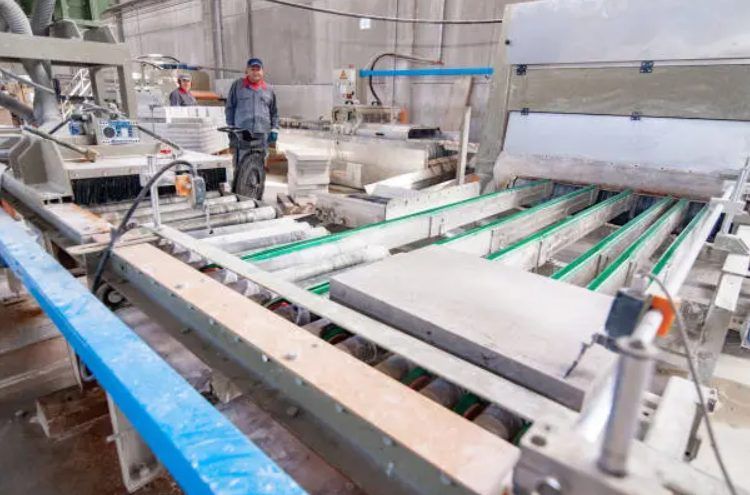
Thely vibrating table is a unique piece of equipment utilized from construction to mining to manufacturing. Its basic function is related to the application of vibrations to materials or molds with the aim of compacting, setting, or separating depending on the particular case. In concrete casting, mineral separation and quality control processes, vibrating tables assist in better material handling at fundamental jigging or concrete casting terminals.
This write-up looked into the core functions of vibrating tables, their types and industrial uses, maintenance practices as well as their benefits. We will briefly discuss the JXSC machine providers that tailor their services to the gravity separation and mineral processing industry.
Operating Principles of a Vibrating Table
To begin with, a vibrating table is made to have a flat platform, which is supported by a spring or shock absorber, along with a motor made to generate vibration. When material gets placed on the platform, vibrations cause the particles to settle and compact or even move based on their physical properties.
There are two common ways used to vibrate:
- Vertical vibration: Settles small particles or compacts materials like concrete.
- Horizontal vibration. Helps in the movement of materials over an area for sorting or feeding.
you can learn more about them here:https://www.jxscmachine.com/id/kategori/pemisah-gravitasi/
Most of the time the vibration frequency and amplitude have the possibility of being changed, enabling the operators to set the performance of the table to some specific processing requirements.
Vibrating tables are commonly encountered with regard to the gravity based systems in mineral separation. To appreciate the extent of operations associated with these tables, vibrate separator tools used in gold and mineral processing are illustrated.
Types of Vibrating Tables
Depending on the use case, vibrating tables come in various configurations. Each of these formats may be tailored to different material properties and industrial needs.
Compaction Vibrating Tables
This type is more often utilized in construction and manufacturing for concrete compaction and casting products or powder densification in containers. While using these particular methods the aim is to remove contained air and ensure constancy in shape and strength.
Sorting Vibrating Tables
Sorting vibrating tables separate material of differing densities in mining and recycling operations. Enhanced vibration causes the heavier particles to settle and move differently than lighter particles, leading to efficient separation.
Laboratory Vibrating Tables
Precision-controlled lab vibrating tables are smaller in size and are utilized in quality control and testing laboratories. They simulate vibrations for assessing the durability of packaging, conducting geological experiments, or testing the durability of different materials.
Customized Industrial Vibrating Tables
For custom surface area and volume operations, or for specialized processing requirements, vibrating tables can be tailored in terms of surface area, vibration strength, control systems, and material fabrication.
Every type of these systems is designed to enhance industrial efficiency, productivity, and product quality, thus reducing waste and improving standards across various industrial settings.
Applications Across Industries
The customizable features of vibrating tables allow them to be applicable in many industries, and are used as an essential component of most production or processing systems.
Construction and Precast Concrete
Vibrating tables are crucial in the construction sector for casting concrete components such as tiles, slabs, and precast columns. Their use reduces air pockets in molds, applies uniform filling to molds, and increases the strength and polish of the end products.
Mining and Mineral Processing
In mining activities, vibrating tables are widely used to separate ores and minerals of different specific gravity. They serve best in gold recovery because they help in the separation of the heavier gold particles from the lighter waste materials.
Packaging and Logistics
The use of vibrating tables is important for manufacturers because it helps settle bulk materials in containers for secure transport. This method assists in maximizing fill, achieving equilibrium, and minimizing shipping costs all while preventing shifting.
Food Processing
In the food sector, vibrating tables assist in sorting portions of chocolates, grains, or nuts, as well as in the drying or coating processes by distributing materials along trays or belts.
Waste and Recycling
Recyclers incorporate the use of vibrating tables when sorting through different forms of plastic, metals, or materials. Vibration separates the various densities and sizes, thus improving recycling rates as well as contaminating materials.
Vibrating tables that are well designed and properly utilized can provide significant enhancement in a business’s work performance along with the quality of deliverables.
Advantages of Using a Vibrating Table
Improved Compaction
In the casting of concrete as well as bulk handling of materials, vibration assists in removing air pockets and ensuring maximum compaction which in return results in a stronger and more uniform product.
Enhanced Material Separation
Vibrating tables also support precise separation of the desired minerals or waste materials with greater accuracy in particle classification based on density and size leading to improved recovery and reduced losses.
Increased Production Efficiency
Vibrating tables result in faster processing and greater efficiency in the production line by eliminating the need for manual intervention and automating the settling or sorting of materials throughout the different production stages.
Cost Reduction
Vibrating tables assist in minimizing material waste as well as transport costs through improving product density, fill volume, and material yield.
Easy Integration
Vibrating tables have a compact and modular design which allows their integration into pre-existing production lines without, or with very little, disruption.
For these reasons, cost efficient quality and throughput enhancement strategies have led to widespread adoption of vibrating tables across various industries.
Maintenance and Best Practices
Operational awareness of the maintenance done on a vibrating table is crucial in order to keep it in optimal working order.
Here are some pointers:
Regular Inspection
Look for loose bolts, worn springs and cracked welds. Lack of checks can result in malfunctioning springs which impacts performance and longevity.
Motor and Control Check
Make sure that the control panel is functioning properly and that the vibration motor, the machine’s heart, is well lubricated.
Cleaning the Surface
In the case of the vibrating surface, the addition of wets, cement, or powder can be obstructive to effectiveness. Hence, the platform should be cleaned regularly.
Monitoring for Unusual Noises
Knocking sounds along with irregular motion can signal problems within the mechanics and if dealt with sooner can save repairs and aid in cost efficiency.
Operator Training
Make certain that the operators are able to adjust the vibration levels and load the table properly. These components can be damaged and efficiency may be reduced due to improper settings and overloading.
With proper practices, vibrating tables can operate efficiently for years, ensuring consistent performance and operational stability.
Conclusion
The vibrating table is a contraption that at first glance may not look like much; however, its importance in the material processing, separation and compaction industry is extensive. In modern day industrial processes, this tool augments the quality of concrete products while improving mineral separation in mining.
Because of its wide range of applications, it can be customized to cater for diverse sectors making it a versatile solution for numerous operational challenges. With proper application and maintenance, vibrating tables can lead to a reduction in costs, increased efficiency, and elevated product standards.
Suppliers such as JXSC machines are still advancing in this field, providing a variety of vibrating and gravity separation solutions to industries aiming to enhance precision, reliability, and efficiency in material handling processes.
Grasping the functionalities and effective use of vibrating tables and how they work enables professionals in construction, mining, recycling, and manufacturing to heighten the efficiency of their operations and gain a competitive advantage.


