



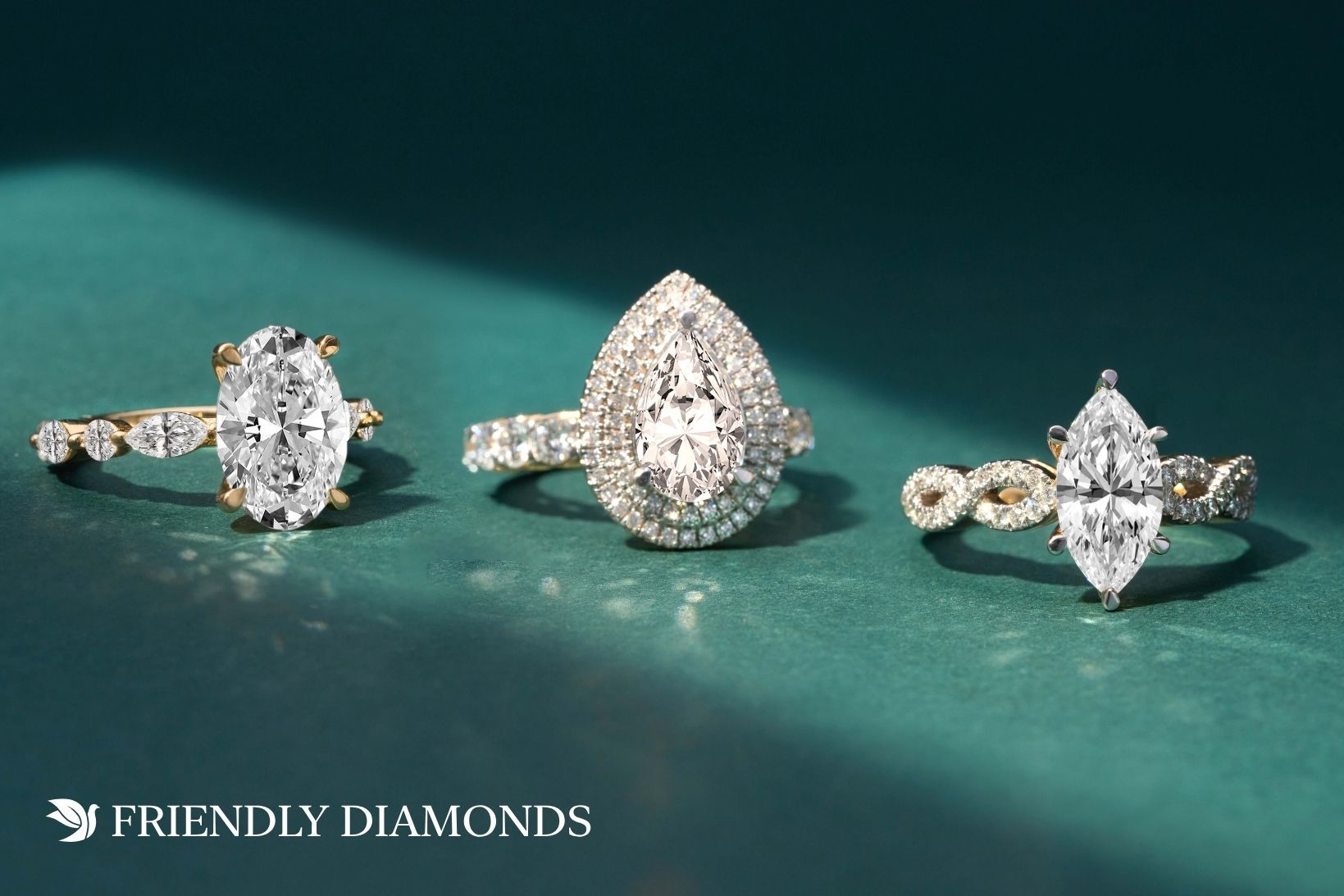
Lab-grown diamond engagement rings are diamonds that are created in a laboratory with a carbon seed through CVD and HPHT processes. They are a rising alternative for natural diamonds due to their eco-conscious production and affordable pricing. Lab-grown diamond engagement rings merge sustainability with accessible luxury, making them a popular choice in the jewelry industry.
Just like mined diamonds, all engagement ring settings are applicable to lab-grown diamonds too. So, making your ring look beautiful is not a challenge with diamonds made in a lab, as they have the same properties as a natural diamond.
Table of Content
- Certification and Quality Standards of a Lab-Grown Diamond Ring
- Benefits of Lab-Grown Diamond Engagement Ring
- Understanding All Engagement Ring Settings
- Choosing the Right Setting for Your Lifestyle
Certification and Quality Standards of a Lab-Grown Diamond Ring
Lab-grown diamonds also require certifications for their quality standards. Just like mined diamonds, lab diamonds are graded to evaluate their cut, color, clarity, and carat weight standards. Lab-grown diamonds are made in high-technology labs with temperatures and conditions that match the formation of a mined diamond; this is why certification is essential for lab diamonds to ensure their quality, purity, and brilliance match that of a natural diamond.
Akin to mined diamonds, lab-grown diamonds are also certified by bodies like GIA [The Gemological Institute of America] and IGI [International Gemological Institute]. The two institutes are highly popular and extremely efficient in their grading parameters, including detailed information about the 4 C’s [cut, color, clarity, carat] quality and value.
Benefits of Lab-Grown Diamond Engagement Ring
Lab diamond engagement rings are ethical and contain conflict-free sourcing, proving to be a better alternative for natural diamonds. They also provide better value for the size and quality than mined diamonds. Lab-grown diamond engagement rings are inexpensive when compared with natural diamond engagement rings, giving the same, if not better, quality. Lastly, they have no harmful environmental impact like mining, deforestation, or rehabilitation. These make a great option to enjoy luxury without having to pay the hefty price of losing environmental resources.
Understanding All Engagement Ring Settings
Engagement ring settings are where the center diamond is mounted on the ring. A setting is responsible for keeping your diamond secure and symbolically expresses the story behind your engagement ring. It not only keeps the center diamond safe but also completely depends on one’s personal preferences and choices. It should complement your lifestyle and appearance.
Different types of ring settings are four-prong and six-prong, which hold the center diamond with 4 and 6 claws, respectively. A bezel setting is the most secure setting if crafted well; it covers your diamond from all angles. Halo settings are a classic that adds additional sparkle and brilliance to your center diamond, making it look bigger than its actual carat size.
Cathedral settings are all about adding drama and durability to your engagement ring. In this setting style, the band arches slightly upward to support the center stone, creating a raised and elegant look. A channel-set ring is a favorite choice for those who want sparkle without having to worry about snagging.
Pave setting is designed to maximize the sparkle by covering the band with tiny diamonds that are set closely together. While the French pave features a more open setting that allows the light to hit each set diamond, creating a brighter and more dramatic sparkle.
Choosing the Right Setting for Your Lifestyle
Choosing the right ring setting should reflect how often you wear the ring. If you are someone who would wear their ring every day, go for secure and low-profile settings like a bezel or channel set ring; these settings are likely to snag and will protect the diamonds. But if you are planning to wear your ring occasionally, then intricate settings like halo, cathedral, and pavé settings might be the ones for you.
So choose a setting that balances style, comfort, and keeps your ring beautiful for the years to come.


