



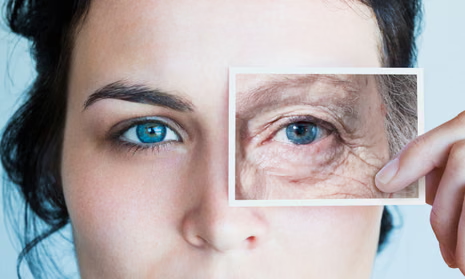
Did you know Keanu Reeves and Nicolas Cage were both born in 1964 and are of the same age? But they don’t look the same, one might say. We’ve also probably met someone who seems remarkably youthful at 60, while another person who appears worn down at 40. What is this difference? The answer lies beyond the calendar years.
We all age at the same chronological pace, but our bodies age at different biological rates. That distinction between how many years we’ve lived and how well our bodies have aged has given rise to biological age testing, a new scientific approach that measures the true state of our cellular and tissue health.
So, what is the biological age, and why does it matter?
Now, biological age represents the physiological condition of your body, independent of the years you’ve lived. Unlike chronological age, which progresses at the same rate for everyone, biological age varies with genetics, lifestyle choices, and environmental factors. A bioage test is designed to assess this variation by evaluating biomarkers that reflect how your body is aging biologically. Biological age can affect healthspan (the time a person spends in good health without chronic disease) by decades, according to research. This means that two people of the same chronological age can have vastly different health spans.
Biological age is a better indicator of health outcomes; therefore, knowing this is crucial. Many studies show that individuals with accelerated biological ageing face higher risks of age-related diseases, reduced physical function, and shorter lifespans. On the other hand, those who maintain a younger biological age often enjoy an extended healthspan and a better quality of life.
Let us examine the scientific basis of biological age tests.
There are multiple ways to test for biological aging, and each provides distinct insights. Our approach is epigenetic testing. Epigenetic age testing is among the most sophisticated approaches for measuring biological ageing. This method examines chemical modifications to DNA, the DNA methylation patterns, that change predictably with age. These epigenetic markers don’t alter the DNA sequence itself but influence gene expression, serving as a biological clock.
Horvath and Hannum clocks are the most widely recognised epigenetic clocks, and both have been validated through extensive research. A recent study published in Nature Communications stated that epigenetic age correlates strongly with physical function and mortality risk, irrespective of chronological age.
This makes it a valuable tool for assessing how lifestyle interventions might slow or reverse biological ageing.
Key Ageing Biomarkers Beyond Epigenetics
A comprehensive biological age assessment often includes multiple biomarkers:
- Telomere Length: Telomeres are protective caps on chromosomes that shorten with each cell division. Shorter telomeres are associated with cellular ageing and increased disease risk, although the relationship is complex and influenced by numerous factors.
- Inflammatory Markers: Chronic inflammation, often measured through C-reactive protein (CRP) and interleukin-6 (IL-6), accelerates biological aging. Elevated inflammatory markers have been linked to cardiovascular disease, cognitive decline, and other age-related conditions.
- Metabolic Indicators: Blood glucose levels, lipid profiles, and insulin sensitivity reflect metabolic health, which significantly impacts biological ageing. Poor metabolic function can accelerate cellular damage and organ dysfunction.
How do these bioage tests work?
Patients submit a biological sample (typically blood or saliva) at home or through a medical professional, depending on the test. The sample is then examined in a lab to measure epigenetic and other important biomarkers.
The chronological age and the estimated biological age derived from these tests are contrasted. A biological age that is lower than chronological age suggests good health, whereas an older biological age may indicate areas that require attention. Additionally, a variety of tests yield comprehensive data that identify specific biological factors that drive aging and provide recommendations for improvement.
How does lifestyle fit into this picture?
In functional practice, we use biological age tests to assess how well a person is ageing and to identify areas of health that require attention. It becomes most valuable when combined with comprehensive lifestyle data. Sleep patterns, physical activity levels, nutritional habits, stress management, social connections, etc, can all influence biological ageing. Research published in Aging highlighted the flexibility of our biological clocks, showing that lifestyle changes could reverse biological age by several years.
Now, tracking lifestyle data alongside periodic bioage testing creates a feedback loop. Initial testing establishes a baseline; lifestyle changes are implemented; and subsequent testing assesses the effectiveness of the interventions. This method translates theoretical health advice into tangible, quantifiable outcomes, fostering long-term behavioral change.
The question remains, “Should I get my biological age test conducted?” Bioage tests offer valuable insight, but have limitations. Individual differences exist in the precision of current epigenetic clocks, which provide approximations rather than precise observations. Results can be affected by recent infections, environmental factors, and the time of sample collection. Additionally, the field continues to evolve, with researchers continually refining measurement techniques and interpretive methods.
It’s also important to recognise that biological age testing is one tool among many for health assessment. Traditional medical screenings, clinical examinations, and symptom monitoring remain essential. The test results should supplement, not replace, routine medical care and competent medical guidance.
Biological age testing will likely become more accessible and accurate as research progresses, potentially altering how we think about preventive healthcare. For now, those considering a biological age longevity test should view it as a starting point for deeper engagement with their health: a tool for awareness and motivation rather than a final verdict on ageing.


