



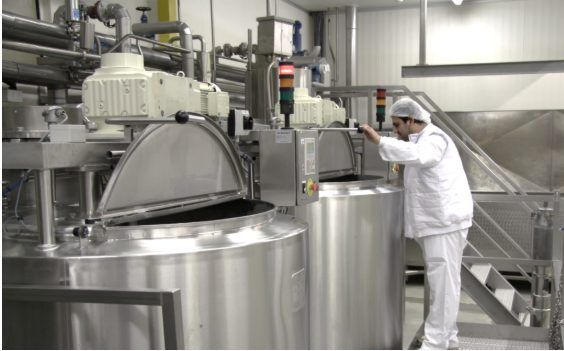
Precision in manufacturing relies on maintaining consistency and mixing technology plays a crucial role in this process.
A mixing tank with agitator is essential for industries requiring homogeneity in their products, from food and beverage to pharmaceuticals and chemical processing. These tanks leverage controlled agitation to blend ingredients uniformly, improve reaction times, and prevent inconsistencies that could impact product quality.
In this article, we’ll discuss how agitation technology works, the mechanics behind efficient mixing, and why it is critical for maintaining superior product standards.
Agitation and Its Role in Mixing Technology
Agitation is the process of creating fluid motion to enhance mixing, dispersion, and homogenization. It prevents ingredient separation and ensures uniformity throughout a batch. In industries such as pharmaceuticals, food production, and specialty chemicals, even minor inconsistencies can lead to product failures or inefficiencies.
Mixing tanks use strategically designed agitators to generate controlled turbulence. The type of agitation required depends on factors such as viscosity, particle size, and the nature of the substances being mixed. Without proper agitation, components can separate, leading to sedimentation, inconsistent textures, and inefficient chemical reactions.
How Mixing Tanks Achieve Consistency
A well-designed mixing tank optimizes product consistency by balancing fluid dynamics, shear forces, and energy efficiency. Key factors influencing effective agitation include:
- Tank Shape and Baffles: Cylindrical tanks with properly positioned baffles reduce vortex formation and promote even circulation.
- Agitator Type and Speed: Various agitators, such as turbine, paddle, and propeller designs, address mixing requirements based on viscosity and material composition.
- Flow Patterns: The arrangement of blades and rotational speed affects how fluids move within the tank, ensuring thorough blending and minimizing dead zones.
These elements work together to maintain a uniform distribution of ingredients, whether dealing with high-viscosity substances like creams and pastes or low-viscosity solutions like beverages and solvents.
Types of Agitators and Their Applications
Choosing the right agitator is crucial for optimizing mixing performance. The following agitator types are commonly used in industrial applications:
1. Propeller Agitators
Designed for low-viscosity liquids, propeller agitators generate axial flow, moving fluids vertically to ensure thorough mixing. These are widely used in beverage production and water treatment processes.
2. Turbine Agitators
Turbine designs create high-shear mixing, making them ideal for emulsions, suspensions, and products requiring rapid blending. They are commonly used in chemical and pharmaceutical industries.
3. Paddle Agitators
Paddle agitators provide gentle yet consistent agitation when mixing high-viscosity fluids. They are essential in industries such as dairy, cosmetics, and adhesives.
4. Anchor Agitators
Anchor agitators are designed for thick mixtures, scraping the tank walls to prevent ingredient buildup. These are vital in processes involving gels, creams, and pastes.


Key Benefits of Using Agitation in Mixing Tanks
Properly designed agitation systems offer multiple advantages across industries:
- Enhanced Product Quality: Consistent mixing produces uniform taste, texture, and composition in end products.
- Reduced Processing Time: Effective agitation speeds up blending, emulsification, and reaction times, increasing overall production efficiency.
- Minimized Waste and Sedimentation: Prevents ingredient separation, reducing the need for reprocessing and minimizing material loss.
- Energy Efficiency: Optimized flow patterns ensure lower power consumption while maintaining effective mixing performance.
Factors to Consider When Selecting a Mixing Tank
Selecting the right mixing tank involves evaluating multiple factors to ensure optimal performance for specific applications:
- Material Compatibility: Stainless steel is preferred for its durability, corrosion resistance, and hygienic properties, making it suitable for food, pharmaceuticals, and chemical industries.
- Volume and Batch Size: Tanks should accommodate production requirements while allowing for adequate mixing without excessive energy use.
- Agitation Speed and Torque: The balance between agitation force and material properties determines efficiency and product consistency.
- Temperature Control: Some processes require heating or cooling mechanisms to maintain optimal mixing conditions.
Conclusion
The science behind agitation is fundamental to achieving consistent product quality in various industries. Using advanced mixing tank designs and selecting the appropriate agitator type allows manufacturers to optimize efficiency, reduce waste, and enhance product uniformity.
Understanding the principles of fluid dynamics, shear forces, and energy distribution allows for precise control over mixing processes, ensuring superior results across multiple applications.
Investing in the right agitation technology is all about elevating overall production standards.


