



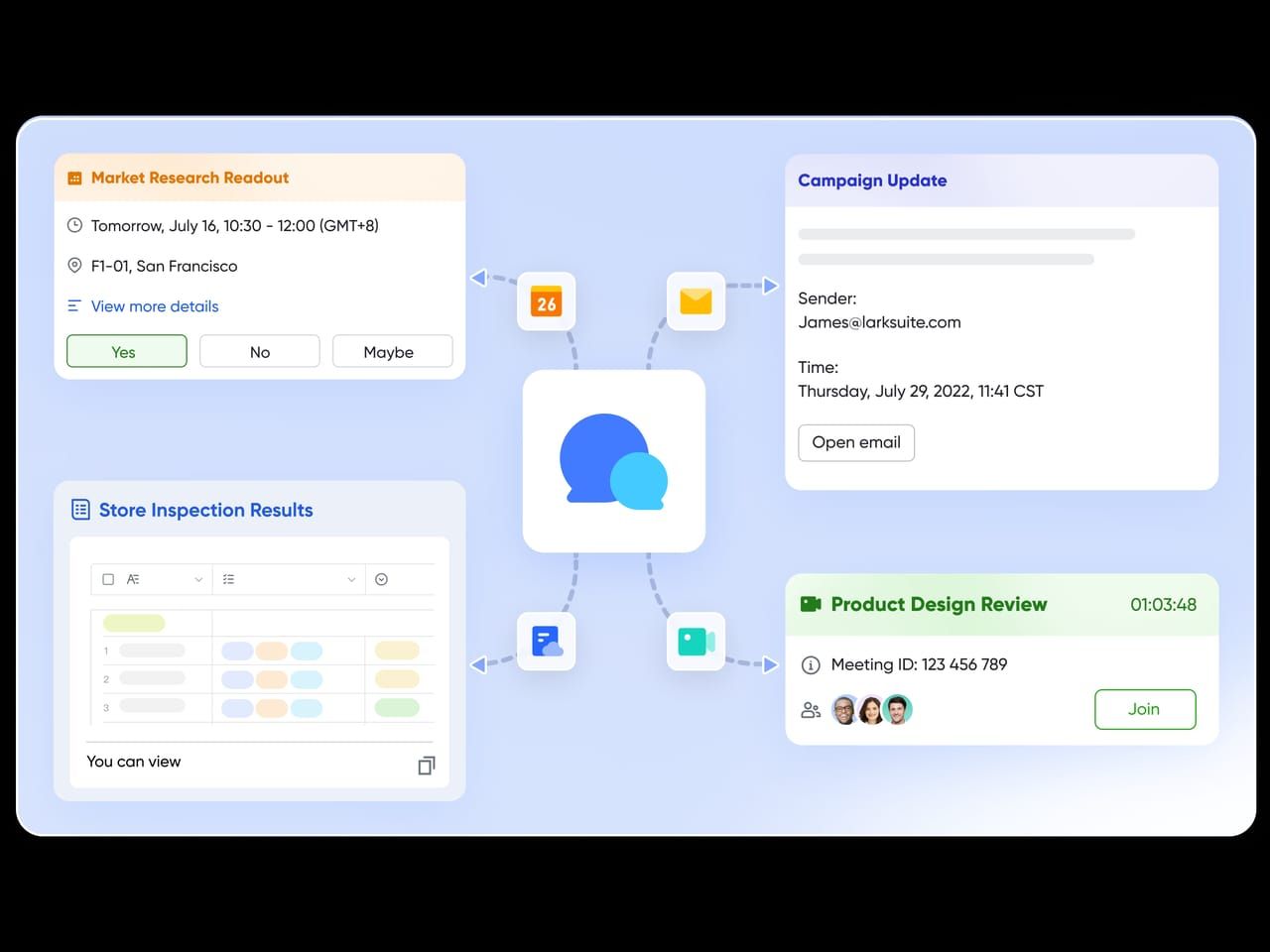
Communication is key to every team’s success, but just talking to each other doesn’t always get the job done. Updates, messages, and meetings build up too often without making real progress. The real problem with modern teams is not that they don’t talk enough; it’s that they don’t do anything after they talk.
Businesses are using project management tools that link communication with action to close that gap. These platforms make sure that every idea, update, and approval has a clear effect. With integrated task management, structured documentation, and seamless messaging, teams can go from talking to finishing faster than ever.
Lark Messenger: Where ideas turn into action
Communication that happens in a vacuum usually doesn’t work. Important news never gets to the right people, and good ideas get lost in chat threads. Lark Messenger changes how we talk to each other by connecting it to the work itself.
People on the team can make separate project channels so that conversations stay on track and don’t get too loud.Tagging shows who is in charge of what, and pinned messages make sure that important news is always seen.Teams don’t have to waste time looking for old context because they can share files and see their history. Messenger also lets employees turn chat messages into tasks right away, which helps them get things done faster.
Messenger makes sure that every message can lead to action by combining instant communication with clear context.Teams talk less about what to do next because they are already doing it.
Lark Docs: Structuring collaborative communication
If you don’t write down what you say, even the best communication loses its value. When teams need to work with multiple emails or versions of documents, they are perplexed and lose time. Lark Docs eliminates this by making conversations come alive as editable content that evolves as work evolves.
Individuals are able to collaborate on proposals, reports, and strategies in real time, reducing the time spent sending documents back and forth. Inline comments ensure you clarify things immediately, and version history ensures everyone understands who is responsible. No longer do you need to flip between tools to manage feedback and updates. Just connect Docs to Messenger or Calendar. Managers can also link Docs to the right projects to make sure that the finished content matches the plans for how to carry them out.
This structure makes communication last by turning it from talking into working together and then from working together into writing down what you did.
Lark Calendar: Coordinating conversations around outcomes
A lot of teams waste time at work not because they don’t have meetings, but because their meetings don’t have a clear purpose. Lark Calendar makes scheduling and coordinating more organized so that every conversation helps with execution.
Teams can set up regular project check-ins, automatically line up across time zones, and add Docs, tasks, or Base records to events that are related to them. This makes sure that every conversation starts with context and ends with clear next steps. Smart reminders and shared visibility help people meet their deadlines and avoid having too many things to do at once. Calendar helps employees stay focused by making scheduling clear. It also makes sure that every meeting happens at the right time, with the right people, and for the right reason.
Lark Tasks: Moving from communication to accountability
Once the plans are made, it’s important to be clear about who does what, when, and how progress is tracked. A lot of companies mess this up, and action items end up all over chats or spreadsheets. Lark Tasks fills this gap by linking communication to ownership directly.
Users can easily create and distribute tasks from Calendar or Messenger. Each of these tasks includes due dates, subtasks, and dependencies, so everyone knows what they have to do. Managers can keep up in real time without micromanaging, and employees can adjust their priorities as work shifts.
Lark Sheets: Turning communication into measurable insight
All companies speak of performance, be it monitoring project figures or reviewing budgets. But when figures remain in isolated spreadsheets, dialog is futile. Lark Sheets simplifies this by allowing teams to collaborate with numbers in real time.
Several people can modify project KPIs, monitor costs, or review trends in real-time. The templates give snapshots in the moment, and filtering allows executives to analyze specific details. All dialogue about metrics is from real-time, live data because Sheets plays in real-time with Tasks and Docs. Teams no longer bicker about outdated numbers; they make decisions with shared, real-time information.
Such a link between discussion and information makes performance measurable, allowing leaders to undertake projects confidently and openly.
Lark Base: Centralizing execution under one system
Organization is what makes productivity possible. With every bit of information, discussion, and approval for a team in a single integrated system, they can only correlate communication to action. Lark Base gives teams the power to build custom databases that keep projects, customers, and deliverables on track.
With automated workflow, each record can hold project data, related documents, work they have been assigned, and approvals which they are credited for. Dashboards give leaders a bird’s-eye view, and filters allow employees to quickly find what they are searching for. Because Base connects all conversations and documents, nothing gets lost—decisions and outcomes can always be traced back.
Conclusion
It’s not how much teams talk that matters for productivity; it’s how well they turn talk into action. As project management software, Lark makes that link easy. Messenger collects ideas, Docs helps people work together, Calendar keeps track of time, Tasks keeps everyone accountable with automated workflows, Sheets tracks progress, and Base gives project management software its reliability. When communication and execution work together, productivity goes up, and work gets done with purpose, clarity, and speed.


